face Archives - Page 5 of 6 - Dr. Walter Zamarian Jr.

Categoria: face

  • Deep Plane Facelift Cost in Brazil: What International Patients Should Know

    Deep Plane Facelift Cost in Brazil: What International Patients Should Know

    In Dr. Walter Zamarian Jr.’s practice in Londrina, Brazil, a complete Deep Plane facelift may use R$85,000 in 2026 as a reference, but this is not a fixed price, quote, offer or universal indication. The final surgical plan and cost depend on the face, neck, eyelids, volume loss, hospital, anesthesia, medical risk, travel logistics and postoperative follow-up.

    This article is written for international patients who search for Deep Plane facelift cost in Brazil and want a serious answer before travelling. The right question is not only “how much is it?” It is also what the quote includes, what safety structure supports the surgery, how long you must stay in Brazil, and whether the proposed plan actually fits your anatomy.

    Medical review

    Written and reviewed by Dr. Walter Zamarian Jr., plastic surgeon in Londrina, Brazil. CRM-PR 17.388, RQE 15.688, full member of the Brazilian Society of Plastic Surgery (SBCP) and member of the American Society of Plastic Surgeons (ASPS). 20+ years of experience and 8,000+ surgeries performed. Last reviewed: May 24, 2026.

    Why there is no single reliable price for every patient

    A Deep Plane facelift is not a standardized item with a universal fee. It is a surgical plan based on facial anatomy, tissue laxity, neck aging, skin quality, previous procedures, medical history, expectations and safety. Two patients with the same age may need very different operations.

    One patient may need a complete face and neck approach with neck lift, blepharoplasty and selected facial fat grafting. Another may need a narrower plan. Smoking, hypertension, anticoagulant use, previous surgery, major weight loss and unrealistic expectations can change the plan or even make surgery inappropriate.

    What affects Deep Plane facelift cost in Brazil?

    A responsible quote should make clear what is included and what is not. The main cost drivers usually include:

    • Extent of surgery: lower face only, face and neck, midface, temporal area, eyelids or revision planning.
    • Neck treatment: platysma work, submental contouring and deeper neck anatomy can change operative time.
    • Associated procedures: fat grafting, blepharoplasty, brow or eyelid work, lip lift or revision surgery each changes the plan.
    • Hospital structure: accredited operating room, monitoring, medications, equipment and the ability to handle emergencies.
    • Anesthesia: anesthesiologist, monitoring, surgical duration and postoperative recovery structure.
    • Surgical team: assistants, scrub nurse, nursing staff and postoperative support.
    • Preoperative workup: laboratory tests, cardiology evaluation, medication adjustment and risk assessment.
    • Follow-up: dressings, early postoperative visits, scar monitoring, complication management and remote follow-up after travel.
    • Travel logistics: flights, accommodation, companion, time away from work and a safe return schedule.

    How to interpret the R$85,000 reference

    The R$85,000 reference is useful for planning expectations, but it should not be read as a price table. It does not replace consultation, physical examination, medical risk analysis or a written individualized proposal. It also does not mean every patient needs a complete Deep Plane facelift.

    For international patients, exchange rates can make Brazilian surgical fees look attractive compared with the United States or Europe. That should not be the reason to choose a surgeon. The safer comparison is whether the plan includes the right hospital, anesthesia, team, recovery time, complication pathway and follow-up after you leave Brazil.

    Brazil versus the United States: compare structure, not only currency

    Patients from the United States often compare Brazilian surgical fees with U.S. facility fees, anesthesia costs and surgeon fees. The comparison is only meaningful if it includes the entire journey: flights, accommodation, companion, time in Londrina, postoperative visits, insurance considerations and what happens if there is a delayed concern after returning home.

    Brazil has a strong plastic surgery tradition, but credentials still matter. Verify that the surgeon has RQE in plastic surgery, hospital access, a qualified anesthesia team, clear postoperative instructions and a realistic plan for communication across languages and time zones. Related reading: Is a Deep Plane facelift in Brazil safe?

    Deep Plane, neck, eyelids and fat grafting: why combinations change cost

    Many patients do not age in only one layer. The lower face may show jowls, the neck may lose definition, the eyelids may create tiredness and the midface may lose volume. In selected cases, a complete plan combines Deep Plane lifting, deep neck work, blepharoplasty and fat grafting. This can be more coherent than treating one sign while leaving the others untouched.

    That does not mean everyone needs every procedure. A cost estimate should explain which parts are medically and anatomically indicated. For the combination logic, read Deep Plane facelift with fat grafting and the page on regenerative Deep Plane planning.

    Training, experience and surgical judgement

    Cost is partly connected to judgement. Deep Plane surgery requires knowledge of facial retaining ligaments, SMAS anatomy, facial nerve safety, skin perfusion and neck anatomy. Dr. Walter Zamarian Jr.’s background includes the Pitanguy tradition in Rio de Janeiro and learning from Dr. Tim Marten and Dr. Mike Nayak in the United States during ASAPS Meetings.

    Experience should still be presented with precision. No credential eliminates surgical risk, and no technique creates the same result in every patient. A good consultation should define indication, alternatives, limitations and the plan if the safest recommendation is not to operate.

    Online consultation and mandatory in-person evaluation

    For international patients, an online consultation can be useful as a first planning step. Photos and video help assess whether a trip may be reasonable, what procedures might be discussed and what questions need to be answered before surgery.

    However, the first consultation in person is mandatory before any surgical procedure. The surgeon must examine skin quality, tissue mobility, scars, neck anatomy, facial nerve function, medical history and expectations before confirming indication. The in-person consultation fee is R$800 for the first visit and R$400 for follow-up consultation.

    How long should international patients stay in Londrina?

    A safe stay depends on the procedure and the patient’s health, but international patients should usually plan enough time for the in-person evaluation, preoperative preparation, surgery, the first recovery days and early postoperative checks before flying home. A rushed return flight can make complication management harder.

    The clinic is located at Rua Eng. Omar Rupp, 186, Jardim Londrilar, Londrina, Parana, Brazil. Patients who travel should plan accommodation near the clinic or hospital, a responsible companion, access to medications, and clear communication channels with the surgical team.

    Risks and costs that must be part of the decision

    A Deep Plane facelift can be appropriate for selected patients, but it is still surgery. Possible risks include hematoma, bleeding, infection, skin suffering, wound healing problems, visible or widened scars, sensory changes, temporary or persistent facial nerve weakness, asymmetry, contour irregularity, prolonged swelling, revision surgery, thrombosis, pulmonary embolism and anesthesia-related complications.

    Warning signs after surgery include rapidly increasing swelling, intense one-sided pain, fever, pus, skin color change, shortness of breath, chest pain, calf swelling, new facial weakness or neurologic symptoms. These require immediate contact with the surgical team or emergency care. The real cost of surgery includes the structure to prevent, recognize and treat problems.

    Questions to ask before accepting a facelift quote in Brazil

    • Is the proposed procedure truly Deep Plane, or another facelift technique?
    • Is the neck included in the plan?
    • Are blepharoplasty or fat grafting medically indicated in my case?
    • Where will the operation take place, and what emergency structure is available?
    • Who is the anesthesiologist, and how will I be monitored?
    • How many postoperative visits are included before I return home?
    • What is the plan if I develop hematoma, skin suffering, infection, asymmetry or another complication?
    • How long should I remain in Londrina before flying?
    • What follow-up is possible after I return to my country?

    Frequently asked questions

    How much does a Deep Plane facelift cost in Brazil?

    In Dr. Walter Zamarian Jr.’s practice, a complete Deep Plane facelift may use R$85,000 in 2026 as a reference, but there is no reliable single fee for every patient. The final cost depends on the face, neck, eyelids, fat grafting, hospital, anesthesia, exams, team and follow-up.

    Is Brazil cheaper than the United States for facelift surgery?

    Brazilian costs may be lower for some international patients, but the decision should not be based only on currency. Travel, accommodation, companion, recovery time, hospital structure, anesthesia, surgeon credentials and complication planning must all be included in the comparison.

    Can I get a quote online before travelling?

    An online consultation can provide preliminary guidance and travel planning, but it cannot replace the in-person examination required before surgery. The final plan and quote depend on physical evaluation and medical risk assessment.

    Does the cost include neck lift, blepharoplasty or fat grafting?

    Not automatically. These procedures are included only when indicated and written into the individualized plan. Adding neck treatment, blepharoplasty or fat grafting changes operative time, team needs, materials, recovery and cost.

    If you are considering surgery in Brazil, use price as one part of the decision, not the center of it. The safer question is whether the proposed plan is medically appropriate, clearly explained and supported by the right structure before, during and after surgery. For longevity expectations, see how long Deep Plane facelift results may last.


  • Structural vs Preservation Rhinoplasty: Which Technique Fits Your Nose?

    Structural vs Preservation Rhinoplasty: Which Technique Fits Your Nose?

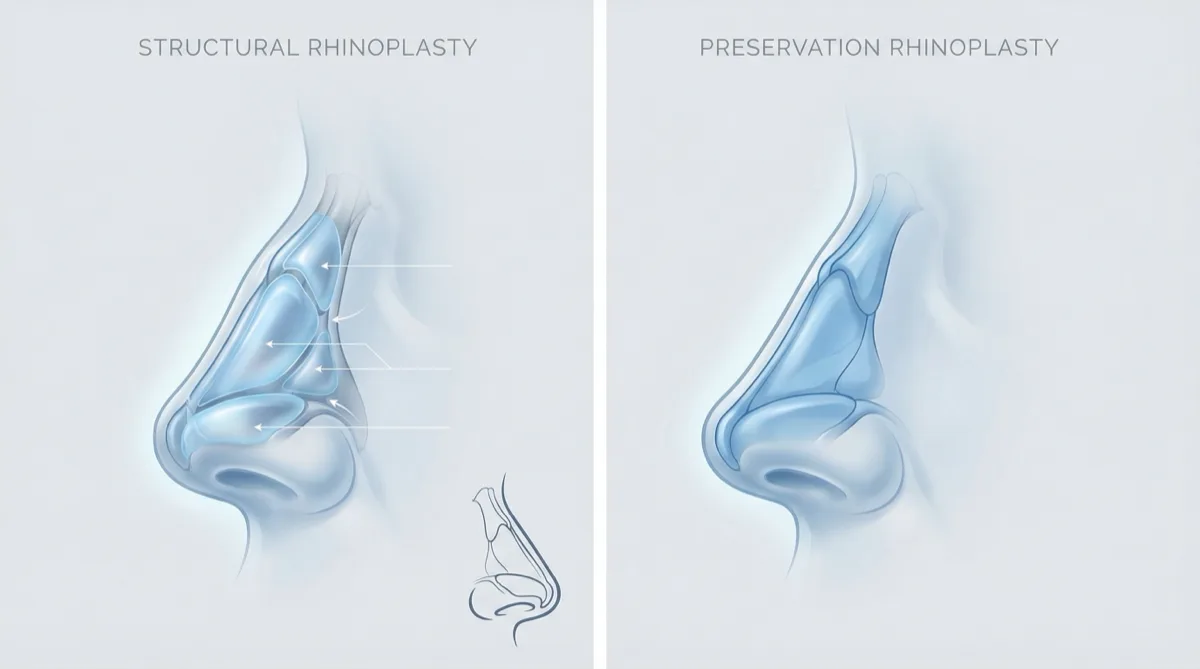
    Structural rhinoplasty and preservation rhinoplasty are not competing recipes, and one technique is not automatically better than the other. The safer choice depends on dorsal anatomy, tip support, septum, breathing, skin thickness, asymmetry, previous surgery and the degree of change the nose needs.

    Patients often hear these terms online and assume they must choose a label before consultation. In reality, the surgeon’s job is to diagnose the anatomy first and then choose the technique, or combination of techniques, that protects function and creates a natural balance with the face.

    Medical review

    Written and reviewed by Dr. Walter Zamarian Jr., plastic surgeon in Londrina, Brazil. CRM-PR 17.388, RQE 15.688, full member of the Brazilian Society of Plastic Surgery (SBCP) and member of the American Society of Plastic Surgeons (ASPS). 20+ years of experience and 8,000+ surgeries performed. Last reviewed: May 24, 2026.

    What is structural rhinoplasty?

    Structural rhinoplasty is a philosophy that rebuilds and supports the nasal framework when support is weak, deviated, asymmetric or previously altered. The operation may be open or closed, but it often uses cartilage grafts to shape and reinforce the nose.

    Cartilage usually comes from the septum. In selected revision or complex cases, ear or rib cartilage may be needed. Grafts such as spreader grafts, septal extension grafts, columellar struts or tip grafts can support breathing, projection, rotation and symmetry when native structures are not enough.

    Structural planning is especially useful when the nose has a significant septal deviation, weak tip support, collapse of the middle vault, previous surgery, trauma, marked asymmetry or a need for meaningful change in projection or definition.

    What is preservation rhinoplasty?

    Preservation rhinoplasty tries to maintain more of the natural nasal architecture, especially the dorsal aesthetic lines, instead of removing and reconstructing the bridge in a traditional way. Techniques such as push-down or let-down lower the nasal dorsum while preserving selected structures.

    This approach may be appropriate when the dorsal shape is favorable, the septum is stable, the tip does not need major support, asymmetry is limited and breathing anatomy allows a conservative plan. In the right patient, preservation principles can reduce dissection and maintain natural contours.

    Preservation is not a shortcut and it is not suitable for every nose. Significant deviation, weak support, severe asymmetry, thick skin with poor definition, airway compromise or prior surgery may require structural reconstruction.

    Structural vs preservation rhinoplasty: practical comparison

    QuestionStructural planningPreservation planning
    Core ideaRebuild and support the framework when neededPreserve selected native structures when anatomy allows
    DorsumMay reshape, reconstruct or reinforce the bridgeMay lower the bridge with push-down or let-down concepts
    TipAllows stronger support and definition when the tip is weakWorks when the tip needs limited modification
    Septum and breathingUseful when septal deviation or valve weakness must be correctedRequires careful selection when the septum is stable
    Revision surgeryOften needed when anatomy has been alteredMay be limited after previous surgery
    RecoverySwelling may last months, especially in thick skin or complex casesSome selected patients may have less early swelling

    Hybrid rhinoplasty is often the real answer

    Modern rhinoplasty is not always purely structural or purely preservation. Many cases use preservation principles where the anatomy is favorable and structural support where the nose needs reinforcement. This hybrid mindset is often more realistic than defending one label for every patient.

    For example, a patient may benefit from preserving dorsal lines while using structural grafts to improve tip support or the internal nasal valve. Another may need a more complete structural plan because breathing, deviation or previous surgery makes preservation unsafe or insufficient.

    Breathing, septum and function come first

    Rhinoplasty should not be planned only from profile photographs. The septum, turbinates, internal nasal valve, external valve, skin thickness and previous trauma all matter. When breathing is part of the complaint, septorhinoplasty planning may be necessary.

    Techniques that look elegant in diagrams can fail if the functional anatomy is ignored. A smaller bridge, narrower bones or more defined tip should not come at the cost of nasal obstruction.

    When structural rhinoplasty may fit better

    • Revision rhinoplasty or previous nasal trauma.
    • Significant septal deviation or valve collapse.
    • Weak tip support or poor tip definition.
    • Marked asymmetry or crooked nose.
    • Need for projection, rotation or support using cartilage grafts.
    • Selected ethnic rhinoplasty cases where support and definition must be built carefully.

    For related planning, see revision rhinoplasty, ethnic rhinoplasty and the guide on when revision rhinoplasty may be needed.

    When preservation rhinoplasty may fit better

    • A favorable dorsal shape with a limited hump.
    • A stable septum and no major airway complaint.
    • A well-supported tip that needs conservative refinement.
    • Limited asymmetry and no major previous surgery.
    • Patient goals that fit a conservative anatomical change.

    Recovery and swelling

    Recovery depends more on the amount of dissection, bone work, skin thickness, grafting, bleeding tendency and whether the case is primary or revision than on the label alone. Preservation rhinoplasty may reduce early swelling in selected cases, but it does not eliminate swelling or make recovery uniformly faster.

    Structural rhinoplasty can involve more grafting and support work, so swelling may take longer to settle, especially in thick skin. Final definition can take many months. Tools such as ultrasonic rhinoplasty may be considered for selected bone work, but they do not replace surgical judgement.

    Risks and red flags

    Risks of rhinoplasty include bleeding, infection, septal perforation, poor wound healing, visible or unfavorable scarring, skin problems, graft visibility, graft warping or resorption, asymmetry, persistent swelling, nasal obstruction, changes in smell, dissatisfaction, need for revision and anesthesia-related complications.

    Urgent postoperative signs include rapidly increasing pain, fever, pus, heavy bleeding, skin color change, worsening obstruction, visual symptoms, shortness of breath, chest pain or neurologic symptoms. These require immediate contact with the surgical team or emergency care.

    Frequently asked questions

    Is preservation rhinoplasty automatically better because it is newer?

    No. Preservation rhinoplasty is valuable for selected anatomy, but newer terminology does not replace diagnosis. Some noses need preservation principles, some need structural support, and some need both.

    Does open rhinoplasty always leave a visible scar?

    No, but no surgeon should promise an invisible scar. The columellar incision often heals subtly when well placed and cared for, but scar visibility depends on skin, healing, tension, sun exposure and individual biology.

    Can rhinoplasty be combined with chin surgery?

    Yes, in selected patients. Nose and chin balance strongly affects the facial profile, so chin implant or mentoplasty may be discussed when chin projection changes how the nose is perceived.

    How I choose the technique

    In consultation, I evaluate photographs, nasal bones, dorsal lines, tip support, septum, valves, skin, breathing, previous surgery and expectations. 3D simulation can help communication, but it is not a promise of outcome. The final plan is anatomical: structural, preservation or hybrid, depending on what your nose safely allows.

  • Rinoplastia estrutural vs preservação: qual técnica combina com o seu nariz?

    Rinoplastia estrutural vs preservação: qual técnica combina com o seu nariz?

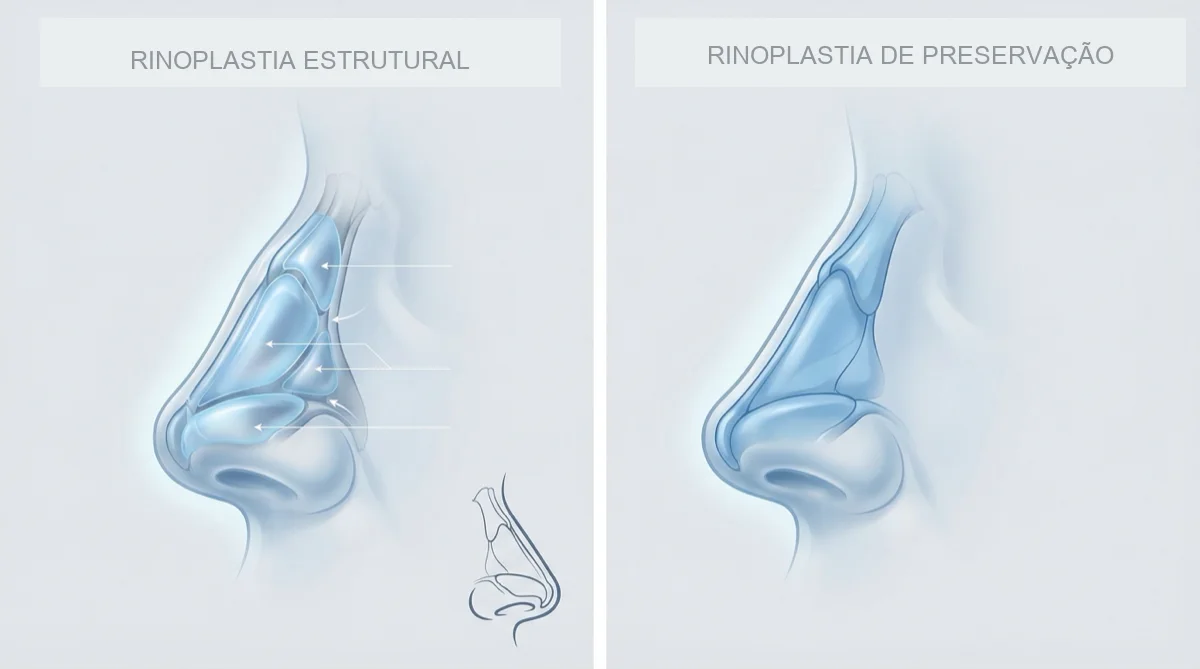
    Rinoplastia estrutural e rinoplastia de preservação não são receitas concorrentes, e nenhuma técnica é automaticamente superior à outra. A escolha mais adequada depende do dorso, ponta nasal, septo, respiração, espessura da pele, assimetria, cirurgia prévia e grau de mudança desejado.

    Muitos pacientes chegam à consulta já perguntando por uma técnica específica. Esse interesse é positivo, mas a decisão não deve começar pelo rótulo. Primeiro vem o diagnóstico anatômico; depois vem a técnica, que pode ser estrutural, preservadora ou uma combinação das duas.

    Autoria e revisão médica

    Conteúdo escrito e revisado pelo Dr. Walter Zamarian Jr., cirurgião plástico em Londrina. CRM-PR 17.388, RQE 15.688, membro titular da Sociedade Brasileira de Cirurgia Plástica (SBCP) e membro da American Society of Plastic Surgeons (ASPS). Mais de 20 anos de experiência e mais de 8.000 cirurgias realizadas. Última revisão: 24 de maio de 2026.

    O que é rinoplastia estrutural?

    A rinoplastia estrutural é uma filosofia que reconstrói e reforça o arcabouço nasal quando há suporte fraco, desvio, assimetria, trauma ou cirurgia anterior. Ela pode ser feita por via aberta ou fechada, mas frequentemente utiliza enxertos de cartilagem para dar sustentação e forma ao nariz.

    A cartilagem costuma vir do septo nasal. Em casos selecionados, principalmente revisões ou deformidades complexas, pode ser necessário usar cartilagem da orelha ou da costela. Enxertos como spreader grafts, septal extension grafts, columellar strut e enxertos de ponta ajudam a tratar projeção, rotação, simetria e função respiratória.

    Esse raciocínio é útil quando há desvio septal importante, ponta fraca, colapso da válvula nasal, cirurgia prévia, trauma, assimetria marcada ou necessidade de mudança estrutural relevante.

    O que é rinoplastia de preservação?

    A rinoplastia de preservação busca manter mais estruturas naturais do nariz, especialmente as linhas estéticas do dorso. Técnicas como push-down e let-down reduzem a altura do dorso preservando determinadas relações anatômicas, em vez de remover e reconstruir o dorso de forma tradicional.

    Ela pode ser adequada quando o dorso tem formato favorável, o septo é estável, a ponta precisa de pouca modificação, a assimetria é limitada e a respiração permite uma abordagem conservadora. Nesses casos, princípios de preservação podem reduzir dissecção e manter linhas naturais.

    A preservação não é atalho e não serve para todos os narizes. Desvios importantes, ponta sem suporte, pele espessa com pouca definição, queixa respiratória relevante ou cirurgia prévia podem exigir reconstrução estrutural.

    Rinoplastia estrutural vs preservação: comparação prática

    PerguntaPlanejamento estruturalPlanejamento preservador
    Ideia centralReconstruir e reforçar quando o nariz precisa de suportePreservar estruturas naturais quando a anatomia permite
    DorsoPode remodelar, reconstruir ou reforçar a ponte nasalPode rebaixar o dorso com conceitos de push-down ou let-down
    Ponta nasalPermite suporte quando a ponta é fraca ou assimétricaFunciona quando a ponta exige ajuste conservador
    Septo e respiraçãoÚtil quando há desvio septal ou fraqueza de válvula nasalExige seleção cuidadosa quando o septo está estável
    RevisãoFrequentemente necessária quando a anatomia já foi alteradaPode ter limitações em narizes já operados
    RecuperaçãoEdema pode durar meses, sobretudo em pele espessa ou casos complexosAlguns pacientes selecionados podem ter menos edema inicial

    O planejamento híbrido muitas vezes é a resposta real

    A rinoplastia moderna nem sempre é puramente estrutural ou puramente preservadora. Muitos casos usam princípios de preservação onde a anatomia permite e suporte estrutural onde o nariz precisa de reforço. Essa visão híbrida costuma ser mais realista do que defender uma única técnica para todos.

    Um paciente pode preservar linhas do dorso e, ao mesmo tempo, precisar de enxertos para dar suporte à ponta ou à válvula nasal interna. Outro pode precisar de reconstrução mais ampla porque respiração, desvio ou cirurgia anterior tornam a preservação insuficiente.

    Respiração, septo e função vêm antes do rótulo

    A rinoplastia não deve ser planejada apenas pela foto de perfil. Septo, cornetos, válvula nasal interna, válvula externa, espessura da pele e histórico de trauma mudam a estratégia. Quando a respiração faz parte da queixa, pode ser necessário pensar em rinosseptoplastia.

    Uma ponte mais baixa, ossos mais estreitos ou ponta mais definida não devem vir às custas de obstrução nasal. A função respiratória precisa ser protegida durante o planejamento estético.

    Quando a rinoplastia estrutural pode fazer mais sentido

    • Rinoplastia secundária ou trauma nasal prévio.
    • Desvio septal importante ou colapso de válvula nasal.
    • Ponta nasal fraca ou pouco definida.
    • Assimetria marcada ou nariz torto.
    • Necessidade de projeção, rotação ou suporte com enxertos.
    • Casos selecionados de rinoplastia étnica em que suporte e definição precisam ser construídos com cuidado.

    Para aprofundar, veja também rinoplastia secundária e o guia sobre quando considerar uma segunda rinoplastia.

    Quando a rinoplastia de preservação pode fazer mais sentido

    • Dorso favorável com giba limitada.
    • Septo estável e sem queixa respiratória importante.
    • Ponta bem sustentada, com necessidade de refinamento conservador.
    • Assimetria pequena e ausência de cirurgia prévia relevante.
    • Objetivo compatível com mudança anatômica moderada.

    Recuperação e inchaço

    A recuperação depende mais de dissecção, trabalho ósseo, pele, enxertos, tendência a sangramento e se o caso é primário ou secundário do que do nome da técnica. A preservação pode reduzir edema inicial em pacientes selecionados, mas não elimina inchaço nem torna a recuperação igual para todos.

    A rinoplastia estrutural pode envolver mais enxertos e suporte, então o edema pode demorar mais para assentar, especialmente em pele espessa. Recursos como a rinoplastia ultrassônica podem ajudar em trabalhos ósseos selecionados, mas não substituem diagnóstico e julgamento cirúrgico.

    Riscos e sinais de alerta

    Os riscos da rinoplastia incluem sangramento, infecção, perfuração septal, cicatrização desfavorável, alteração de pele, enxerto visível, empenamento ou reabsorção de enxertos, assimetria, edema prolongado, obstrução nasal, alteração do olfato, insatisfação, necessidade de revisão e complicações anestésicas.

    Sinais urgentes no pós-operatório incluem dor que piora rapidamente, febre, secreção purulenta, sangramento intenso, alteração de cor da pele, obstrução nasal progressiva, sintomas visuais, falta de ar, dor no peito ou sintomas neurológicos. Nesses casos, a equipe cirúrgica ou um serviço de emergência deve ser acionado imediatamente.

    Perguntas frequentes

    A rinoplastia de preservação é automaticamente superior por ser mais recente?

    Não. A preservação é valiosa para anatomias selecionadas, mas o nome da técnica não substitui o diagnóstico. Alguns narizes pedem preservação, outros pedem suporte estrutural, e muitos pedem uma combinação.

    A rinoplastia aberta deixa cicatriz aparente?

    Nem sempre, mas nenhuma cicatriz deve ser prometida como invisível. A incisão na columela costuma amadurecer de forma discreta quando bem posicionada e bem cuidada, mas visibilidade depende de pele, cicatrização, tensão, sol e biologia individual.

    Rinoplastia pode ser combinada com mentoplastia?

    Sim, em pacientes selecionados. Nariz e queixo influenciam muito o perfil facial, então mentoplastia pode ser discutida quando a projeção do queixo muda a percepção do nariz.

    Como escolho a técnica na consulta

    Na avaliação, analiso fotografias, ossos nasais, linhas do dorso, suporte de ponta, septo, válvulas, pele, respiração, cirurgias anteriores e expectativas. A simulação 3D pode ajudar na comunicação, mas não é promessa de resultado. O plano final é anatômico: estrutural, preservador ou híbrido, conforme o que o nariz permite com segurança.

  • Lifting após Ozempic: quando combinar Deep Plane e lipoenxertia facial?

    Lifting após Ozempic: quando combinar Deep Plane e lipoenxertia facial?

    Após grande emagrecimento com GLP-1, dieta ou cirurgia bariátrica, alguns pacientes desenvolvem flacidez facial e perda de volume que podem exigir duas estratégias combinadas: reposicionar tecidos e repor volume. Isso pode envolver lifting Deep Plane, tratamento do pescoço, blefaroplastia e lipoenxertia facial, mas a indicação depende de consulta, exame físico e avaliação clínica.

    “Ozempic face” é um termo coloquial usado para descrever afinamento facial, sulcos mais marcados e excesso de pele após perda de peso; não é um diagnóstico formal. Medicamentos como semaglutida, tirzepatida e outros GLP-1 devem ser conduzidos pelo médico assistente; a cirurgia plástica entra apenas quando o peso, a saúde e a anatomia permitem planejar uma correção segura.

    Autoria e revisão médica

    Conteúdo escrito e revisado pelo Dr. Walter Zamarian Jr., cirurgião plástico em Londrina. CRM-PR 17.388, RQE 15.688, membro titular da Sociedade Brasileira de Cirurgia Plástica (SBCP) e membro da American Society of Plastic Surgeons (ASPS). Mais de 20 anos de experiência e mais de 8.000 cirurgias realizadas. Última revisão: 24 de maio de 2026.

    O que muda no rosto após grande perda de peso?

    Quando o corpo perde gordura, o rosto também pode perder compartimentos importantes de suporte. Em algumas pessoas, isso aparece como têmporas afundadas, sulco nasolabial mais marcado, bochechas vazias, pele frouxa na mandíbula, papada, pescoço com sobra de pele e pálpebras com aspecto cansado.

    O ponto central é separar os problemas. Flacidez e queda dos tecidos não são a mesma coisa que perda de volume. Pele excedente não é tratada da mesma forma que gordura facial reduzida. Pálpebras, pescoço, terço médio e mandíbula precisam ser avaliados como regiões conectadas, mas com necessidades diferentes.

    Por que só preencher pode não resolver?

    Quando há apenas perda discreta de volume, preenchimentos ou lipoenxertia podem ser discutidos. Mas quando existe flacidez importante, excesso de pele e queda do terço médio, adicionar volume sem reposicionar tecidos pode deixar o rosto pesado ou artificial.

    Por outro lado, tracionar pele e tecidos sem repor volume em uma face esvaziada pode acentuar sombras e deixar o resultado pouco natural. Por isso, em pacientes bem selecionados após emagrecimento, o plano pode combinar lifting facial Deep Plane com lipoenxertia facial.

    Quando o Deep Plane entra no plano?

    O Deep Plane reposiciona tecidos profundos da face, em vez de depender apenas de tensão na pele. Ele pode ser relevante quando há queda do terço médio, sulcos profundos, jowls, perda de contorno mandibular e flacidez que não seria tratada de forma adequada apenas com volume.

    Quando o pescoço também participa do envelhecimento após emagrecimento, o plano pode incluir tratamento cervical. Em alguns pacientes, pálpebras superiores ou inferiores também precisam ser avaliadas, e a blefaroplastia pode fazer parte do tratamento global.

    Quando a lipoenxertia facial faz sentido?

    A lipoenxertia usa gordura do próprio paciente para restaurar volume em áreas selecionadas, como têmporas, região malar, transição pálpebra-bochecha, sulcos e região perioral. Em pacientes pós-emagrecimento, ela pode ajudar quando há perda real de volume, e não apenas flacidez.

    A gordura enxertada tem integração variável. Parte do volume pode ser reabsorvida, e a manutenção depende de técnica, vascularização local, saúde geral, estabilidade de peso e biologia individual. A gordura contém células derivadas do tecido adiposo e fração estromal, mas isso deve ser apresentado com cautela: não é um tratamento biológico autônomo, nem promessa de renovação da pele.

    Para entender a combinação em mais detalhe, leia também Deep Plane com lipoenxertia facial, o guia sobre rosto pós-Ozempic e lipoenxertia e a página sobre Deep Plane Regenerativo, termo usado no site para descrever o planejamento que combina reposicionamento profundo e restauração seletiva de volume.

    Quando operar após Ozempic ou outro GLP-1?

    O momento depende de estabilidade ponderal e saúde geral. Em geral, é mais seguro considerar cirurgia quando o paciente está próximo do peso-alvo, com peso estável por alguns meses, nutrição adequada, boa ingestão de proteína, exames compensados e acompanhamento do médico que prescreve o GLP-1.

    Não cabe ao cirurgião plástico orientar suspensão ou manutenção do medicamento sem diálogo com o médico assistente. O plano cirúrgico deve considerar risco anestésico, esvaziamento gástrico, uso de anticoagulantes, anemia, tabagismo, diabetes, hipertensão, histórico de trombose e capacidade de seguir o pós-operatório.

    O que pode compor um tratamento completo?

    • Deep Plane facelift: reposicionamento de tecidos profundos da face.
    • Deep neck lift ou neck lift: tratamento do pescoço quando há flacidez cervical, bandas platismais ou contorno cervicomentoniano desfavorável.
    • Blefaroplastia: indicada quando pálpebras contribuem para aspecto cansado ou excesso de pele.
    • Lipoenxertia facial: restauração seletiva de volume em compartimentos esvaziados.
    • Cuidados clínicos: nutrição, estabilidade de peso, controle de doenças e planejamento de recuperação.

    Nem todos os pacientes precisam de todos esses componentes. O objetivo é montar um plano proporcional ao problema anatômico, não adicionar procedimentos por protocolo.

    Riscos e sinais de alerta

    Riscos possíveis incluem hematoma, sangramento, infecção, sofrimento de pele, cicatrizes desfavoráveis, assimetria, alterações de sensibilidade, fraqueza temporária ou persistente de ramos nervosos, irregularidades, reabsorção variável da gordura, nódulos, necrose gordurosa, necessidade de revisão, trombose, embolia pulmonar e complicações anestésicas.

    Sinais urgentes incluem aumento rápido de volume em um lado da face, dor intensa, febre, secreção purulenta, alteração de cor da pele, falta de ar, dor no peito, panturrilha inchada ou sintomas neurológicos. Nesses casos, a equipe cirúrgica ou um serviço de emergência deve ser acionado imediatamente.

    Perguntas frequentes

    Quem usa Ozempic pode fazer lifting facial?

    Pode ser possível em pacientes bem avaliados, mas a decisão depende de peso estável, exames, risco anestésico, nutrição, doenças associadas e orientação do médico que acompanha o GLP-1. A consulta presencial é indispensável antes de qualquer cirurgia.

    Lipoenxertia substitui lifting após emagrecimento?

    Não quando há flacidez relevante. A lipoenxertia trata perda de volume; o lifting trata queda e excesso de pele. Muitos pacientes precisam de uma análise combinada, mas a indicação varia caso a caso.

    O resultado dura quanto tempo?

    A duração varia. Envelhecimento, sol, tabagismo, variação de peso, pele, genética, volume facial e cuidados pós-operatórios influenciam. Veja também o guia sobre duração do lifting Deep Plane.

    Se você emagreceu muito e percebeu flacidez, pescoço pesado ou perda de volume facial, a avaliação deve começar pelo diagnóstico anatômico. O plano pode ir de observação e cuidados clínicos até uma combinação cirúrgica, mas precisa ser individualizado.

  • Facelift After Ozempic: When Deep Plane and Fat Grafting Work Together

    Facelift After Ozempic: When Deep Plane and Fat Grafting Work Together

    After major weight loss with GLP-1 medication, diet or bariatric surgery, some patients develop both facial laxity and facial volume loss. In selected cases, treatment may need to combine tissue repositioning with volume restoration, such as Deep Plane facelift, neck planning, blepharoplasty and facial fat grafting. The indication is individual and requires an in-person medical evaluation before surgery.

    “Ozempic face” is a colloquial term, not a formal diagnosis. It is used to describe facial thinning, deeper folds, hollow temples or cheeks and loose skin after weight loss. Decisions about semaglutide, tirzepatide or other GLP-1 medications should remain with the prescribing clinician; plastic surgery planning begins only when weight, nutrition, health and anatomy are appropriate.

    Medical review

    Written and reviewed by Dr. Walter Zamarian Jr., plastic surgeon in Londrina, Brazil. CRM-PR 17.388, RQE 15.688, full member of the Brazilian Society of Plastic Surgery (SBCP) and member of the American Society of Plastic Surgeons (ASPS). 20+ years of experience and 8,000+ surgeries performed. Last reviewed: May 24, 2026.

    What changes in the face after major weight loss?

    Weight loss can reduce facial fat compartments that normally support the midface, temples, jawline and lid-cheek transition. Some patients notice hollow cheeks, sunken temples, deeper nasolabial folds, loose lower-face skin, neck laxity or eyelids that look more tired.

    These problems are not all the same. Laxity, excess skin, volume loss, eyelid aging and neck contour each require a different surgical decision. Treating one issue while ignoring the others can create an unbalanced result.

    Why filler or fat alone may not be enough

    If the main issue is mild volume loss, non-surgical filler or limited fat grafting may be discussed. But when the face has significant laxity, jowls, neck heaviness or excess skin, adding volume without repositioning tissues can make the face look heavy.

    The opposite is also true. Tightening a deflated face without restoring selected volume can exaggerate shadows. For well-selected patients after major weight loss, the plan may combine Deep Plane facelift with facial fat grafting.

    When Deep Plane facelift enters the plan

    The Deep Plane facelift repositions deeper facial tissues rather than relying only on skin tension. It may be relevant when there is midface descent, jowling, loss of jawline definition, deep folds and skin laxity that volume alone cannot address.

    When the neck is part of the aging pattern after weight loss, the plan may include neck lift or deeper neck contouring. When eyelids contribute to a tired look, blepharoplasty may also be evaluated.

    When facial fat grafting may help

    Facial fat grafting uses the patient’s own fat to restore selected areas such as temples, cheeks, the lid-cheek transition, folds and the perioral region. It can help when there is true volume loss, not just loose skin.

    Fat retention is variable. Some volume may be absorbed, and long-term maintenance depends on technique, local blood supply, general health, weight stability and individual biology. Fat contains adipose-derived cells and stromal fraction, but this must be discussed carefully: it is not a stand-alone biological treatment and should not be presented as a skin-renewal promise.

    For more detail, read Deep Plane facelift with fat grafting, the guide to Ozempic face and fat grafting and the page on regenerative Deep Plane planning.

    When is surgery considered after GLP-1 weight loss?

    Timing depends on weight stability and overall health. Surgery is usually more reasonable when the patient is near a stable weight, nutrition is adequate, protein intake is appropriate, lab work is acceptable and the physician managing GLP-1 medication is involved in perioperative planning.

    The surgical plan must consider anesthesia risk, delayed gastric emptying, anticoagulants, anemia, smoking, diabetes, hypertension, history of thrombosis and the patient’s ability to follow postoperative instructions.

    What can a complete plan include?

    • Deep Plane facelift: repositioning deeper facial tissues.
    • Neck lift or deep neck work: treatment of neck laxity, platysma bands or submental contour when indicated.
    • Blepharoplasty: eyelid surgery when excess skin or lower-eyelid aging contributes to tiredness.
    • Facial fat grafting: selective restoration of depleted facial compartments.
    • Medical preparation: nutrition, weight stability, risk review and recovery planning.

    Not every patient needs every component. The plan should match anatomy and safety, not a rigid protocol.

    Risks and red flags

    Possible risks include hematoma, bleeding, infection, skin suffering, unfavorable scars, asymmetry, sensory changes, temporary or persistent facial nerve weakness, irregularities, variable fat resorption, nodules, fat necrosis, revision surgery, thrombosis, pulmonary embolism and anesthesia-related complications.

    Urgent signs include rapidly increasing one-sided swelling, severe pain, fever, pus, skin color change, shortness of breath, chest pain, calf swelling or neurologic symptoms. These require immediate contact with the surgical team or emergency care.

    Frequently asked questions

    Can someone taking Ozempic have a facelift?

    It may be possible in well-evaluated patients, but timing depends on weight stability, nutrition, medical history, anesthesia risk and guidance from the clinician prescribing the GLP-1 medication. In-person evaluation is required before surgery.

    Can fat grafting replace a facelift after weight loss?

    Not when laxity is significant. Fat grafting treats volume loss; facelift surgery treats tissue descent and excess skin. Many patients need a combined assessment, but the indication varies.

    How long can results last?

    Longevity varies with aging, sun exposure, smoking, weight changes, skin quality, genetics, facial volume and follow-up care. See the guide on Deep Plane facelift longevity.

    If major weight loss has changed your face, the first step is diagnosis. The plan may range from observation and medical optimization to a combined surgical approach, but it should always be individualized.