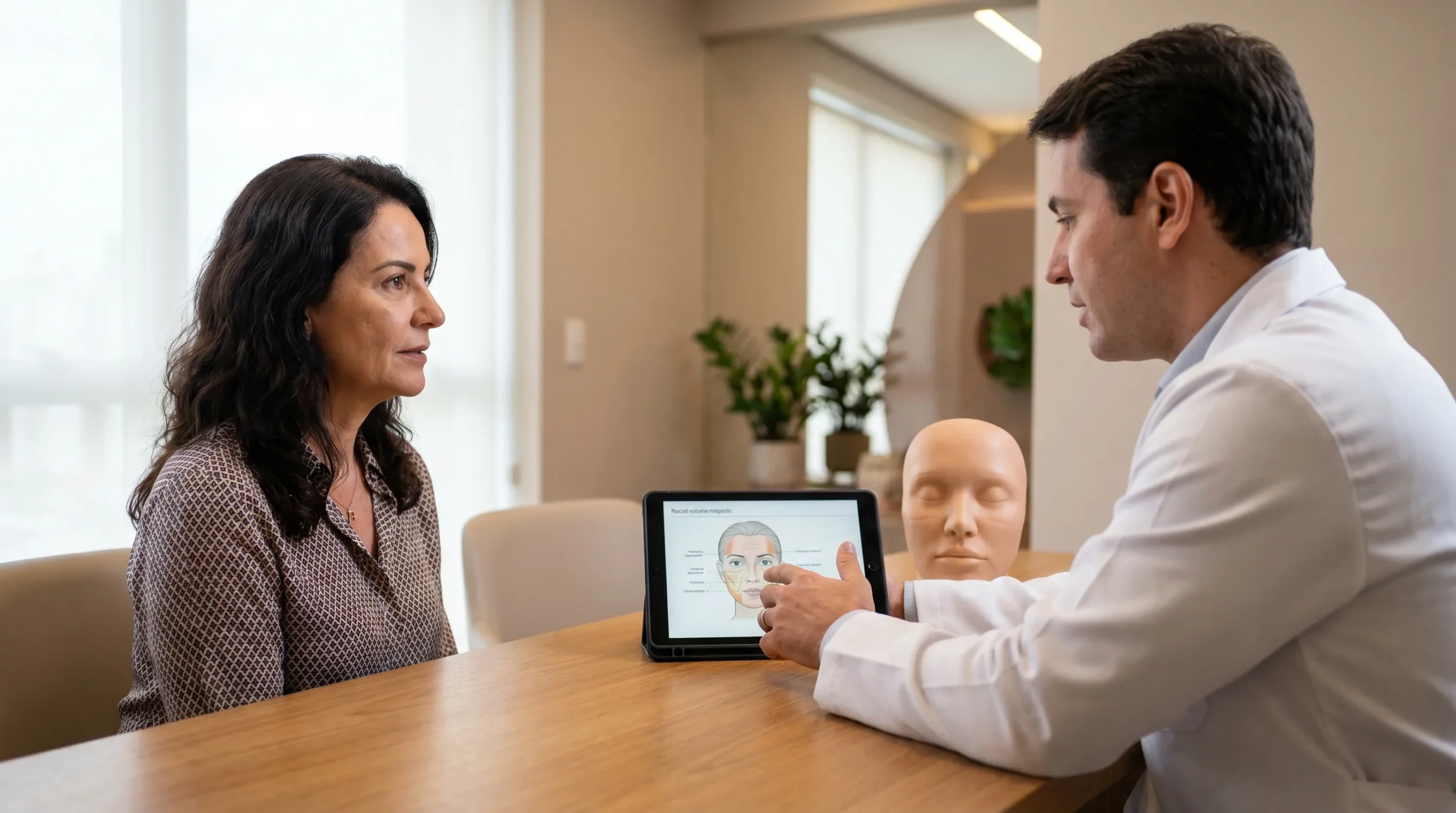
After major weight loss with GLP-1 medication, diet or bariatric surgery, some patients develop both facial laxity and facial volume loss. In selected cases, treatment may need to combine tissue repositioning with volume restoration, such as Deep Plane facelift, neck planning, blepharoplasty and facial fat grafting. The indication is individual and requires an in-person medical evaluation before surgery.
“Ozempic face” is a colloquial term, not a formal diagnosis. It is used to describe facial thinning, deeper folds, hollow temples or cheeks and loose skin after weight loss. Decisions about semaglutide, tirzepatide or other GLP-1 medications should remain with the prescribing clinician; plastic surgery planning begins only when weight, nutrition, health and anatomy are appropriate.
Medical review
Written and reviewed by Dr. Walter Zamarian Jr., plastic surgeon in Londrina, Brazil. CRM-PR 17.388, RQE 15.688, full member of the Brazilian Society of Plastic Surgery (SBCP) and member of the American Society of Plastic Surgeons (ASPS). More than 8,000 surgeries over two decades of practice; today, by deliberate choice, more than 90% of his surgeries are deep plane facelifts with fat grafting — 3 per week (~150 per year). Last reviewed: May 24, 2026.
What changes in the face after major weight loss?
Weight loss can reduce facial fat compartments that normally support the midface, temples, jawline and lid-cheek transition. Some patients notice hollow cheeks, sunken temples, deeper nasolabial folds, loose lower-face skin, neck laxity or eyelids that look more tired.
These problems are not all the same. Laxity, excess skin, volume loss, eyelid aging and neck contour each require a different surgical decision. Treating one issue while ignoring the others can create an unbalanced result.
Why filler or fat alone may not be enough
If the main issue is mild volume loss, non-surgical filler or limited fat grafting may be discussed. But when the face has significant laxity, jowls, neck heaviness or excess skin, adding volume without repositioning tissues can make the face look heavy.
The opposite is also true. Tightening a deflated face without restoring selected volume can exaggerate shadows. For well-selected patients after major weight loss, the plan may combine Deep Plane facelift with facial fat grafting.
When Deep Plane facelift enters the plan
The Deep Plane facelift repositions deeper facial tissues rather than relying only on skin tension. It may be relevant when there is midface descent, jowling, loss of jawline definition, deep folds and skin laxity that volume alone cannot address.
When the neck is part of the aging pattern after weight loss, the plan may include neck lift or deeper neck contouring. When eyelids contribute to a tired look, blepharoplasty may also be evaluated.
When facial fat grafting may help
Facial fat grafting uses the patient’s own fat to restore selected areas such as temples, cheeks, the lid-cheek transition, folds and the perioral region. It can help when there is true volume loss, not just loose skin.
Fat retention is variable. Some volume may be absorbed, and long-term maintenance depends on technique, local blood supply, general health, weight stability and individual biology. Fat contains adipose-derived cells and stromal fraction, but this must be discussed carefully: it is not a stand-alone biological treatment and should not be presented as a skin-renewal promise.
For more detail, read Deep Plane facelift with fat grafting, the guide to Ozempic face and fat grafting and the page on regenerative Deep Plane planning.
When is surgery considered after GLP-1 weight loss?
Timing depends on weight stability and overall health. Surgery is usually more reasonable when the patient is near a stable weight, nutrition is adequate, protein intake is appropriate, lab work is acceptable and the physician managing GLP-1 medication is involved in perioperative planning.
The surgical plan must consider anesthesia risk, delayed gastric emptying, anticoagulants, anemia, smoking, diabetes, hypertension, history of thrombosis and the patient’s ability to follow postoperative instructions.
What can a complete plan include?
- Deep Plane facelift: repositioning deeper facial tissues.
- Neck lift or deep neck work: treatment of neck laxity, platysma bands or submental contour when indicated.
- Blepharoplasty: eyelid surgery when excess skin or lower-eyelid aging contributes to tiredness.
- Facial fat grafting: selective restoration of depleted facial compartments.
- Medical preparation: nutrition, weight stability, risk review and recovery planning.
Not every patient needs every component. The plan should match anatomy and safety, not a rigid protocol.
Risks and red flags
Possible risks include hematoma, bleeding, infection, skin suffering, unfavorable scars, asymmetry, sensory changes, temporary or persistent facial nerve weakness, irregularities, variable fat resorption, nodules, fat necrosis, revision surgery, thrombosis, pulmonary embolism and anesthesia-related complications.
Urgent signs include rapidly increasing one-sided swelling, severe pain, fever, pus, skin color change, shortness of breath, chest pain, calf swelling or neurologic symptoms. These require immediate contact with the surgical team or emergency care.
Frequently asked questions
Can someone taking Ozempic have a facelift?
It may be possible in well-evaluated patients, but timing depends on weight stability, nutrition, medical history, anesthesia risk and guidance from the clinician prescribing the GLP-1 medication. In-person evaluation is required before surgery.
Can fat grafting replace a facelift after weight loss?
Not when laxity is significant. Fat grafting treats volume loss; facelift surgery treats tissue descent and excess skin. Many patients need a combined assessment, but the indication varies.
How long can results last?
Longevity varies with aging, sun exposure, smoking, weight changes, skin quality, genetics, facial volume and follow-up care. See the guide on Deep Plane facelift longevity.
If major weight loss has changed your face, the first step is diagnosis. The plan may range from observation and medical optimization to a combined surgical approach, but it should always be individualized.
Read Also

Dr. Walter Zamarian Jr.
Plastic surgeon in Londrina, Brazil (CRM-PR 17.388 | RQE 15.688), full member of SBCP and ASPS. He has worked in plastic surgery for more than 20 years, with a focus on individualized planning, patient safety, Deep Plane facelift, structural rhinoplasty, and female intimate surgery.
Follow this blog on Google
Want to find more articles from this blog on Google? Add Dr. Walter Zamarian Jr. to your preferred sources.
Deixe um comentário