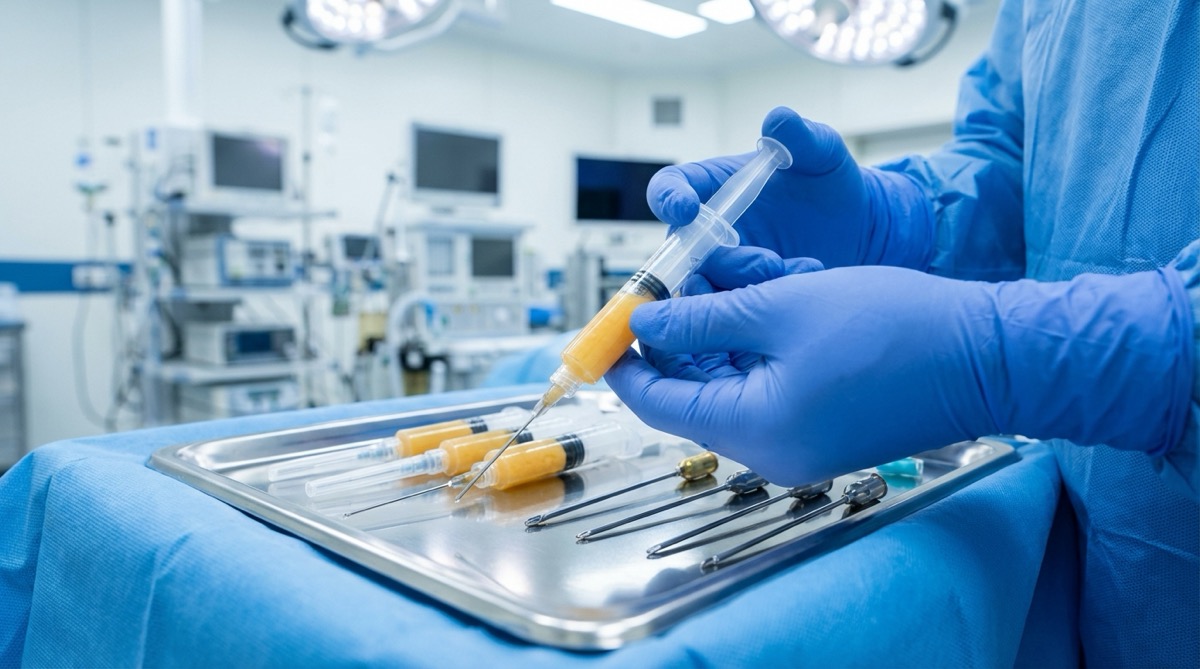
Deep Plane facelift and facial fat grafting are combined in selected patients because lifting repositions descended tissue, while fat grafting restores volume loss that a lift alone cannot correct. When needed, the plan may also include deep neck contouring and blepharoplasty assessment, because facial aging is usually a combination of descent, laxity, neck change, eyelid change and volume deflation.
The goal is not to fill every hollow or tighten every visible fold. The goal is to diagnose which part of aging comes from tissue descent, which part comes from volume loss, which part comes from the neck, and which part belongs to the eyelids. A safe facial rejuvenation plan starts with that distinction.
Medical review
Written and reviewed by Dr. Walter Zamarian Jr., plastic surgeon in Londrina, Brazil. CRM-PR 17.388, RQE 15.688, full member of the Brazilian Society of Plastic Surgery (SBCP) and member of the American Society of Plastic Surgeons (ASPS). More than 8,000 surgeries over two decades of practice; today, by deliberate choice, 2-3 facelifts per week (~100-150 per year). His facial rejuvenation work includes ongoing learning from Dr. Tim Marten and Dr. Mike Nayak in the United States during ASAPS Meetings. Last reviewed: May 24, 2026.
Why a facelift alone may not be enough
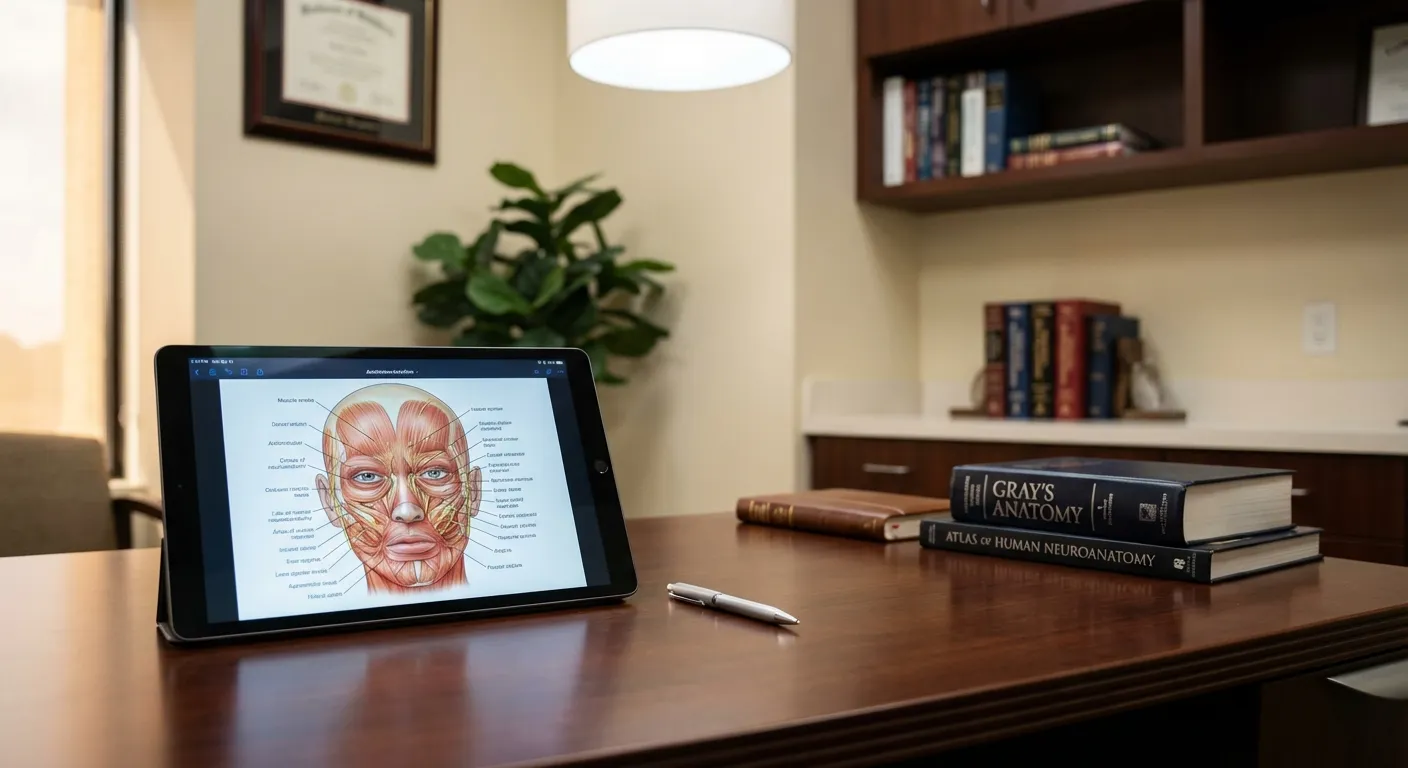
A Deep Plane facelift is designed to reposition deeper facial tissues rather than simply tighten skin. It can improve jowls, cheek descent, jawline definition and the transition between the face and neck. But it does not replace fat that has been lost from the temples, cheeks, tear troughs, lid-cheek junction or perioral region.
This is why some patients look lifted but still tired after a facelift-only plan. The skin and soft tissues may be in a better position, but the face can remain hollow or depleted if volume loss was not addressed. In those patients, facial fat grafting can be considered as part of the same surgical strategy.
What facial fat grafting can do
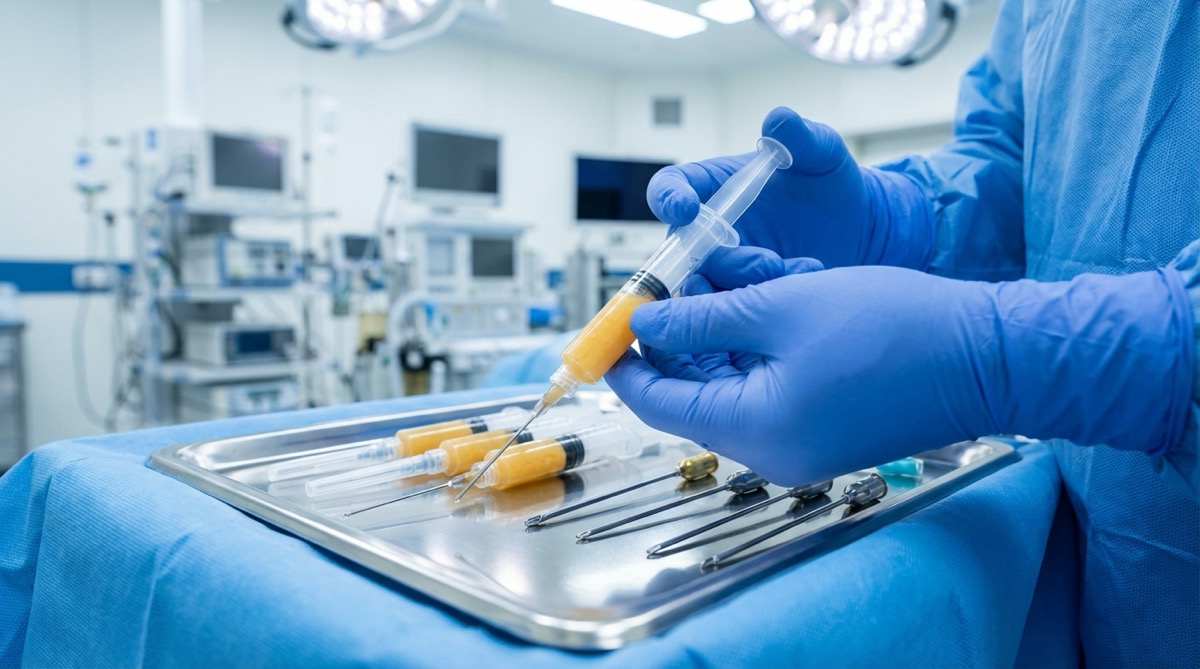
Facial fat grafting, also called autologous fat transfer or lipofilling, transfers a patient’s own fat from a donor area to selected facial compartments. It is used to restore volume in carefully chosen areas, not to inflate the face. Common target zones include the malar region, temples, tear trough region, lid-cheek transition, nasolabial transition and selected perioral areas.
Fat grafting is different from hyaluronic acid filler because it is surgical, not easily reversible, and its retention varies. Some transferred fat is absorbed during healing. The retained volume depends on technique, blood supply, recipient tissue quality, smoking status, inflammation, weight stability and individual biology.
What fat grafting cannot do
Fat grafting does not lift the neck, remove excess eyelid skin, correct jowls by itself, treat platysmal bands or replace a facelift when the main issue is tissue descent. It also should not be presented as routine stem-cell therapy. Fat contains stromal and adipose-derived cells that may contribute to tissue behavior, but the clinical procedure is facial fat transfer, not a guaranteed biological reset.
The complete facial rejuvenation plan
For some patients, the most coherent plan is not one isolated procedure. It is a coordinated plan that treats each layer of aging with the right tool: ptosis, neck laxity, eyelid change and volume loss are related but not identical problems.
- Deep Plane facelift: repositions descended cheek and jawline tissues through a deeper surgical plane.
- Deep neck lift or neck contouring: addresses neck laxity, platysma, subplatysmal fullness or cervicomental angle issues when present.
- Blepharoplasty and eyelid assessment: evaluates eyelid skin, fat pads, lid support and the lid-cheek junction instead of assuming a facelift will correct eyelids.
- Facial fat grafting: restores selected volume deficits to soften transitions and avoid a hollow, over-tightened look.
This combined logic is the reason I often discuss Deep Plane facelift, neck contour, eyelids and fat transfer together. The final recommendation may include all of them, some of them, or none of them, depending on the examination.
Where fat is usually placed
The exact map is individualized. In a patient with hollow temples, fat may be placed conservatively in the temporal region. In a patient with flattened midface, small parcels may be placed in the malar and submalar compartments. In the lower eyelid transition, the plan must be especially conservative because swelling, irregularity or overcorrection can be difficult to hide.
The technical principle is small-volume placement in multiple passes, respecting vascular anatomy and tissue planes. More volume is not better. The best fat grafting usually looks like restored facial continuity, not visible filling.
Who may be a good candidate?
The combined approach may fit patients with visible facial descent and true volume loss: jowls with cheek flattening, neck laxity with midface deflation, hollow temples, lid-cheek hollowing or an aged face that looks both descended and depleted. Candidates should be healthy enough for surgery, understand the recovery, avoid nicotine and accept that fat retention is variable.
It may not be appropriate for patients who primarily need skin care, weight stabilization, eyelid-only surgery, non-surgical volume correction, or psychological support for unrealistic expectations. Patients actively losing weight, especially after major GLP-1-related weight changes, may need to stabilize before surgery is planned.
Recovery when procedures are combined
Combining fat grafting with a Deep Plane facelift can increase swelling and bruising in the treated areas, even when it does not radically change the overall recovery plan. Early swelling can make the face look fuller than intended. As healing progresses, some transferred fat is absorbed and the final volume becomes clearer over months.
Most patients need a staged mindset: the first weeks are about swelling, bruising, incision care and rest; the next months are about definition, scar maturation, neck contour and fat retention. Final judgment should not be rushed.
Risks and red flags
Deep Plane facelift with fat grafting is still surgery. Risks include anesthesia-related problems, bleeding, hematoma, infection, delayed healing, visible or widened scars, skin suffering, nerve irritation or injury, asymmetry, contour irregularity, prolonged swelling, numbness, hairline or earlobe changes, fat undercorrection or overcorrection, fat necrosis or oil cysts, donor-site bruising, donor-site contour change, DVT, pulmonary embolism, dissatisfaction and possible revision.
Urgent red flags include severe one-sided swelling, rapidly expanding bruising, intense pain, fever, pus, skin color change, shortness of breath, chest pain, calf swelling, visual change or neurologic symptoms. These require immediate contact with the surgical team or emergency care.
Frequently asked questions
Why combine Deep Plane facelift and fat grafting?
They treat different parts of facial aging. Deep Plane facelift repositions descended tissue, while fat grafting restores selected volume loss. In the right patient, combining them can create a more balanced plan than either technique alone.
Is fat grafting the same as filler?
No. Fat grafting is a surgical transfer of the patient’s own fat, with variable retention and recovery. Hyaluronic acid filler is an injectable material that can be useful in selected non-surgical cases, but it does not replace surgical lifting or neck correction.
Is this stem-cell treatment?
No. Routine facial fat grafting should not be marketed as stem-cell treatment. Fat contains stromal and adipose-derived cells, but the clinical procedure is volume restoration with autologous fat transfer, and outcomes vary by patient.
Can blepharoplasty be part of the same plan?
Yes, in selected patients. Eyelid aging is evaluated separately because a facelift does not remove eyelid skin or correct every lower-eyelid fat-pad issue. Blepharoplasty may be combined only when the anatomy and safety profile justify it.
Will all grafted fat survive?
No. Some transferred fat is absorbed during healing, and retention varies. This is why careful planning, conservative placement and follow-up matter more than adding excessive volume at the first operation.
How I plan this in Brazil
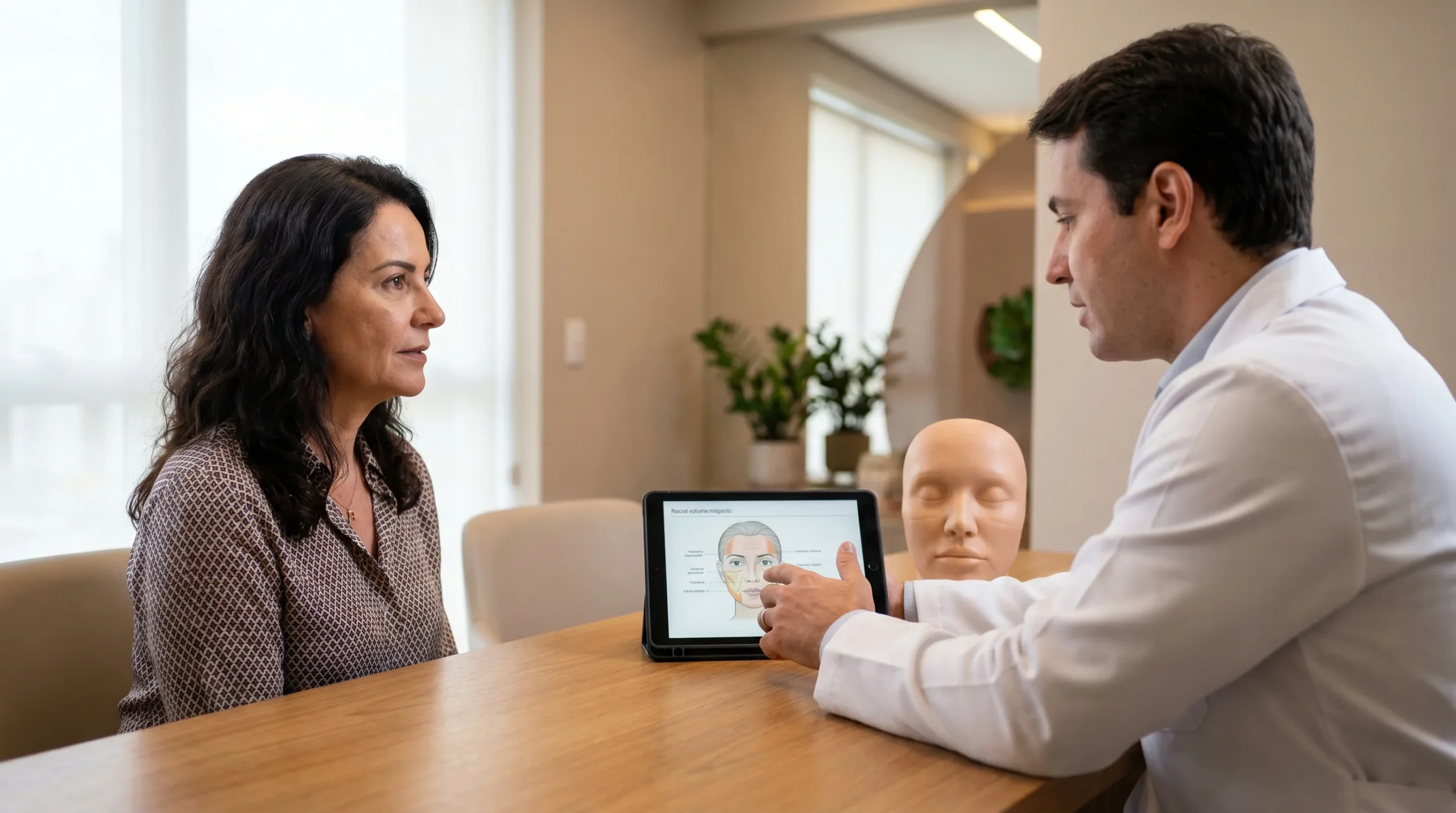
During consultation, I evaluate the face, neck, eyelids, skin quality, volume distribution, prior procedures, weight stability, donor areas and expectations. For international patients, an online consultation can help with preliminary planning, but the final surgical indication requires in-person examination in Londrina.
For deeper reading, see the pages on Deep Plane facelift, regenerative Deep Plane planning, facial fat grafting, neck lift and blepharoplasty. Related blog guides include facial fat grafting and fat grafting versus dermal fillers.