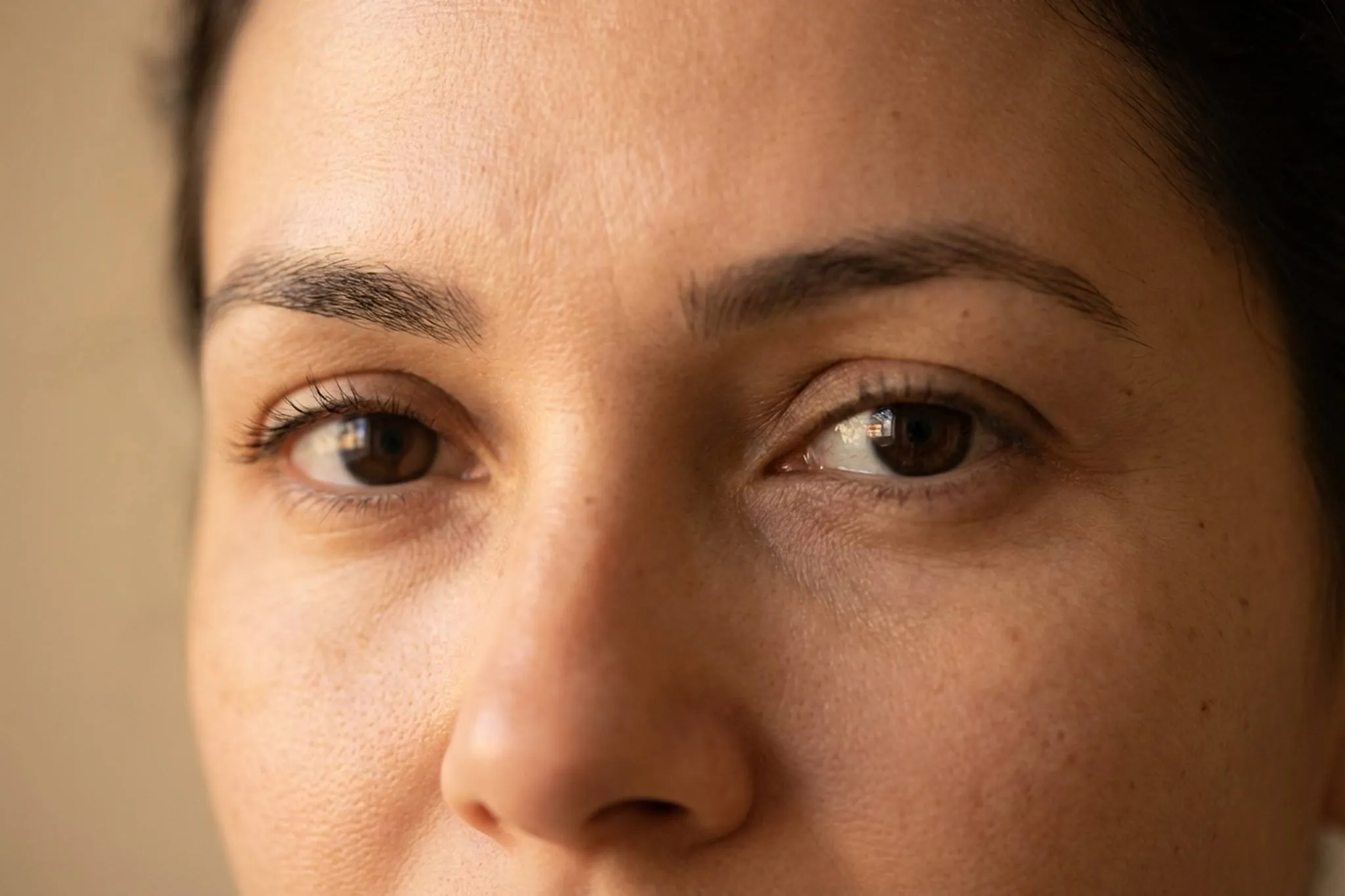
Transconjunctival Blepharoplasty in Brazil: goodbye to under-eye bags without any external scarring
If you have bags under your eyes that give you a tired, aged, or sad appearance, but your skin is still firm and without excess, I have excellent news: there is a surgical technique capable of eliminating these bags without leaving any visible marks on the skin. This technique is called transconjunctival blepharoplasty, and throughout my more than twenty years of experience as a plastic surgeon in Brazil, with over eight thousand surgeries performed, I can say it is one of the most elegant and rewarding eyelid surgeries I perform. International patients seeking eye bag removal as part of their cosmetic surgery abroad journey frequently choose this scarless approach at my clinic in Brazil.
Transconjunctival blepharoplasty differs from traditional blepharoplasty in one fundamental aspect: the entire surgery is performed from inside the lower eyelid, through the conjunctiva — that pink membrane that lines the inside of the eyelid. There is no cut on the skin, no external sutures, no visible scars. The fat that forms the bags is accessed, removed, or redistributed exclusively from the inside.
This approach is especially recommended for younger patients, generally between twenty-five and fifty years old, who have hereditary or early under-eye bags but have not yet developed excess skin or significant sagging in the lower eyelids. These are the people who look in the mirror and see a young face, but with bags that do not match their actual age.
Why bags appear even in young people
Many of my patients are surprised when I explain that bags under the eyes are not always a sign of ageing. In fact, a significant portion of the cases I see in my clinic in Brazil involves young patients with genetic predisposition. What happens is simple: the fat that normally protects the eyeball within the orbit begins to protrude forward, pushing the skin of the lower eyelid and creating that characteristic bulge.
There are three compartments of fat in the lower eyelid — the nasal (medial), the central, and the lateral — and any of them can herniate, either alone or in combination. Herniation of the nasal fat is the most common and the most noticeable, as it creates a bulge near the nose that generates shadows and deepens the nasojugal groove, that depression that goes from the inner corner of the eye to the cheek.
When the problem is exclusively fatty, without excess skin, the transconjunctival route is the perfect choice. It makes no sense to create an external scar to treat a problem that can be resolved entirely from the inside.
How transconjunctival blepharoplasty works
I consider transconjunctival blepharoplasty one of the most refined techniques in eyelid surgery. The entire procedure is performed through a small incision in the conjunctiva, the mucous membrane that lines the inside of the lower eyelid. As the conjunctiva heals spontaneously in a few days — without the need for sutures in most cases — there are absolutely no visible marks left.
During the surgery, I gently evert the lower eyelid and make an incision of approximately one centimetre in the conjunctiva. Through this small opening, I have direct access to the three compartments of orbital fat. With delicate and precise instruments, I identify each fat bag, assess its volume, and decide on the best strategy: partial removal, total removal, or redistribution.
Removal versus redistribution of fat
The decision between removing and redistributing fat is one of the most important points of the surgery. In many patients, especially those with a deep nasojugal groove — that depression that goes from the corner of the eye towards the cheek — the best strategy is not simply to remove the fat, but rather to reposition it. I release the herniated fat and shift it downwards, filling the nasojugal groove and creating a smooth transition between the eyelid and the cheek.
This redistribution technique is particularly elegant because it solves two problems with a single manoeuvre: it eliminates the bag and fills the depression. In other patients, where there is real excess fat without significant depressions, controlled partial removal is the most appropriate path. The secret lies in removing only what is necessary. Removing excess fat can create a skeletal and aged appearance, which is exactly the opposite of what we seek.
The surgery is outpatient
Transconjunctival blepharoplasty is performed under local anaesthesia with sedation, on an outpatient basis. You arrive at the clinic, undergo the procedure, and go home the same day. The average duration is forty-five minutes to one hour, depending on the complexity of the case. It is an extremely safe surgery when performed by an experienced plastic surgeon with a deep understanding of orbital anatomy.
Who is transconjunctival blepharoplasty recommended for
The appropriate selection of patients is fundamental for the success of this surgery. Over more than eight thousand surgeries, I have learned that the correct recommendation is as important as the surgical technique itself. Transconjunctival blepharoplasty is ideal for a specific patient profile:
- Under-eye bags without excess skin: the patient presents herniation of fat in the lower eyelid, but the skin is still firm, elastic, and without significant excess.
- Young patients with genetic predisposition: people between twenty-five and fifty years old who have inherited the family tendency to eyelid bags.
- Deep nasojugal groove: when the depression between the eyelid and the cheek is pronounced and can be corrected with redistribution of orbital fat.
- Patients who desire zero scarring: for whom the complete absence of external marks is a priority.
- Structural dark circles due to shadow: when the dark circle is caused by the shadow projected by the bags, and not by pigmentation or visible blood vessels.
When transconjunctival is NOT recommended
I need to be honest: transconjunctival blepharoplasty does not solve all problems of the lower eyelid. If you have excess skin, pronounced wrinkles, or significant muscle laxity, the transcutaneous approach (from the outside) is more suitable. In these cases, the traditional lower blepharoplasty allows for the removal of both fat and excess skin in a single procedure.
Similarly, patients with ptosis of the eyelid — the drooping of the upper eyelid — require a different and specific approach to this problem. During the consultation, I perform a complete assessment of all periocular structures to determine which technique offers the best result for your specific case.
In some intermediate cases, I may combine the transconjunctival approach with a procedure called "pinch blepharoplasty," where I remove a thin strip of skin just below the eyelashes. This allows me to treat both the fat (from the inside) and a small excess of skin (from the outside) with minimal scarring.
Advantages over traditional blepharoplasty
Transconjunctival blepharoplasty offers significant advantages when compared to the traditional transcutaneous technique. These advantages are not theoretical — they are real differences that I observe daily in my clinical practice in Brazil:
Total absence of external scarring
This is the most obvious advantage and the main reason why many patients specifically seek this technique. There is no incision in the skin, no visible sutures, and no scar maturation period. The day after the surgery, if someone looks at your eyelids, they will see absolutely no sign that you have undergone a surgical procedure.
Significantly faster recovery
As there is no dissection of the skin or the orbicular muscle, recovery is remarkably shorter and more comfortable. Swelling is less, bruising is more discreet, and most patients are presentable in five to seven days. Compare this to traditional blepharoplasty, where complete recovery can take two to three weeks.
Lower risk of complications
The transconjunctival approach virtually eliminates two risks of the transcutaneous surgery that have always concerned me: ectropion (outward turning of the eyelid) and lower eyelid retraction. These complications occur when there is shortening or excessive scarring of the eyelid skin after the external approach. As we do not touch the skin in the transconjunctival technique, these risks are practically zero.
Preservation of natural anatomy
By accessing the fat from the inside, I fully preserve the orbicular muscle, the orbital septum, and the eyelid skin. This means that the natural shape of your eyes is maintained, without any alteration in the position or dynamics of the eyelids. The result is absolutely natural.
Possibility of facilitated revision
If for any reason a future revision is necessary, the transconjunctival approach is simpler to reoperate, as there are no scar adhesions in the skin. The anatomy has been preserved, which facilitates any complementary intervention.
The consultation: detailed assessment of your case
I dedicate significant time to the consultation because I believe that inadequate assessment is the main cause of unsatisfactory results in eyelid surgery. In my clinic in Brazil, I examine each patient with attention to details that many may consider subtle, but that make all the difference in the final result.
What I assess during the consultation
- Quantity and distribution of under-eye bags: I identify which of the three compartments (nasal, central, and lateral) are herniated and to what degree.
- Quality and elasticity of the skin: I perform the "snap-back" test — I gently pull the lower eyelid down and assess the speed at which it returns to its normal position. Skin with good elasticity returns instantly.
- Presence of nasojugal groove: I assess the depth of the depression between the eyelid and the cheek to decide if redistributing the fat is an option.
- Tone of the orbicular muscle: I check if the muscle surrounding the eye has good tone, which is essential for eyelid support.
- Position of the lower eyelid in relation to the iris: a naturally low eyelid may require complementary techniques to prevent retraction.
- Ocular prominence: more prominent eyes (proptosis) require a more conservative approach.
- Asymmetries: every face has natural asymmetries that I need to consider in the planning.
Necessary examinations
I request basic pre-operative tests that include a full blood count, coagulation profile (PT and aPTT), blood glucose, creatinine, and ECG. Patients over forty years old or with specific health conditions may require a pre-operative cardiac assessment.
I advise the discontinuation of medications that increase the risk of bleeding — such as acetylsalicylic acid, anti-inflammatories, vitamin E, omega 3, and ginkgo biloba — for two weeks before and two weeks after the surgery.
The procedure step by step
I believe that understanding each step of the surgery helps to reduce anxiety and build confidence. I will describe exactly how I perform transconjunctival blepharoplasty in my clinic in Brazil:
Anaesthesia and preparation
The surgery is performed under local anaesthesia with sedation. You will be relaxed and comfortable, but conscious. I apply anaesthetic eye drops and infiltrate local anaesthetic in the lower eyelid. Special eye protectors are positioned to protect the cornea throughout the procedure.
Transconjunctival access
With the lower eyelid gently everted, I make an incision of approximately one centimetre in the conjunctiva, in the region of the inferior fornix (the fold between the eyelid and the eyeball). This incision is made with an electric scalpel, which simultaneously cauterises and minimises bleeding.
Treatment of under-eye bags
Through this opening, I sequentially access the three fat compartments. Each bag is carefully identified, isolated, and treated individually. The amount removed or redistributed is assessed in real time, with the patient sitting during the surgery to check for symmetry and the result.
Redistribution of fat (when recommended)
In cases where I opt for redistribution, I release the herniated fat from the nasal compartment and reposition it over the lower orbital rim, filling the nasojugal groove. I secure the fat in its new position with delicate absorbable sutures. This manoeuvre completely transforms the transition between the eyelid and the cheek.
Closure
In most cases, the conjunctiva does not require suturing — it heals spontaneously in three to five days. In some situations, I apply one or two very fine absorbable sutures to ensure proper closure. There is no external dressing. I only apply an ophthalmic ointment and cold compresses.
Recovery: what to expect after surgery
One of the greatest advantages of transconjunctival blepharoplasty is the quick and relatively comfortable recovery. But I need to be realistic with you — every surgery has a recovery period, and it is important to know exactly what to expect.
First 24 to 48 hours
There will be moderate swelling in the lower eyelids and possibly some bruising (purple spots). Apply cold compresses intermittently — twenty minutes with a compress, twenty minutes without. Keep your head elevated, even while sleeping, using two or three pillows. Avoid physical exertion, bending your head down, and lifting weights.
You may feel a slight sensation of sand in your eyes or mild tearing. This is completely normal and results from the incision in the conjunctiva, which is healing. The eye drops I prescribe help to keep your eyes lubricated and comfortable.
First week
The swelling peaks around the second day and begins to decrease progressively. Bruising, when present, descends by gravity towards the cheeks and changes colour — from purple to greenish and then yellowish — until it completely disappears between seven and fourteen days.
Most of my patients are presentable for social activities in five to seven days. Makeup can be used carefully from the fifth day, as long as it is not applied directly to the eyelid edge.
First month
The result is already quite evident, although a slight residual swelling may persist. Avoid direct sun exposure on the eyelids and wear UV-protective sunglasses when going out. Physical activities can be gradually resumed after two weeks.
Final result
The final result establishes itself between two and three months, when all residual swelling has subsided and the tissues have settled into their final position. The result is long-lasting — the fat removed does not accumulate again. In young patients, the result can be considered permanent.
Risks and complications: total transparency
As with any surgical procedure, transconjunctival blepharoplasty has risks, although they are considerably lower compared to the transcutaneous technique. I make it a point to discuss each of them transparently during the consultation.
Haematoma
This is the most frequent complication, although it is still rare. A small accumulation of blood may occur in the first few hours after surgery. In the vast majority of cases, the haematoma resolves spontaneously. In exceptional cases where the bleeding is more significant, a revision for drainage may be necessary.
Prolonged swelling
Some patients experience swelling that persists beyond the usual period. This is more common in people with very fair skin, a tendency for fluid retention, or those who do not adequately follow postoperative instructions. It resolves spontaneously but may take up to two months in more persistent cases.
Asymmetry
Small asymmetries may be noticeable in the immediate postoperative period, usually related to differences in swelling between the two sides. In most cases, symmetry is restored as the swelling subsides. True asymmetries, which persist after the complete resolution of swelling, are rare and can be corrected with minor touch-ups.
Insufficient or excessive fat removal
This is the risk that most depends on the surgeon's experience. Removing too little fat means an insufficient result. Removing too much creates a skeletal appearance with an aged look. My experience of over two decades allows me to accurately calibrate the ideal amount to be treated in each compartment.
Chemosis
This is swelling of the conjunctiva that may occur in the first few days. It appears as a transparent "gelatin" over the white part of the eye. Although visually alarming, it is a minor complication that resolves spontaneously with lubricating eye drops in a few days.
Serious risks such as eye injury, severe infection, or vision loss are extremely rare when the surgery is performed by an experienced plastic surgeon in an appropriate surgical environment. In over twenty years of practice, I have never had a serious complication in blepharoplasty.
Procedures that can be combined
One of the great advantages of transconjunctival blepharoplasty is that it can be easily combined with other procedures in the same surgical time, enhancing the rejuvenation of the eye area and the face as a whole.
Upper blepharoplasty
The most frequent combination in my practice. Many patients who have lower bags also have excess skin on the upper eyelids. Performing upper and lower blepharoplasty in the same surgical procedure offers complete rejuvenation of the gaze, with a single recovery.
Periocular fat graft
The fat graft is an extraordinary complement for patients who, in addition to bags, have significant volume loss in the periocular area. The grafted fat fills depressions around the eyes, softens deep dark circles, and brings with it stem cells that regenerate skin quality. It is a perfect marriage of techniques.
Facial fillers
In selected cases, hyaluronic acid filler in the nasojugal groove area can complement the result of transconjunctival blepharoplasty, especially when there is volume loss in the middle third of the face that exceeds what orbital fat redistribution can correct.
Facelift
For patients who, in addition to bags, have significant facial sagging, combining transconjunctival blepharoplasty with a facelift or mini facelift offers complete and balanced rejuvenation. Blepharoplasty is always performed at the beginning of the surgery when the tissues are still not swollen.
Botulinum toxin
Three to four weeks after surgery, when recovery is already advanced, the application of botulinum toxin in the crow's feet and glabellar region brilliantly complements the result. The dynamic wrinkles that the surgery does not address are softened, and the rejuvenation of the gaze is complete.
Transconjunctival blepharoplasty versus non-surgical treatments
In recent years, various treatments have emerged that promise to eliminate bags under the eyes without surgery: radiofrequency, microfocused ultrasound, laser, injectable deoxycholic acid. I need to be honest with you: none of these treatments resolve true under-eye bags.
Understand the fundamental difference: eyelid bags are caused by the herniation of orbital fat through a weakened septum. No non-invasive technology is capable of returning this fat inside the orbit or removing it without surgery. Non-surgical treatments can improve skin quality, discreetly reduce swelling (fluid retention), or stimulate collagen production. But they do not eliminate under-eye bags.
Do the math: a series of sessions of radiofrequency, laser, and biostimulators over a year can cost between ten to thirty thousand reais, with modest and temporary results. Transconjunctival blepharoplasty resolves the problem definitively in less than an hour, with a single recovery. It is the difference between treating symptoms and resolving the cause.
When non-surgical treatments make sense
That said, I am not against non-surgical aesthetic treatments. They have valid uses and can complement surgery. For morning eyelid swelling, dietary changes and lymphatic drainage can help. For pigmentation (dark circles), peels and fractional laser can improve. For fine wrinkles around the eyes, botulinum toxin is excellent. But for under-eye bags, surgery remains the only definitive solution.
My experience and training
I graduated from the State University of Londrina and had the privilege of being a student of Professor Ivo Pitanguy, the greatest name in Brazilian plastic surgery and one of the most respected in the world. With him, I learned not only surgical techniques but a philosophy of respect for the patient and the pursuit of excellence in every detail.
Over more than twenty years of practice, I have performed over eight thousand plastic surgeries. Blepharoplasty, in all its variants, is one of the procedures I perform the most. I am a full member of the Brazilian Society of Plastic Surgery (SBCP) and the American Society of Plastic Surgeons (ASPS), constantly keeping myself updated with the advances in the specialty through national and international congresses.
The periocular region requires a level of millimetric precision. We are talking about delicate structures — the thinnest skin on the human body, muscles only a few millimetres thick, fat that protects the eyeball. An error of just one or two millimetres can compromise the aesthetic result and, in extreme cases, affect eyelid function. That is why the experience accumulated over decades makes all the difference in this type of surgery.
Why trust me for your blepharoplasty
I do not promise miracles. I promise honesty, refined technique, and absolute dedication to your result. If during the consultation I perceive that transconjunctival blepharoplasty is not the best option for your case — if you need a transcutaneous approach, or if your expectations are not realistic — I will say this clearly and respectfully. I prefer to lose a surgery than to make a patient unhappy.
Frequently Asked Questions about Transconjunctival Blepharoplasty
What is the difference between transconjunctival blepharoplasty and traditional blepharoplasty?
The fundamental difference lies in the surgical access. In transconjunctival, the incision is made inside the eyelid, through the conjunctiva, without cutting the skin. In traditional (transcutaneous), the incision is made on the skin, just below the eyelashes. Transconjunctival does not leave an external scar, has a quicker recovery, and a lower risk of eyelid retraction. However, it does not allow for the removal of excess skin, being recommended only when the problem is exclusively fat.
Does the surgery hurt?
The surgery is performed under local anaesthesia with sedation, so you will not feel pain during the procedure. In the postoperative period, discomfort is minimal — more of a feeling of heaviness or pressure on the eyelids than actual pain. Most patients report that recovery is much more comfortable than they imagined. Simple painkillers are sufficient for the first few days.
How long does the surgery take?
Isolated transconjunctival blepharoplasty lasts between forty-five minutes and one hour. When combined with upper blepharoplasty or other procedures, the total time can vary from one and a half to two and a half hours.
When can I return to work?
For remote work or activities that do not require public presentation, three to five days. For in-person activities, five to seven days. For intense physical effort, two weeks. Contact lenses can be used again after seven to ten days.
Is the result permanent?
The fat removed does not return. In this sense, the result is permanent. However, the natural process of ageing continues, and over time other eyelid changes may arise — such as excess skin or sagging — which may eventually require complementary treatment in the future.
Is there a risk of having uneven eyes?
Small transient asymmetries are common in the immediate postoperative period due to differences in healing and swelling between the two sides. Significant and permanent asymmetries are rare when the surgery is performed by an experienced surgeon who carefully assesses symmetry during the procedure.
Can I have the surgery on both eyes at the same time?
Yes, and this is the standard procedure. I operate on both lower eyelids in the same session. This ensures better symmetry, a single recovery, and lower total cost.
Does transconjunctival blepharoplasty resolve dark circles?
It depends on the type of dark circle. If the dark circle is caused by the shadow projected by the under-eye bags and the deep nasojugal groove, yes — the surgery can significantly improve it. If the dark circle is caused by pigmentation (excess melanin), visible blood vessels, or very thin skin, the surgery alone does not resolve it, although it can be complemented with other specific treatments.
Can I combine it with hyaluronic acid fillers?
Yes, and in many cases this combination is extremely advantageous. The surgery removes or redistributes the herniated fat, while the filler can treat adjacent areas of volume loss. I generally recommend waiting at least two months after the surgery to assess whether complementary filler is truly necessary.
What is the minimum age to have this surgery?
There is no fixed minimum age. I have operated on patients from the age of twenty-five who had significant hereditary bags that affected their self-esteem and quality of life. The recommendation is based on the presence of the anatomical problem, not on chronological age.
What happens if I do not treat the bags?
The under-eye bags tend to progressively increase over time. The fat continues to herniate and the orbital septum weakens more and more. Additionally, with ageing, excess skin may arise that would make transconjunctival blepharoplasty less suitable, requiring a more extensive approach in the future. Treating early, when only fat is the problem, allows for simpler surgery and better recovery.
Book via WhatsApp
If you have made it this far, it is because you are seriously considering transconjunctival blepharoplasty. The next step is simple: book a consultation with me in Brazil. My team is ready to assist you, answer your questions, and find the best time for your evaluation.
Learn more about the first consultation, the pricing, and the guidelines for pre-surgical preparation and post-operative recovery.
Are you ready for this new change? Book now!

Dr. Walter Zamarian Jr.
Plastic Surgeon in Brazil
Rua Engenheiro Omar Rupp, 186
Londrina - Brazil
ZIP 86015-360
Brazil
YouTube Channel: Dr. Walter Zamarian Jr.
Follow on Instagram: @drwalterzamarianjr
Follow on TikTok: @drwalterzamarianjr
Search on our website:
This page in other languages:
Portuguese (BR) | English (US) | English (UK) | Italian | French | Spanish