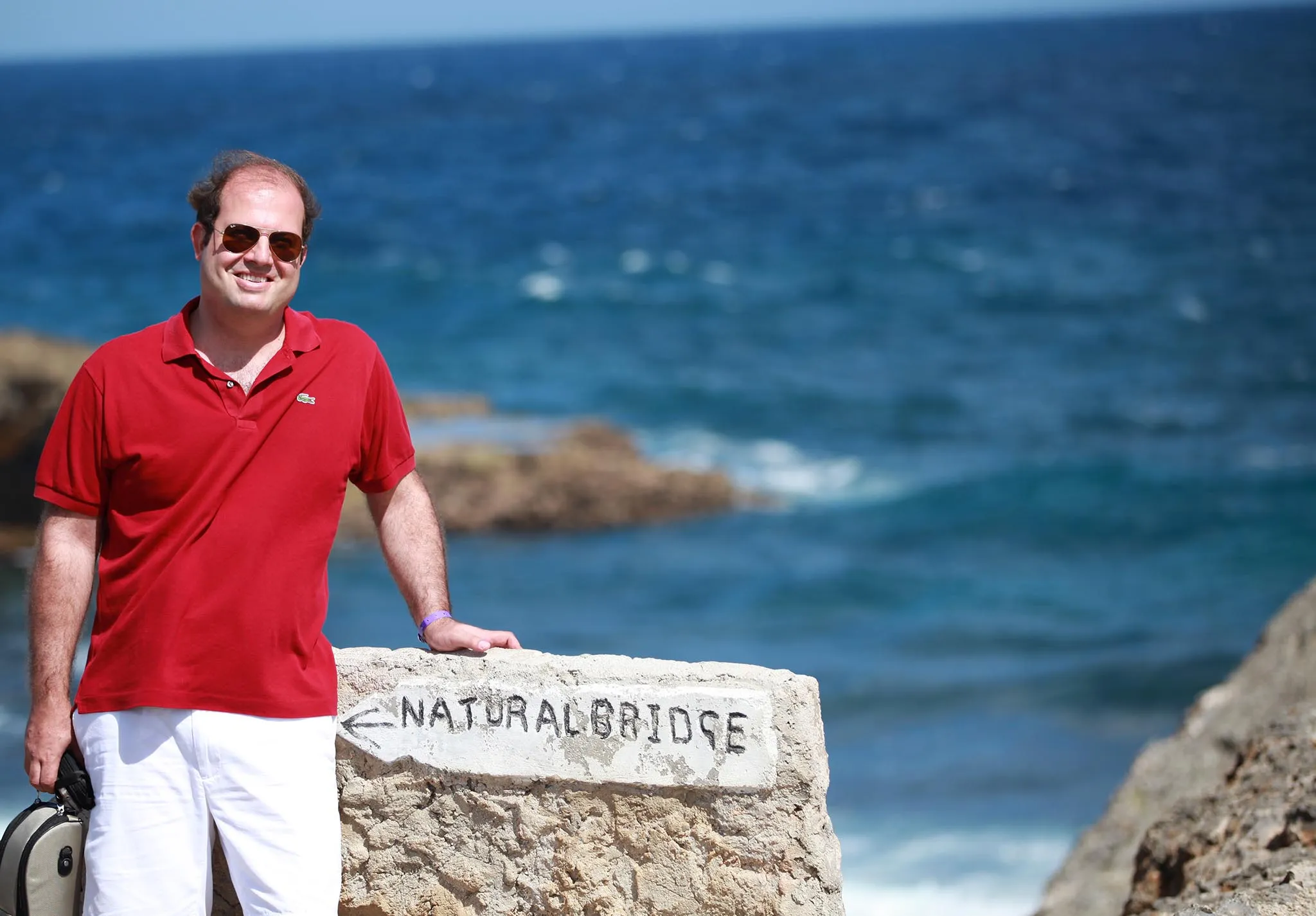
My mission: natural-looking results with responsible surgical planning
More than 22 years dedicated to specialised plastic surgery care
When I was a child, I thought my father was a magician. I imagined that he put a sheet of plastic over a patient’s face and, when he removed it, she looked beautiful. That was how I made sense of plastic surgery. The study, responsibility and care behind it were things I would understand much later.
Today, after more than 8,000 procedures and more than 22 years of practice, I aim to put that experience to work for each person I see. Ivo Pitanguy trained and a member of the SBCP and ASPS, I serve patients from all over Brazil and abroad, with the commitment to plan procedures that respect the identity, anatomy, and expectations of each person. International patients considering medical tourism in Brazil will find in me a surgeon who speaks five languages and understands diverse cultural expectations.
CRM-PR 17.388 | RQE 15.688
Subscribe to my YouTube channel:
Subscribe on YouTubeA family story, a path of my own
I was born in Cornélio Procópio, Paraná, while my father was training with Professor Ivo Pitanguy in Rio de Janeiro. I returned from Rio de Janeiro at the age of two. After qualifying, my father set up his practice in Londrina. At the time, many people needed him to explain what plastic surgery could involve.
I was nine when he died following a car accident. From then on, I carried a wish to continue the work he had been unable to finish. I studied medicine and completed my general surgery residency at the State University of Londrina, staying close to the family who had supported me through the loss.
Joining Pitanguy’s plastic surgery residency brought a sense of belonging. Several teachers had known my father, and Professor Pitanguy spoke with me about him on a number of occasions. In my first year, I was one of two residents chosen to work at his private clinic, alongside training at the 38th Ward of Santa Casa in Rio de Janeiro.
I was invited to remain on the team after residency. But I missed Londrina and my family, so I returned in 2004. Establishing my practice where my father had worked made this much more than a professional homecoming.
My foundation, my own direction
My further study took me to the United States and Canada. I first encountered facial fat grafting at an ASAPS meeting in Las Vegas in 2009. Some years later, in New Orleans, I saw refinements that led me to adopt it. I have now combined fat grafting with facelift surgery for more than ten years.
Tim Marten’s conference presentations helped me refine my approach to fat grafting; Mike Nayak’s informed my study of the deep plane technique. During residency, I had learnt SMAS plication with Pitanguy and SMAS dissection while assisting Marcelo da Cunha Araújo. Each experience contributed something different to my understanding of facial surgery.
A right shoulder tendon injury during liposuction prompted another change. To protect my shoulder, I stopped undertaking body operations that often involved hours of liposuction. I concentrated on the face, nose, eyelids and female intimate surgery, areas in which I already had a particular interest.
I bring that experience to the consultation, together with a willingness to listen. I want you to understand what is possible, what the limitations are and what care involves before you decide.
Every decision in facial surgery should have a reason
My experience leads me to consider support, volume, the neck and the eyelids together. Deep plane and deep neck surgery address different structures; fat grafting can restore volume, whilst blepharoplasty addresses eyelid changes. An individual assessment determines which steps are appropriate.
Adopting a technique has never been about following a trend. It involves study, following its development and understanding what it may add to care. When we discuss your plan, I explain the limitations and risks too.
And if it is your nose you would like to change?
That same attention to the whole picture guides my rhinoplasty practice. I want to understand your concerns about appearance and hear about your breathing. Both help build an assessment that goes beyond a photograph.
During the consultation, I explain what surgery may address, the constraints of your anatomy and what recovery involves.
Space for your most personal questions
I bring the same willingness to listen to female intimate surgery, which remains another focus of my work. A welcoming consultation offers privacy to discuss discomfort and concerns.
Your account and examination guide our conversation about options and care. Any decision needs to make sense for you.
Beyond borders: fluency in five languages
Caring for international patients at Pitanguy’s clinic broadened my outlook. During residency I spoke Portuguese, English, Spanish and French; I learnt Italian after completing my training. Those conversations taught me to listen to different expectations and concerns. I now see patients from Brazil and abroad in all five languages.
I regularly receive patients from the United States, Europe, Japan, and Latin American countries. Direct communication, without translators, makes a difference: I can understand nuances, cultural expectations, specific fears. And the patient feels more secure knowing they will be understood.
For those coming from afar, my team organises logistics such as accommodation near the clinic, transport, and post-operative follow-up planning. Distance requires careful preparation, especially for surgical recovery and return travel.
Contribution to medicine: the Burn Centre of Londrina
I helped establish the Burn Centre at the University Hospital of Londrina, where I had trained in general surgery. I worked there on Sundays, until the demands of my private practice meant I no longer had a day off and needed to step away. It remains an important part of my history in Londrina; my work today is centred on my clinical and surgical practice.
Care carries on after surgery
I operate at Hospital do Coração — Unidade Bela Suíça in Londrina. On the evening of surgery, I visit my patients in hospital; we meet again the following day.
Follow-up appointments are scheduled for 1, 2, 7, 10 and 14 days; 1, 2 and 6 months; and one year. Before surgery, we also have the initial consultation and a pre-operative appointment. At each stage, I want you to understand the plan and feel able to ask questions.
Credentials and associations
- Full Member of the SBCP — Brazilian Society of Plastic Surgery
- Member of the ASPS — American Society of Plastic Surgeons
- Member of the AExPI — Association of Alumni of Professor Ivo Pitanguy
- Graduated in Medicine from the State University of Londrina (UEL)
- Specialisation in Plastic Surgery from the Ivo Pitanguy Clinic / PUC-RIO
"Plastic surgery is, for me, the opportunity to combine technical planning with aesthetic judgement. I seek balance between anatomy, identity, and realistic expectations."
All of my degrees and registrations — with the scanned documents and the official sources to verify each one — are published on the Credentials & Titles page.
Receiving support taught me why offering it matters. It is the connection between the boy who admired his father and the surgeon you meet today. If you would like to talk about your own story, my team can help arrange a consultation.
Book via WhatsApp
To discuss whether surgery is appropriate for your case, contact Zamarian Clinic and book an appointment. You can also start with an online consultation, review the pricing details, or explore our results gallery.

Dr. Walter Zamarian Jr.
Plastic Surgeon in Londrina - Brazil
Rua Engenheiro Omar Rupp, 186
Londrina - Brazil
ZIP 86015-360
Brazil
YouTube Channel: Dr. Walter Zamarian Jr.
Follow on Instagram: @drwalterzamarianjr
Follow on TikTok: @drwalterzamarianjr
Search on our website:
This page in other languages:
Portuguese (BR) | English (US) | English (UK) | Italian | French | Spanish
Frequently Asked Questions about Dr. Walter Zamarian Jr.
What is Dr. Walter Zamarian Jr.'s education?
I graduated in Medicine from the State University of Londrina (UEL) and completed my residency in General Surgery at the same institution. My specialisation in Plastic Surgery was carried out at the Ivo Pitanguy Clinic and at the 38th Ward of the Santa Casa de Misericórdia in Rio de Janeiro, through PUC-RIO — one of the most influential schools in Brazilian plastic surgery. It was three years of immersion in surgical technique and philosophy with Professor Pitanguy.
Which medical societies is Dr. Zamarian a member of?
I am a Full Member of the Brazilian Society of Plastic Surgery (SBCP) and a member of the American Society of Plastic Surgeons (ASPS), the American plastic surgery society. I also belong to the Association of Alumni of Professor Ivo Pitanguy (AExPI). These affiliations require rigorous proof of education, ethics, and continuing education.
How many surgeries has Dr. Zamarian performed?
Over more than 22 years of practice, I have performed over 8,000 surgical procedures. This experience encompasses facial, body, and intimate surgeries, with attention to natural-looking proportions, indication, safety planning, and risk discussion. Each procedure has contributed to refining my technique and my ability to anticipate complications.
What are Dr. Zamarian's specialities?
My main areas of expertise are facial rejuvenation with Deep Plane technique and fat grafting, rhinoplasty with micro-perforations (without traditional fractures), and female intimate surgery, where I was one of the first Brazilians to train directly with Dr. Gary Alter, who is internationally recognised in the field. I also perform blepharoplasty and combined face and neck treatments.
Book your first consultation, get to know our clinic, and see patient testimonials.
How can I verify if Dr. Zamarian is truly a specialist in plastic surgery?
You can confirm my credentials directly on the website of the Regional Medical Council of Paraná, searching for CRM-PR 17.388 and RQE 15.688. It is also possible to consult the website of the Brazilian Society of Plastic Surgery (SBCP) to verify my status as a Full Member. These are reliable ways to confirm the qualifications of any plastic surgeon in Brazil.
Does Dr. Zamarian treat international patients?
Yes, I regularly receive patients from the United States, Europe, Japan, and various countries in Latin America. I speak five languages fluently — Portuguese, English, Spanish, French, and Italian — which allows me direct communication, without intermediaries. My team also organises all logistics for out-of-town patients: accommodation, transportation, and post-operative follow-up.
In which hospital does Dr. Zamarian operate?
I operate at the Heart Hospital – Bela Suíça Unit, in Brazil. I chose this hospital because it offers an ICU available 24 hours, anaesthetists specialised in plastic surgery who have worked with me for years, and total intravenous anaesthesia (TIVA), which can support a smoother awakening and recovery for selected patients. Hospital structure is a central part of my risk-management approach.
What differentiates Dr. Zamarian's approach from other surgeons?
What sets my approach apart is the combination of training at the Pitanguy school with advanced training in the United States, along with more than 22 years of experience. I use a regenerative approach with fat grafting, deep facial rejuvenation techniques, and less traumatic rhinoplasty methods when indicated. I aim for results that look natural for the patient's anatomy.
Does Dr. Zamarian have experience with reconstructive surgery?
Dr. Zamarian has reconstructive surgery experience, including participation as one of the founders of the Burn Centre at the University Hospital of Londrina. In that work, I applied the experience gained during my internship at the Andaraí Hospital in Rio de Janeiro; treating severely burned patients taught me fundamental lessons about meticulous planning, anticipating complications, and the importance of a well-trained team — principles that I carry into all my procedures, including aesthetic ones.