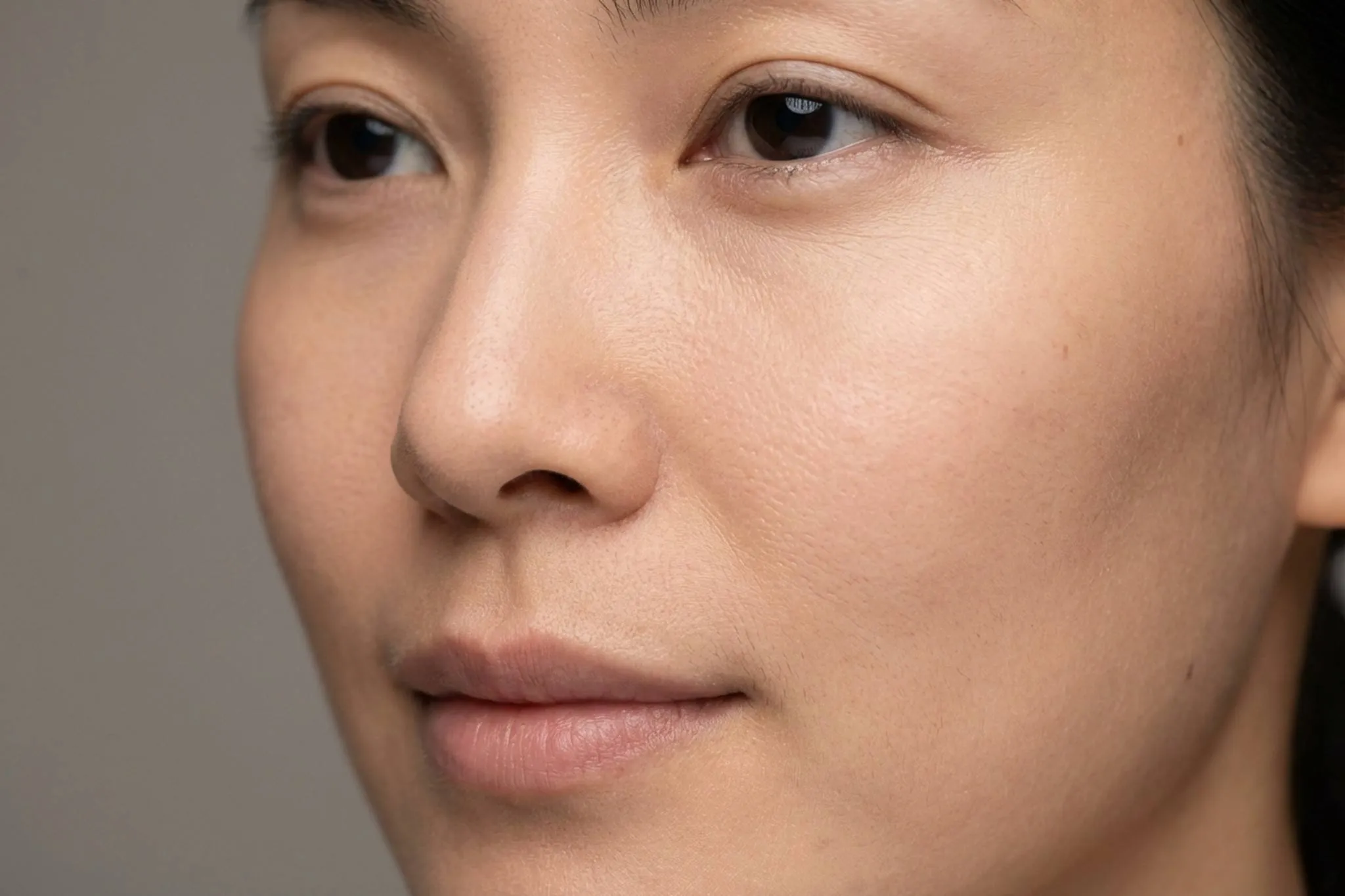
Lower Blepharoplasty in Brazil: the rejuvenation of the gaze begins with the lower eyelids
The lower eyelids are undoubtedly one of the areas that most reveal ageing and fatigue. Under-eye bags that protrude beneath the eyes, thin and wrinkled skin, deep dark circles that no concealer can disguise — these signs can appear early, sometimes before the age of thirty, and become more pronounced over time. Lower blepharoplasty — also known as eye bag removal surgery — corrects these changes definitively, restoring a rested and rejuvenated appearance to the gaze.
Over more than twenty years of practice as a plastic surgeon in Brazil and more than eight thousand surgeries performed, I have developed a deep understanding of eyelid anatomy. The area of the lower eyelids is one of the most delicate in the human body — the skin is the thinnest in the entire organism, the muscles are extremely subtle, and the supporting structures are complex. Operating in this area requires millimetric precision, in-depth anatomical knowledge, and above all, respect for the structures that protect your eyes. International patients seeking cosmetic surgery abroad often choose my clinic in Brazil for the combination of expertise, affordability, and personalised care.
On this page, I will explain in detail how I perform lower blepharoplasty, the different techniques I use depending on each case, what to expect from recovery, and how this surgery can transform not only your appearance but also your self-confidence. If you also wish to treat the upper eyelids, know that I often combine both procedures in the same surgical session.
Subscribe to my YouTube channel:
Subscribe on YouTubeWhat causes bags and dark circles under the eyes
To understand lower blepharoplasty, it is essential to comprehend what happens to the area around the eyes over the years. The lower eyelid is not just a piece of skin — it is a complex system of layers that includes skin, orbicular muscle, orbital septum, fat compartments, and the tarsal plate that provides support.
With ageing, several changes occur simultaneously:
- Weakening of the orbital septum: the septum is a fibrous membrane that keeps the orbital fat in place. When it weakens, the fat protrudes forward, forming under-eye bags.
- Loss of volume in the middle third: the cheek loses fat and descends, accentuating the transition between the eyelid and cheek and creating the so-called nasojugal groove, popularly known as dark circles.
- Skin and muscle laxity: the eyelid skin, already naturally thin, loses elasticity and the orbicular muscle elongates, creating wrinkles and an appearance of excess tissue.
- Bone resorption: the very bone of the lower orbital rim remodels with age, enlarging the orbital cavity and allowing the fat to protrude even more.
- Genetic factors: many people develop under-eye bags early due to family predisposition, regardless of age.
The combination of these factors explains why no cream, massage, or non-surgical procedure definitively resolves under-eye bags. Procedures such as facial fillers with hyaluronic acid can conceal mild dark circles, but do not eliminate herniated fat bags or treat excess skin.
The techniques I use in lower blepharoplasty
There is no single technique that works for all patients. The choice of approach depends on a careful evaluation that I take very seriously during the consultation. Basically, I work with two main approaches and their variations:
Transcutaneous lower blepharoplasty (external approach)
In the transcutaneous approach, I make a millimetric incision just below the eyelashes of the lower eyelid, in the so-called subciliary line. This incision gives me complete access to all layers: skin, orbicular muscle, orbital septum, and fat compartments. It is the technique I choose for patients who present significant excess skin, wrinkles, muscle laxity, and under-eye bags — that is, when there are multiple problems to be corrected simultaneously.
Through this approach, I can:
- Remove or reposition herniated fat
- Precisely remove excess skin
- Tighten the orbicular muscle when necessary
- Perform canthopexy to reinforce the lateral support of the eyelid
- Smooth the transition between eyelid and cheek
The resulting scar is hidden in the natural fold just below the eyelashes and becomes practically invisible in a few weeks.
Transconjunctival lower blepharoplasty (internal approach)
In the transconjunctival approach, the incision is made on the inner surface of the eyelid, through the conjunctiva. There is no cut on the skin — therefore, there is no visible external scar. It is the ideal technique for younger patients who have under-eye bags but with good skin quality and no significant excess skin.
Through the transconjunctival route, I directly access the fat compartments and can remove or reposition them precisely. As there is no manipulation of the skin and muscle, recovery tends to be faster and the risk of eyelid position alteration (ectropion) is lower.
The skin pinch technique
In some cases, I combine the transconjunctival approach with the removal of a thin strip of skin just below the eyelashes — the so-called skin pinch technique. It is an elegant resource that allows treating mild excess skin without needing to detach the entire eyelid as in the complete transcutaneous technique. The scar is minimal and the result very natural.
Fat repositioning versus removal
One of the most important evolutions in modern lower blepharoplasty has been the change in philosophy regarding orbital fat. In the past, the approach was simply to remove all herniated fat. The immediate result was good, but over time the eyes became hollow, with a skeletal and aged appearance.
Today, whenever possible, I prefer to reposition the fat rather than remove it. In practice, I mobilise the fat pads that protrude as bags and displace them downwards, filling the nasojugal groove (dark circle). With this, I achieve two benefits in a single gesture: I eliminate the bag and correct the dark circle. The result is a smooth transition between eyelid and cheek, without depressions or unwanted projections.
In selected cases, the combination of eyelid fat repositioning with fat graft in the middle third of the face produces an even more complete and natural rejuvenation.
Canthopexy and canthoplasty: protecting the position of the eyelid
One of the most important aspects of lower blepharoplasty — and one that is often neglected — is the evaluation and reinforcement of the lateral support of the eyelid. The outer corner of the eye (lateral canthus) is supported by the lateral canthal tendon. With age, this tendon can loosen, allowing the lower eyelid to descend and expose more of the sclera (the white part of the eye).
Canthopexy is a procedure that reinforces this tendon, keeping the eyelid in the correct position after surgery. It is a step that I consider fundamental in a large part of my lower blepharoplasties, especially in patients with pre-existing eyelid laxity or prominent eyes.
The difference between canthopexy and canthoplasty is subtle but important: in canthopexy, I reinforce the tendon without sectioning it; in canthoplasty, I section and reinsert the tendon in a new position. The choice depends on the degree of laxity found during surgery.
Why this matters for your result
A lower blepharoplasty without attention to canthal support can result in ectropion — a condition in which the lower eyelid pulls away from the eyeball, exposing the conjunctiva. Besides being aesthetically undesirable, ectropion causes dry eye, tearing, and discomfort. It is a complication that can be avoided with proper technique, which is why I am so meticulous in this evaluation.
Patients who present ptosis of the eyelid (drooping of the upper eyelid) also deserve special attention, as the combined correction of upper and lower eyelids requires integrated planning to ensure symmetry and proper function.
Who is a candidate for lower blepharoplasty
Lower blepharoplasty is recommended for men and women who present one or more of the following changes:
- Under-eye bags under the eyelids, which give a permanently swollen appearance
- Deep dark circles caused by an accentuated nasojugal groove
- Excess skin with fine wrinkles on the lower eyelid
- Muscle laxity that accentuates the aged appearance
- Palpebral asymmetry that is aesthetically bothersome
- Permanently tired appearance, even after a good night's sleep
Age is not the determining factor. I have patients in their twenties with significant hereditary under-eye bags and patients in their sixties with mild changes. What matters is the individual evaluation.
When lower blepharoplasty is not recommended
There are situations where I recommend caution or temporarily contraindicate surgery:
- Active eye diseases (decompensated glaucoma, severe dry eye)
- Uncontrolled thyroid diseases (can affect eye projection)
- Unrealistic expectations about the result
- Active smoking (must be stopped at least two weeks before and after)
- Use of anticoagulants without the possibility of discontinuation
During the consultation, I evaluate each of these factors individually. My priority is always the safety and best possible result for each patient.
The consultation: detailed evaluation for an accurate result
The consultation for lower blepharoplasty is extremely detailed. I dedicate time to examine not only the eyelids but the entire periocular region and the middle third of the face, because these structures function as a unit.
What I specifically evaluate
- Snap-back test: I gently pull the lower eyelid down and assess the speed with which it returns to the normal position. This indicates eyelid tone and the need for canthopexy.
- Eyelid distraction test: I assess how much the eyelid moves away from the eyeball when pulled. More than six millimetres indicates significant laxity.
- Fat evaluation: I identify which of the three fat compartments (nasal, central, and lateral) are herniated and to what degree.
- Skin quality: determines whether the approach will be transconjunctival or transcutaneous.
- Eye projection: prominent eyes require special care to avoid ectropion.
- Nasojugal groove: the depth of the dark circle indicates whether fat repositioning will be necessary.
- Middle third of the face: I assess whether there is volume loss in the cheek that contributes to the aged appearance of the infraorbital region.
Pre-operative exams
I request the following exams:
- Complete blood count
- PT with INR + APTT
- Creatinine and urea
- Fasting blood glucose
- ECG
- Pre-operative cardiac assessment
- Ophthalmological evaluation (when recommended)
Two weeks before surgery, I advise the discontinuation of acetylsalicylic acid (Aspirin), anti-inflammatories, vitamin E, ginkgo biloba, high doses of omega 3, and any herbal medicine that may increase the risk of bleeding.
The surgery step by step
The isolated lower blepharoplasty lasts between one and two hours, depending on the chosen technique and combined procedures. It can be performed under local anaesthesia with sedation or general anaesthesia, as per the planning.
Transcutaneous approach
After careful surgical marking, I make the subciliary incision — two millimetres below the lash line. I carefully dissect the orbicular muscle, expose the orbital septum, and identify the three fat compartments: nasal (the most medial and often the most prominent), central, and lateral.
As per the planning, I reposition the herniated fat to fill the nasojugal groove or conservatively remove the excess. When necessary, I tighten the orbicular muscle and perform canthopexy to ensure adequate lateral support. Finally, I redrape the skin without excessive tension and remove only the minimum necessary excess. The closure is made with very fine sutures that will be removed in five to seven days.
Transconjunctival approach
After eversion (turning outward) of the lower eyelid, I make the incision in the conjunctiva, directly accessing the fat compartments behind the orbital septum. I mobilise and reposition the fat as necessary. There is no external suture — the conjunctiva heals spontaneously in a few days.
Frequently combined procedures
Lower blepharoplasty is rarely an isolated surgery. I often combine it with other procedures for a more balanced result:
- Upper blepharoplasty: the most natural combination, treating upper and lower eyelids in the same surgical time.
- Deep plane facelift: for complete facial rejuvenation, lower blepharoplasty complements the rejuvenation of the mid and lower thirds.
- Mini facelift: a less invasive option when facial sagging is moderate.
- Fat grafting: to restore volume in the mid-third of the face and enhance the result of blepharoplasty.
- Facial fillers: in some cases, I complement with hyaluronic acid in specific areas post-operatively.
Post-operative: what to expect from recovery
The recovery from lower blepharoplasty is quicker than most people imagine, especially when I use the transconjunctival approach. Some important milestones:
First 48 hours
There will be swelling and possibly bruising (purple spots) in the eyelid and periorbital region. I recommend cold compresses in the first twenty-four hours, keeping the head elevated, and relative rest. Pain is mild to moderate, easily controlled with simple analgesics. Lubricating eye drops are essential to keep the eyes comfortable.
First week
The swelling peaks between the second and third day and begins to decrease progressively. Bruising, when present, usually resolves in seven to ten days. I remove the sutures from the transcutaneous approach between the fifth and seventh day. Avoid physical exertion, prolonged reading, and sun exposure.
Second week
Most patients are already presentable for social activities. Mild residual swelling may persist but is easily disguised with sunglasses. Light makeup can be used after suture removal and with medical approval.
First to third month
The result progressively refines. The residual oedema gradually subsides, the tissues settle, and the scar (in the transcutaneous approach) matures, becoming practically imperceptible. During this period, it is already possible to observe a result close to the definitive.
Final result
Between three and six months, the result is complete. The rejuvenation of the gaze is long-lasting — the under-eye bags do not return, although the natural ageing process continues. Most patients maintain the result for many years.
Risks and complications: transparency above all
Like any surgical procedure, lower blepharoplasty has risks. I am transparent about each of them during the consultation because I believe that a well-informed patient makes better decisions.
Possible complications
- Ectropion: detachment of the lower eyelid from the eyeball. It is the most feared complication and the reason why I am so meticulous in the pre-operative evaluation and in performing canthopexy when recommended. When it occurs, it is usually temporary and resolves spontaneously or with guided massages.
- Haematoma: accumulation of blood in the surgical site. Rare when meticulous haemostasis is performed during surgery and when the patient follows rest and medication discontinuation guidelines.
- Chemosis: swelling of the conjunctiva that causes it to bulge between the eyelids. It resolves spontaneously in days to weeks with eye drops and local care.
- Asymmetry: slight asymmetries are normal and usually balance out with the resolution of swelling. Significant asymmetries are rare with proper planning.
- Temporary dry eye: may occur in the first weeks and is treated with lubricating eye drops.
- Retrobulbar haematoma: an extremely rare but serious complication that requires immediate diagnosis and treatment. This is why I operate in a properly equipped hospital environment.
The best way to minimise risks is through a combination of refined surgical technique, careful pre-operative evaluation, and attentive post-operative follow-up. This is exactly what I offer my patients.
Lower blepharoplasty in the context of facial rejuvenation
It is essential to understand that the eyes do not age in isolation. The lower eyelid is part of an aesthetic unit that includes the upper eyelids, eyebrows, the mid-third of the face, and even the neck. When I plan a lower blepharoplasty, I always consider the face as a whole.
The importance of the eyelid-cheek transition
One of the hallmarks of ageing is the deepening of the junction between the lower eyelid and the cheek. In youth, this transition is smooth and imperceptible. Over time, a step forms — the palpebromalar groove — which gives a tired appearance to the gaze.
The repositioning of fat in lower blepharoplasty is precisely the technique that restores this smooth transition. And when combined with fat grafting in the cheek or with a deep plane facelift, the result is a natural rejuvenation of the entire face.
Lower blepharoplasty and complementary procedures
I often guide my patients on the importance of treating the face in an integrated manner. A rejuvenated gaze on a face with significant sagging can create visual dissonance. Similarly, a facelift without eyelid treatment can leave the result incomplete.
The decision to combine procedures or perform them in stages depends on various factors: age, degree of ageing, health conditions, availability for recovery, and of course, your personal goals. During the consultation, I develop a personalised plan that may include one or more procedures, always prioritising safety and naturalness.
My experience and approach
I graduated from the State University of Londrina and had the privilege of being a student of Professor Ivo Pitanguy, the greatest name in Brazilian plastic surgery. With him, I learned not only surgical techniques but a philosophy of respect for the patient and an unrelenting pursuit of excellence.
Over more than twenty years of practice, I have performed over eight thousand plastic surgeries. I am a full member of the Brazilian Society of Plastic Surgery (SBCP) and the American Society of Plastic Surgeons (ASPS). Blepharoplasty — both upper and lower — is one of the procedures I perform most frequently, often combined with the deep plane facelift and fat grafting.
My approach to lower blepharoplasty is conservative and individualised. Conservative because I respect the tissues, preserve fat when possible, and never remove excess skin. Individualised because there is no one-size-fits-all recipe — each pair of eyes deserves its own surgical plan.
Why trust me
I do not promise impossible results. I promise honesty in evaluation, meticulous technique in surgery, and dedicated follow-up in recovery. If during the consultation I perceive that lower blepharoplasty is not the best path for you, or that another procedure would bring a more satisfactory result, I will say this clearly. My commitment is to your best result, not to performing a surgery.
Frequently Asked Questions about Lower Blepharoplasty
Does lower blepharoplasty eliminate dark circles?
It depends on the type of dark circle. Dark circles caused by a deep nasojugal groove (depression between the eyelid and the cheek) are significantly improved with fat repositioning. Dark-coloured circles, caused by hyperpigmentation or vascular transparency, are not corrected by surgery and require specific dermatological treatments. During the consultation, I identify the cause of your dark circles and recommend the best treatment.
What is the difference between transcutaneous and transconjunctival lower blepharoplasty?
The transconjunctival is performed from inside the eyelid, without an external scar, ideal for those with under-eye bags without excess skin. The transcutaneous is performed through an incision just below the eyelashes, allowing for the treatment of bags, excess skin, and muscle laxity simultaneously. The choice depends on the individual assessment during the consultation.
Does the surgery hurt?
Lower blepharoplasty is a procedure with minimal pain. Most of my patients report mild discomfort, easily controlled with simple analgesics. Swelling and a feeling of heaviness in the eyelids in the first few days are more bothersome than the pain itself.
Can the under-eye bags return?
The fat that is removed or repositioned does not return. However, the ageing process continues, and over many years, new changes may arise. The vast majority of patients maintain the result for ten years or more.
Can I have lower and upper blepharoplasty at the same time?
Yes, and this is a very common combination in my practice. Treating both eyelids in the same surgical time offers a more balanced result and avoids two separate recoveries. The complete blepharoplasty (upper and lower) is one of the procedures that most transforms the gaze.
How long does recovery take?
The majority of patients are socially presentable in seven to ten days. Light physical activities can be resumed in two weeks and intense exercises in a month. The final result establishes itself between three and six months.
Can lower blepharoplasty be done along with a facelift?
Yes, and this combination is highly recommended. The deep plane facelift rejuvenates the middle and lower third of the face and the neck, while lower blepharoplasty takes care of the gaze. Together, they provide complete and natural rejuvenation. The mini facelift can also be combined when the laxity is moderate.
Is there a risk of having a droopy gaze or turned eyelid?
Ectropion (eyelid turned outwards) is the complication that most concerns patients. With proper pre-operative evaluation — including tests for eyelid laxity — and performing canthopexy when recommended, this risk is very low. That is why choosing an experienced surgeon in blepharoplasty is so important.
Can men have lower blepharoplasty?
Absolutely. Lower blepharoplasty is one of the most sought-after procedures by men who wish for a more rested and less aged appearance. The technique is adapted to respect masculine characteristics: thicker skin, lower positioned eyebrows, and incisions placed to maintain a naturally masculine appearance.
What is the cost of lower blepharoplasty?
The cost varies according to the technique used, combined procedures, and the type of anaesthesia. I openly discuss pricing during the consultation, after defining the individualised surgical planning. The important thing is to understand that the result lasts for many years.
Book via WhatsApp
If you have made it this far, it is because you wish to improve the appearance of your lower eyelids. The next step is simple: book a consultation with me. My team is ready to assist you, answer your questions, and find the best time for your evaluation.
Learn more about the first consultation, the pricing, and the guidelines for pre-surgical preparation and post-operative recovery.
Are you ready for this new change? Book now!

Dr. Walter Zamarian Jr.
Plastic Surgeon in Brazil
Rua Engenheiro Omar Rupp, 186
Londrina - Brazil
ZIP 86015-360
Brazil
YouTube Channel: Dr. Walter Zamarian Jr.
Follow on Instagram: @drwalterzamarianjr
Follow on TikTok: @drwalterzamarianjr
Search on our website:
This page in other languages:
Portuguese (BR) | English (US) | English (UK) | Italian | French | Spanish