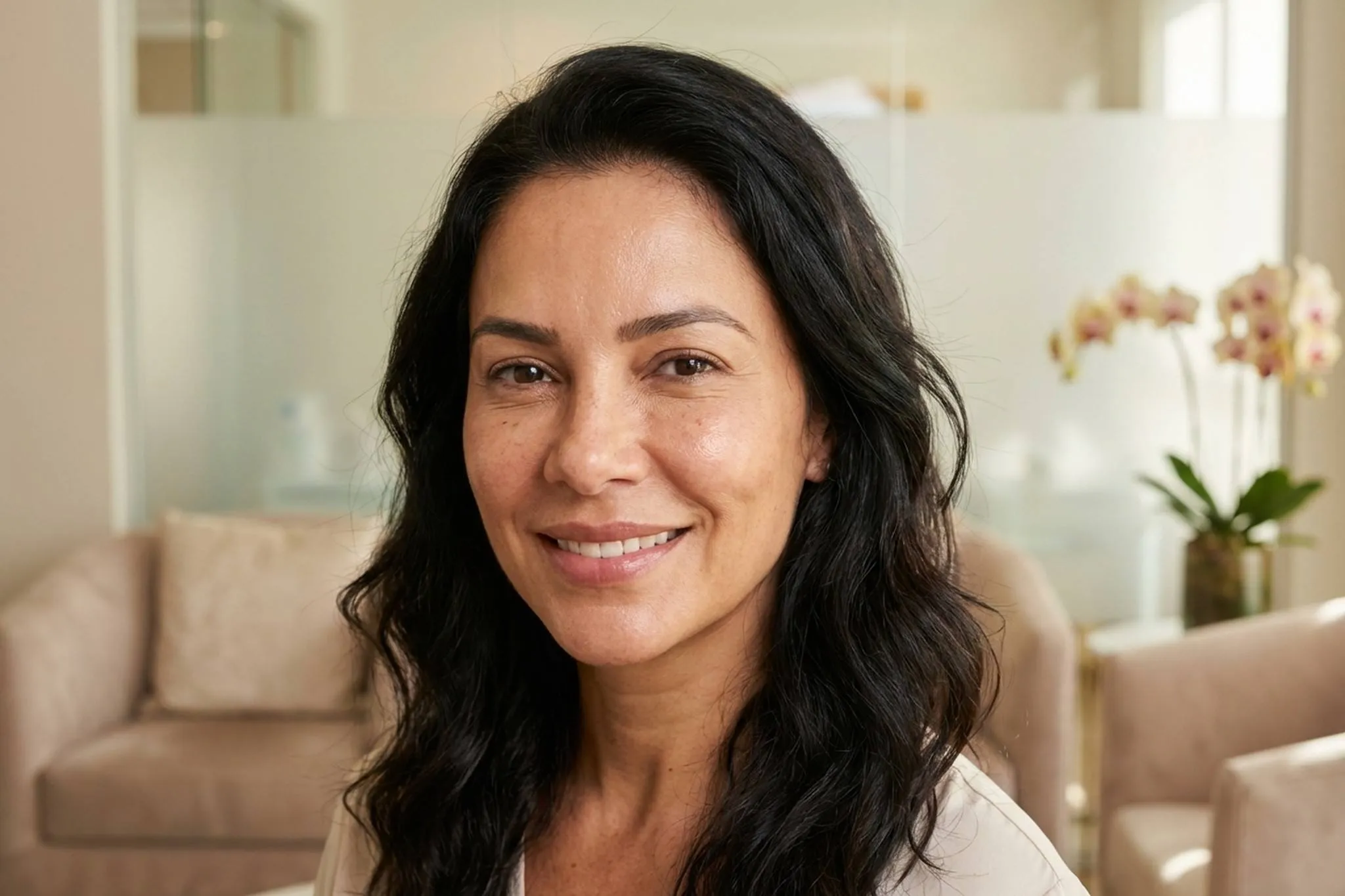
Facial Fat Grafting in Brazil: lipofilling and fat transfer for rejuvenation
If there is a procedure that I consider truly revolutionary in facial plastic surgery, it is facial fat grafting. Also known as lipofilling or fat transfer, this technique has become central to my practice. After more than twenty years as a plastic surgeon in Brazil, performing this procedure and following its scientific evolution, I can affirm: the fat from one's own body is the best biostimulator that exists. No industrial product can deliver what nature has already prepared.
Facial fat grafting is not just about filling wrinkles or restoring lost volume. It is transplanting to the face a living tissue, rich in adipose stem cells, that will integrate permanently and promote real skin regeneration. International patients seeking cosmetic surgery abroad are drawn to this procedure for its natural, long-lasting results. When I perform fat transfer, I am not simply shaping contours; I am transplanting youth.
Why is fat superior to industrial fillers?
Hyaluronic acid, calcium hydroxyapatite, poly-L-lactic acid: all have their place in aesthetic medicine. I use some of them in specific situations. But when the goal is complete and lasting facial rejuvenation, fat offers advantages that no product can match.
First, it is permanent. The fat that survives the first ninety days after transplantation remains forever. Second, it is completely biocompatible, after all, I am transferring tissue from the patient to the patient. Third, and perhaps most importantly: fat carries adipose stem cells that promote true regeneration of the tissues where they are implanted.
The science behind adipose stem cells
The stem cells derived from adipose tissue, known by the acronym ADSCs (Adipose-Derived Stem Cells), are the protagonists of hundreds of scientific studies in the last two decades. What science has proven is fascinating: these cells have the ability to differentiate into other cell types, secrete growth factors that stimulate collagen production, and promote the formation of new blood vessels.
In practice, this means that when I graft fat into a patient's face, I am not just filling. I am implanting a factory of regeneration that will work silently for months, improving the quality of the skin, its texture, its radiance. Patients often report that their skin looks younger in a way that goes beyond the added volume.
Subscribe to my YouTube channel:
Subscribe on YouTubeDr. Walter Zamarian Jr. explains about the best biostimulator that exists: fat grafting

Understanding facial ageing: why we lose volume
To understand why fat grafting is so effective in rejuvenation, I need to explain how the face ages. Many patients come to the consultation believing that the problem is just wrinkles and sagging. The reality is more complex.
Facial ageing occurs in three dimensions. On the surface, the skin loses collagen, elastin, and hyaluronic acid, becoming thinner and less elastic. In depth, the bones of the face undergo resorption, especially in the area of the cheekbones, orbits, and maxilla. And in the middle, the facial fat compartments, which provide support and volume to the youthful face, progressively atrophy.
The result is a face that appears to collapse upon itself. The cheekbones lose projection. The nasolabial folds deepen. The dark circles become more pronounced. The jawline loses definition. The cheeks, once full and positioned high, seem to slide down forming the so-called jowls.
Fat grafting reverses this process
When I perform a well-planned facial fat grafting, I am directly addressing the cause of the problem. I restore the atrophied fat compartments, reposition the lost volume, and, through the stem cells, stimulate the regeneration of the skin itself.
That is why fat grafting is so often associated with facelift surgery. In my deep plane facelift, which I consider the gold standard for rejuvenation, I frequently combine the technique of muscle and skin repositioning with fat grafting to maximise the result. The facelift repositions what has fallen; the fat restores what has atrophied.
Miligraft, microfat, and nanofat: understand the differences
One of the most important evolutions in fat grafting has been the understanding that different processing produces materials with distinct properties. Mastering these techniques allows me to use each one where it is most effective.
Miligraft: structural volumisation
Miligraft consists of fat particles two to three millimetres in size, preserving the adipocytes (fat cells) intact within their extracellular matrix. It is ideal for restoring large volumes, such as in the cheekbones, malar region, temples, or to project the chin.
The advantage of miligraft is that the adipocytes survive well when transplanted to areas with good vascularisation. The disadvantage is that larger particles cannot be injected into very superficial or delicate areas without creating visible irregularities.
Microfat: precision in delicate areas
Microfat is obtained through additional processing that reduces the particles to 0.5 to 1 millimetre. This more refined fat allows me to work in areas that require greater precision: lips, tear trough (dark circles), perioral wrinkles (barcode lines), back of the hands.
The technique I use to process microfat preserves viable adipocytes while removing excess oil and fluids. The result is a more homogeneous material that can be injected with finer cannulas, offering greater control.
Nanofat: pure biostimulation
Nanofat represents a paradigm shift. Through mechanical emulsification and filtration, the fat is processed until it forms a liquid emulsion where practically no viable adipocytes remain. What is left? An extraordinary concentration of adipose stem cells, vascular progenitor cells, and growth factors.
Nanofat does not fill, does not volumise. Its function is exclusively regenerative. I inject this emulsion into the dermis itself to treat fine wrinkles, improve skin quality, treat pigmented dark circles, and even acne scars. The results I have observed are impressive: real improvement in skin texture and radiance that continues to evolve for months after the procedure.
The CAL technique: enhancing results
The CAL technique (Cell-Assisted Lipotransfer) represents the state of the art in fat grafting. The concept is simple: enrich the miligraft or microfat with an extra concentration of stem cells isolated from another portion of the collected fat.
Scientific studies show that the CAL technique increases the graft survival rate from approximately 45% to about 60%. In practice, this means more consistent and predictable results. I use this technique in selected cases, especially when I need maximum graft survival.
Recommendations for facial fat grafting
Over two decades of performing fat grafting, I have identified the situations where this procedure offers the best results:
Global facial rejuvenation
The classic recommendation. Patients who have lost facial volume with ageing and desire a natural and long-lasting rejuvenation. I often combine it with deep plane facelift or blepharoplasty for complete results.
Dark circles and tear trough
One of my favourite recommendations. Dark circles due to volume loss respond magnificently to microfat or nanofat grafting. The result is superior to filling with hyaluronic acid because it is permanent and promotes improvement in the quality of the local skin.
Permanent lip volumisation
For patients who desire fuller lips without the need for periodic reapplications of fillers. The result is natural and definitive.
Correction of facial asymmetries
Congenital or acquired asymmetries (post-trauma, post-surgical) can be corrected with precision using fat grafting.
Facial lipoatrophy
Patients with facial fat loss due to pronounced ageing, significant weight loss, or use of certain medications find in fat grafting the definitive solution.
Improvement of skin quality
With nanofat, I can treat fine wrinkles, acne scars, photoaged skin, and even stretch marks. The regenerative action of the stem cells promotes a real improvement in skin texture.
Complement to facelift surgery
In my deep plane facelift protocol, fat grafting is frequently used to restore volume in areas that the facelift cannot fill: temples, cheekbones, deep folds.
Pre-operative: preparing for the procedure
The consultation: detailed planning
The consultation for fat grafting is one of the most detailed that I perform. I analyse the face at rest and in motion, assess the quality of the skin, identify the atrophied fat compartments, and precisely plan where and how much I will graft.
I use standardised photographs and, in complex cases, computer simulation to align expectations. I openly discuss what fat grafting can and cannot do, and whether other combined procedures would be beneficial.
Evaluation of donor areas
I need to identify where I will collect the fat. The most common areas are the lower abdomen, flanks, and inner thighs. I assess not only the available quantity but also the quality of the adipose tissue. Patients who have undergone multiple previous liposuctions may have fibrous areas that hinder collection.
Pre-operative tests
I request a pre-operative cardiac assessment and the following tests:
- Complete blood count;
- PT with INR + APTT;
- Fasting blood glucose;
- Creatinine and urea;
- Total proteins and fractions;
- ECG;
- Pre-operative cardiac assessment.
Pre-operative guidelines
- Discontinue aspirin, anti-inflammatories, and vitamin E two weeks prior;
- Discontinue anticoagulants as per cardiologist's guidance;
- Do not smoke for at least two weeks prior (ideally thirty days);
- Avoid alcoholic beverages in the week before;
- Fast for eight hours on the day of surgery.
The surgery: how I perform the fat graft
The procedure is performed under general anaesthesia or sedation with local anaesthesia, depending on the extent. The duration varies from one to three hours, according to the volume to be transferred and whether there are combined procedures.
Step 1: fat collection
I start by infiltrating tumescent solution in the donor area. This solution contains anaesthetic and adrenaline, which minimise bleeding and facilitate aspiration. The collection is done with blunt-tipped cannulas connected to low-pressure syringes, a technique that better preserves cell viability.
The fat collected by conventional high-pressure liposuction suffers a lot of trauma and has inferior survival. Therefore, I exclusively use a manual technique with syringes, even though it is more laborious.
Step 2: fat processing
The aspirated fat is a mixture of adipocytes, stem cells, blood, anaesthetic, and oil. I need to separate what is relevant. I use low-speed centrifugation, which separates the layers without traumatising the cells.
I discard the upper layer of oil and the lower layer of blood and fluids. The intermediate layer, golden and dense, is the purified fat. Depending on the recommendation, I process this fat into millifat, microfat, or nanofat.
Step 3: grafting
This is the step that requires the most technique and experience. The fat needs to be deposited in multiple microscopic layers, never in blocks. Each small portion of transplanted fat needs to be in close contact with vascularised tissue to survive.
I use cannulas of different calibres, starting with the deeper layers and progressing to the superficial ones. The movement is one of withdrawal, depositing fine threads of fat along the path. It is a handcrafted job that requires patience and precision.
In areas where I use nanofat, the technique changes: I inject directly into the dermis with fine needles, creating a mesh of regenerative cells under the skin.
Calculated overcorrection
Part of the transplanted fat will be reabsorbed in the first months, even with perfect technique. Therefore, I always graft a little more than necessary, calculating for this expected absorption. The amount of overcorrection varies according to the area and the characteristics of the patient.
Post-operative: recovery and care
The recovery from facial fat grafting is relatively smooth, especially when compared to other facial procedures such as a facelift.
First 48 hours
There will be swelling and possibly bruising, both on the face and in the donor area. This is normal and expected. I prescribe cold compresses, anti-inflammatories, and rest with the head elevated. Most patients report mild discomfort, not significant pain.
First week
The swelling peaks between the second and third day, then begins to decrease progressively. The bruising, when present, starts to lighten. You can resume light activities at home, but avoid physical exertion and sun exposure.
In the donor area, the discomfort is similar to that of liposuction: a bruised sensation, improving with gentle movement and the use of a compression garment.
First weeks
By two weeks, most of the swelling has subsided, and you can resume social activities with makeup. The result is still not final. During this period, neovascularisation of the graft is occurring, a process in which the recipient tissues form new blood vessels to nourish the transplanted fat.
First trimester
This is the critical period. The fat that will survive is integrating definitively. The fat that will not is being reabsorbed. Avoid trauma in the area, do not massage, and maintain strict sun protection. At three months, what remains is permanent.
Final result
The definitive result appears between six months and a year, when the entire integration process is complete and the residual swelling, imperceptible to the naked eye, has completely disappeared. The regenerative action of the stem cells may continue to promote subtle improvements in skin quality for up to two years.
Results: what to expect from fat grafting
Realistic expectations
Fat grafting offers results that no industrial filler can match: permanent, natural, and with regenerative action. But it is essential to have realistic expectations.
The survival rate of the graft, even with perfect technique, varies between 50% and 70%. This means that part of the initial volume will be lost in the first months. Therefore, I perform calculated overcorrection, and in some cases, a touch-up session may be necessary after six months to a year.
What fat grafting can do
- Restore volume lost with ageing;
- Improve facial contours permanently;
- Smooth out grooves and depressions;
- Improve skin quality through stem cells;
- Provide a natural result that ages well with you;
- Eliminate the need for periodic reapplications of fillers.
What fat grafting cannot do
- Lift sagging tissues (for that, there is facelift);
- Eliminate dynamic wrinkles (for that, there is botulinum toxin);
- Guarantee 100% survival of the grafted volume;
- Stop the natural ageing process.
The difference of experience
In over twenty years performing facial plastic surgery and more than eight thousand procedures, I have developed a deep understanding of how the face ages and how to restore it. Fat grafting requires not only impeccable technique but also artistic vision to understand where to place volume and in what quantity.
Fat grafting combines exceptionally with various facial procedures: blepharoplasty for rejuvenating the eyes, facial fillers to complement specific areas, mentoplasty for profile balance, and lip lift for rejuvenating the perioral region. Also learn about the first consultation and the cost involved.
My training with Professor Ivo Pitanguy, the leading name in Brazilian plastic surgery, taught me that our work goes far beyond technique: it is about restoring the natural balance of the face while respecting the individuality of each patient. This principle guides every procedure I perform.
If you are considering facial fat grafting, I invite you for a consultation. Let’s analyse your face together, discuss your expectations, and create a personalised plan to achieve the natural and lasting rejuvenation you deserve.
Frequently Asked Questions about Facial Fat Grafting
How long does the result of facial fat grafting last?
In my experience, the fat that survives the first three months after the transplant remains permanently. With the techniques I use — low-pressure manual harvesting and controlled centrifugation — I achieve survival rates between 60% and 70%. The result is permanent, although natural ageing continues its normal course.
What is the difference between millifat, microfat, and nanofat?
I use each of these techniques according to the needs of each patient. Millifat consists of particles of 2 to 3 millimetres, ideal for restoring large volumes such as in the cheekbones and temples. Microfat consists of smaller particles, 0.5 to 1 millimetre, which I use in delicate areas such as lips and dark circles. Nanofat is a stem cell-rich emulsion that I inject into the dermis for bio-stimulation and improvement of skin quality.
Does fat grafting replace hyaluronic acid fillers?
They are complementary procedures, and I usually guide my patients on the differences. Fat grafting offers a permanent result and regenerative action of stem cells, but requires a surgical environment. Hyaluronic acid, on the other hand, is temporary, lasting from 12 to 18 months, but can be done in the clinic with minimal downtime. I recommend fat grafting when the patient seeks a definitive result.
Do the stem cells from fat grafting really work?
Yes, and I have been following this scientific evolution for over twenty years. Studies show that adipose stem cells promote the formation of new blood vessels, stimulate collagen production, and improve skin quality. I use the CAL (Cell-Assisted Lipotransfer) technique in selected cases, which increases the graft survival from approximately 45% to about 60%.
Can I have facial fat grafting if I am very thin?
In the vast majority of cases, yes. I usually reassure my thinner patients by explaining that facial procedures require relatively small volumes of fat. Even people with little body fat have enough reserve in the lower abdomen or flanks for a complete facial graft.
When will I see the final result of the fat graft?
I advise my patients that the definitive result appears between six months and a year. By three months, the surviving fat is already permanently integrated. What I often observe is that the regenerative action of the stem cells continues to promote subtle improvements in skin quality for up to two years after the procedure.
Is more than one session of fat grafting necessary?
It depends on the case. As part of the fat is naturally reabsorbed in the first months, some patients may require a touch-up session after six months to a year. In my practice, most patients are satisfied with a single session, but I evaluate individually during the postoperative follow-up.
Can fat grafting be combined with a facelift?
Yes, and this is one of the combinations I perform most frequently. In my deep plane facelift, I often combine fat grafting to restore volume in areas that the facelift cannot fill: temples, cheekbones, and deep folds. The facelift repositions what has sagged; the fat restores what has atrophied. Together, they offer complete rejuvenation.
What is the recovery like after facial fat grafting?
I consider the recovery relatively smooth. In the first few days, there will be swelling and possibly bruising, which are normal. I recommend that my patients rest with their heads elevated and use cold compresses. By two weeks, most of the swelling has subsided, and it is possible to resume social activities with makeup. Return to work usually occurs between seven and fourteen days.
Can nanofat treat acne scars and fine wrinkles?
Yes, and the results I have observed are impressive. Nanofat, being a concentrated emulsion of stem cells without viable adipocytes, can be injected directly into the dermis to treat fine wrinkles, acne scars, and photo-aged skin. The improvement is real and progressive, continuing to evolve for months after the procedure.
Book via WhatsApp
Book your consultation for facial rejuvenation with fat grafting with Dr. Walter Zamarian Jr. in Brazil. Contact the Zamarian Clinic and speak with one of our secretaries, who can answer your questions and book your consultation.
Are you ready for this new change? Book now!

Dr. Walter Zamarian Jr.
Plastic Surgeon in Brazil
Rua Engenheiro Omar Rupp, 186
Londrina - Brazil
ZIP 86015-360
Brazil
YouTube Channel: Dr. Walter Zamarian Jr.
Follow on Instagram: @drwalterzamarianjr
Follow on TikTok: @drwalterzamarianjr
Search on our website:
This page in other languages:
Portuguese (BR) | English (US) | English (UK) | Italian | French | Spanish