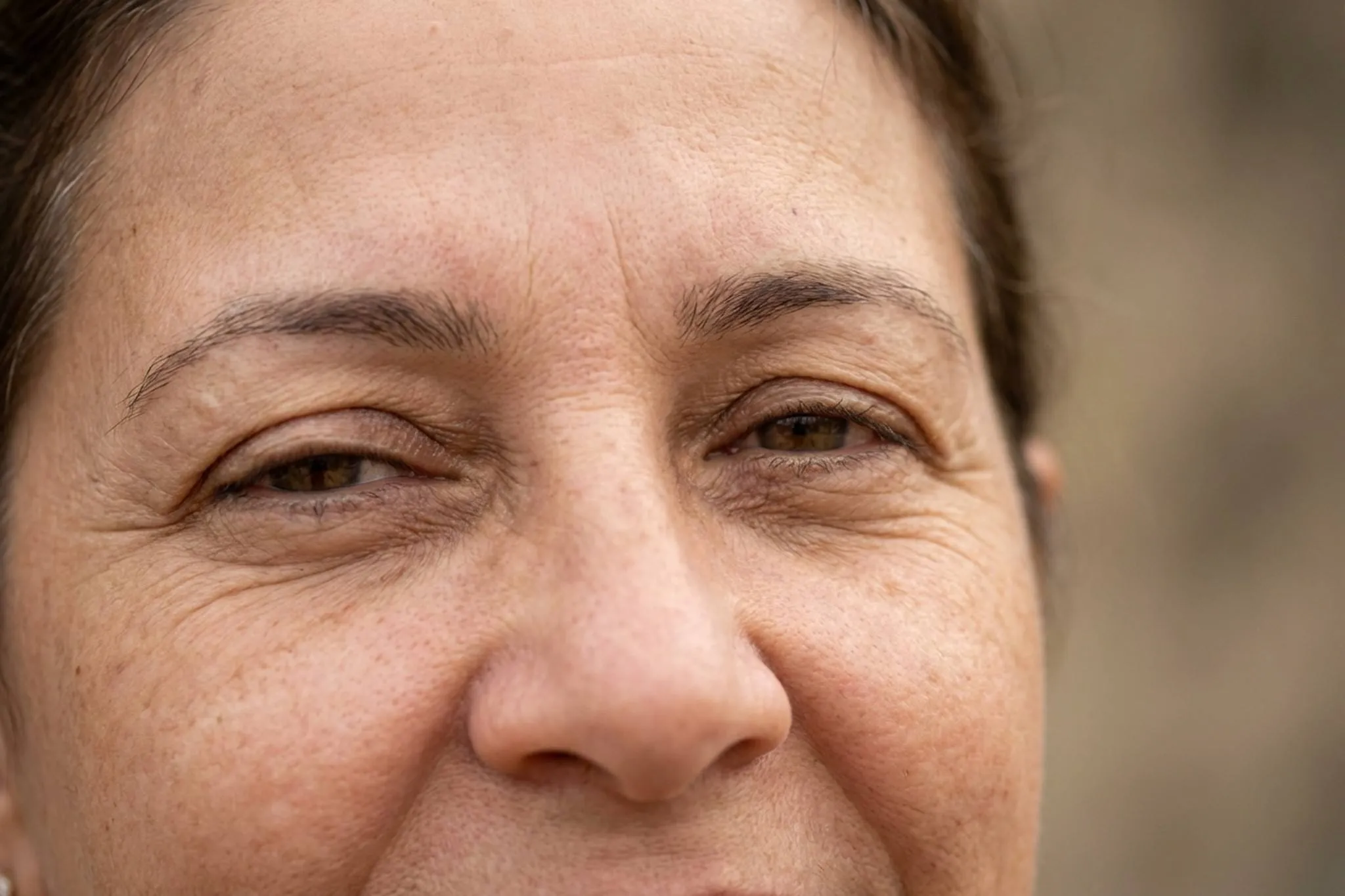
Correction of eyelid ptosis in Brazil: recover your gaze and your vision
What is eyelid ptosis and why does it deserve special attention
If you have noticed that one or both of your upper eyelids are progressively drooping, covering part of the pupil and making it difficult for you to see, you are likely facing eyelid ptosis. This condition, commonly known as "droopy eyelid", goes far beyond an aesthetic issue — it is a functional problem that can significantly compromise your quality of life.
Over more than twenty years as a plastic surgeon in Brazil, I have treated hundreds of patients with eyelid ptosis. Many arrived at my clinic in Brazil thinking they only needed a blepharoplasty — an eyelid surgery to remove excess skin — when in fact the real problem was the weakness of the levator muscle. This distinction is crucial, as the correct treatment depends on an accurate diagnosis. International patients seeking cosmetic surgery abroad benefit from my extensive experience with both functional and aesthetic eyelid correction.
Eyelid ptosis occurs when the levator muscle — responsible for keeping the eye open — loses its strength or detaches from its insertion in the tarsal cartilage. The result is an eyelid that descends beyond the normal position, potentially covering the pupil partially or completely. Unlike the simple excess skin treated in blepharoplasty, ptosis involves a muscular dysfunction or aponeurosis that needs to be surgically corrected in a specific manner.
In my practice, I observe that many patients live with ptosis for years before seeking treatment. Some adapt by tilting their heads back or constantly raising their eyebrows to compensate for the drooping eyelid. These compensations, in addition to causing muscle fatigue and headaches, can mask the true severity of the problem. If you identify with this description, know that there is a solution — and it is more accessible than you think.
The causes of eyelid ptosis: understanding why your eyelid has drooped
Eyelid ptosis can have various origins, and identifying the correct cause is essential to define the best surgical approach. In my experience, I classify the causes into four main groups:
Involutional ptosis (due to ageing)
This is by far the most common cause I encounter in the clinic. As the years go by, the aponeurosis of the levator muscle — a tendinous structure that connects the muscle to the eyelid — stretches, thins, or partially detaches from the tarsal cartilage. The result is an eyelid that gradually droops over the years. This type of ptosis is usually bilateral, although often one side is more affected than the other.
The prolonged use of rigid contact lenses can accelerate this process, as the repeated manipulation of the eyelid when putting in and taking out the lenses contributes to the stretching of the aponeurosis. Previous eye surgeries, such as cataract surgery, can also trigger involutional ptosis.
Congenital ptosis
Present from birth, congenital ptosis occurs when the levator muscle does not develop properly during gestation. The muscle has an abnormal amount of fibrous tissue instead of contractile muscle fibres, resulting in a reduced ability to elevate. It can affect one or both eyes.
In children, congenital ptosis deserves special attention because it can cause amblyopia — the so-called "lazy eye" — if the drooping eyelid obstructs the visual axis during the critical period of vision development. In these cases, early surgical correction is essential.
Neurogenic ptosis
Caused by problems in the nerves that control the levator muscle. The most well-known is the paralysis of the third cranial nerve (oculomotor nerve), which in addition to ptosis can cause strabismus and pupil dilation. Myasthenia gravis, an autoimmune disease that affects the junction between the nerve and the muscle, can also initially manifest as eyelid ptosis, often with a fluctuating characteristic — worsening throughout the day and improving with rest.
Mechanical and traumatic ptosis
Palpebral tumours, scars, chronic inflammatory processes, and direct trauma to the eyelid or orbital region can cause ptosis due to excessive weight on the eyelid or direct injury to the levator muscle and its aponeurosis. Previous surgeries in the area also fall into this category.
During the consultation, I perform a detailed examination to identify not only the presence of ptosis but its specific cause, as this determines the most appropriate surgical technique for each patient.
Ptosis versus blepharoplasty: the difference that many are unaware of
One of the most frequent confusions I encounter is between ptosis and dermatochalasis (excess skin on the upper eyelid). Although they can coexist — and often do — they are distinct conditions that require different treatments.
What is dermatochalasis
Dermatochalasis is the excess skin and sometimes fat on the upper eyelid. The excess skin hangs over the eyelid crease and may cover the eyelashes, but the eyelid margin itself remains in a normal position. The treatment is upper blepharoplasty, which removes the excess skin and fat.
What is ptosis
In ptosis, the problem lies with the eyelid margin: it descends below the normal position (which would be about one to two millimetres below the upper limbus of the cornea). Even if you remove all the excess skin with a blepharoplasty, the eyelid will remain droopy if the levator muscle is not repaired.
The importance of correct diagnosis
I have received patients who had undergone blepharoplasty elsewhere and were dissatisfied because "the eyelid remained droopy". The reason was simple: they had undiagnosed ptosis. The blepharoplasty removed the excess skin, but did not correct the weakness of the levator muscle.
On the other hand, it is very common for me to perform ptosis correction and blepharoplasty in the same surgical session. In fact, in patients over fifty years old, the combination of involutional ptosis with dermatochalasis is the rule, not the exception. In this case, I first correct the ptosis — reinforcing or shortening the levator aponeurosis — and then remove the excess skin. The result is a completely renewed appearance.
If you are unsure whether your problem is excess skin, ptosis, or both, an in-person consultation is the way to go. I perform precise measurements of the palpebral fissure, the function of the levator muscle, and the margin-reflex distance to determine exactly what needs to be done.
Clinical evaluation: how I diagnose and classify ptosis
The success of ptosis surgery begins with a meticulous evaluation. During the consultation, I perform a series of measurements and tests that determine not only the severity of the ptosis but also the most appropriate technique to correct it.
Measurements I perform
- Margin-reflex distance (MRD1): the most important measurement. It is the distance between the upper eyelid margin and the light reflex in the centre of the pupil. The normal range is four to five millimetres. In mild ptosis, it is between three and four millimetres; moderate, between two and three; and severe, below two millimetres.
- Palpebral fissure: the vertical distance between the upper and lower eyelid margins. The normal range is nine to twelve millimetres.
- Function of the levator muscle: I block the action of the frontalis muscle with my thumb over the eyebrow and ask the patient to look down and then up. The excursion of the eyelid indicates muscle function. Good function: above twelve millimetres; fair: eight to twelve; poor: below eight millimetres.
- Height of the eyelid crease: in involutional ptosis, the crease is often higher than normal, indicating disinsertion of the aponeurosis.
- Phenylephrine test: I apply a vasoconstrictor eye drop that stimulates the Müller muscle. If the eyelid rises significantly, it indicates that the conjunctivomullerectomy technique may be a good option.
What else I evaluate
I also examine the position of the eyebrows, as many patients with ptosis develop a compensatory elevation of the eyebrow that needs to be considered in the surgical planning. I assess the presence of associated dermatochalasis, facial symmetry, the function of the orbicularis muscle, corneal sensitivity, and the tear film. I request ophthalmological evaluation when necessary, especially to rule out neurological causes.
When there is suspicion of myasthenia gravis, I request a test for anti-acetylcholine receptor antibodies and, if necessary, electromyography. It is essential to exclude neurological causes before recommending surgery, as treatment in these cases may be clinical.
Surgical techniques for correcting ptosis
The choice of surgical technique fundamentally depends on two factors: the cause of the ptosis and the residual function of the levator muscle. Over more than two decades, I have mastered the three main approaches and choose the most appropriate for each individual case.
Advancement or reinsertion of the levator aponeurosis
This is the technique I perform most often, recommended for involutional ptosis — the most common — where the levator muscle aponeurosis has elongated or disinserted from the tarsal cartilage. Through an incision in the natural crease of the upper eyelid (the same used in blepharoplasty), I identify the aponeurosis, reinforce its insertion into the tarsus, and adjust the height of the eyelid with precise sutures.
The great advantage of this technique is that I perform it under local anaesthesia with sedation, which allows me to ask the patient to open their eyes during the surgery to check symmetry in real time. This intraoperative adjustment is one of the secrets to achieving symmetrical and natural results. The incision is hidden in the eyelid crease and becomes practically invisible after healing.
Conjunctivomullerectomy (resection of the Müller muscle)
A minimally invasive technique performed via the posterior approach (through the inner surface of the eyelid), without an incision in the skin. It is ideal for mild ptosis when the phenylephrine test is positive, indicating good function of the Müller muscle. I resect a portion of the conjunctiva and the Müller muscle, shortening the structure and elevating the eyelid. Recovery is quicker and leaves no visible scar.
Frontal suspension (frontalis sling)
I reserve this technique for cases of severe ptosis with poor function of the levator muscle, as occurs in severe congenital ptoses. When the levator muscle hardly functions, the only alternative is to connect the eyelid to the frontalis muscle, so that the patient elevates the eyelid by contracting the forehead.
I can use autologous fascia lata (taken from the patient's thigh), temporal fascia, or synthetic materials such as silicone. Autologous fascia offers the best long-term results. The technique requires experience and precision to achieve a functionally and aesthetically acceptable result.
Combination with other procedures
In most adult patients, I combine ptosis correction with upper blepharoplasty to remove excess skin, achieving a complete result. In some cases, I also combine lower blepharoplasty or transconjunctival blepharoplasty for complete rejuvenation of the periorbital area. Brow lift may also be recommended when there is associated drooping of the eyebrows.
The surgery step by step: how I perform ptosis correction
I describe here the most common procedure in my practice: the advancement of the levator aponeurosis, often combined with upper blepharoplasty.
Anaesthesia and marking
The surgery is performed under local anaesthesia with sedation. Before starting, with the patient seated, I make precise markings on the eyelid, demarcating the eyelid crease, the amount of skin to be removed, and the reference points for symmetry.
Incision and access
The incision is made in the natural crease of the upper eyelid, following the previously made marking. After removing the strip of skin and orbicularis when there is associated dermatochalasis, I access the orbital septum and identify the levator muscle aponeurosis.
Identification and repair of the aponeurosis
I identify the aponeurosis — which in involutional ptosis is often thinned, disinserted, or elongated — and carefully release it. I perform the advancement or reinsertion of the aponeurosis on the anterior face of the tarsal cartilage with nylon or polyester sutures. The key point is to position the suture in the exact location that will provide the appropriate elevation of the eyelid.
Intraoperative adjustment
Here lies the differential of the technique under local anaesthesia: I ask the patient to open their eyes and compare the height and contour of both eyelids. I make fine adjustments to the sutures until I achieve the desired symmetry. This possibility of real-time adjustment is impossible under general anaesthesia and greatly contributes to superior results.
Closure
I close the incision with fine sutures that are removed between the fifth and seventh day. The scar is hidden in the natural eyelid crease and becomes practically imperceptible within a few weeks.
The procedure lasts between forty-five minutes and one and a half hours, depending on whether it is unilateral or bilateral and if combined with blepharoplasty. The patient goes home the same day.
Post-operative recovery: what to expect
The recovery from eyelid ptosis surgery is generally smoother than patients imagine. Here I describe what you can expect at each stage:
First 48 hours
There will be swelling and bruising in the eyelid area, which is completely normal. I recommend cold compresses (ice wrapped in a clean cloth) for twenty minutes every hour during the first 48 hours. Keep your head elevated, even while sleeping. The prescribed medication effectively controls discomfort, which is usually mild. Lubricating eye drops are used to keep the cornea protected.
First week
The swelling peaks between the second and third day and begins to subside. Bruises (purple spots) may extend to the cheek area and gradually disappear within ten to fourteen days. The sutures are removed between the fifth and seventh day in the clinic, quickly and painlessly.
Second to third week
Most of the swelling has subsided, and you will be presentable for social activities. The eyelid may show slight temporary asymmetry due to residual oedema — this is expected and resolves spontaneously. Light makeup can be used after the sutures are removed.
One to three months
The result progressively refines. The scar in the eyelid crease matures and becomes increasingly discreet. The sensitivity of the eyelid, which may be altered in the first few days, normalises completely.
Final result
Between three and six months, the definitive result establishes itself. The eyelid assumes its final position, the eyelid contour appears natural and balanced, and patients report a significant improvement not only in appearance but also in the visual field.
Important care
- Avoid intense physical exertion for two to three weeks
- Do not wear contact lenses for at least two weeks
- Protect your eyes from the sun with sunglasses
- Do not rub or scratch your eyes during recovery
- Apply the eye drops and ointment as prescribed
- Attend all follow-up appointments
Eyelid ptosis in children: when to operate
Congenital ptosis deserves a separate chapter due to its particularities. When I attend to a child with eyelid ptosis, my main concern is not aesthetic — it is functional. An eyelid that covers the visual axis during the first years of life can cause amblyopia, a condition in which the brain "turns off" vision in that eye due to not receiving adequate visual stimuli.
When surgery is urgent
When the ptosis is severe and completely or almost completely covers the pupil, surgery should be performed as early as possible — ideally before the age of two — to allow for normal visual development. In these cases, the technique of choice is usually frontal suspension, as the levator muscle often has very poor function.
When I can wait
If the ptosis is partial and does not obstruct the visual axis, I can clinically monitor the child, with periodic ophthalmological evaluations to assess visual acuity and the development of amblyopia. Surgery can be scheduled for an age when the child's cooperation facilitates the procedure — usually between three and five years.
Technical particularities in children
In children, the surgery is performed under general anaesthesia, which prevents the intraoperative adjustments I make in adults. Therefore, I use reference tables based on the function of the levator muscle to calculate the exact amount of advancement or resection needed. The surgeon's experience is even more critical in these cases.
Parents should be aware that, in congenital ptosis, more than one procedure may be necessary throughout the child's life, especially if the first surgery is performed very early. Long-term follow-up is essential.
Risks and complications: transparency above all
As with any surgical procedure, the correction of eyelid ptosis has risks that I discuss openly with all my patients. I believe that transparency is fundamental for a trusting relationship.
Under-correction and over-correction
The adjustment of eyelid height is millimetric. Differences of just one millimetre are noticeable. Under-correction (eyelid that remains lower than desired) and over-correction (eyelid that is higher, making complete closure of the eye difficult) are the most common complications. Intraoperative adjustment under local anaesthesia greatly minimises this risk, but surgical revisions may be necessary in a small percentage of cases.
Asymmetry
Achieving perfect symmetry between the two eyes is the greatest technical challenge of ptosis surgery. It is important to understand that no human face is perfectly symmetrical, and small asymmetries are acceptable and natural. In more evident cases, a revision may be recommended.
Lagophthalmos
Difficulty in completely closing the eyes may occur in the first few days after surgery, especially during sleep. Therefore, I prescribe ocular lubricants and nighttime ophthalmic ointment. This condition usually improves as the oedema subsides and the tissues settle.
Dry eye
Patients who already have a tendency to dry eye may experience temporary worsening after surgery. Assessment of the tear film in the pre-operative phase is essential.
Haematoma and infection
Rare with proper technique and rigorous post-operative care. Discontinuing anticoagulants and anti-inflammatories before surgery reduces the risk of bleeding.
The revision rate in ptosis surgery is around ten to fifteen percent in the global medical literature, which is higher than in most aesthetic procedures. I inform all patients of this because I believe that realistic expectations are the foundation of satisfactory results. In my practice, with intraoperative adjustment under local anaesthesia, my revision rate is below this average.
Results: what ptosis correction can do for you
The results of eyelid ptosis surgery are often described by my patients as transformative. And it is not an exaggeration. The eyelid that previously covered part of the pupil returns to its natural position, revealing a gaze that had been hidden for years.
Functional benefits
- Widening of the visual field: patients report seeing "more" — not because visual acuity has changed, but because the upper visual field has been unblocked.
- Elimination of compensatory fatigue: no longer needing to constantly raise the eyebrows to keep the eyes open, the frontal muscles relax and tension headaches disappear.
- Improvement in cervical posture: patients who tilted their heads back to compensate for ptosis return to a natural position.
- Greater comfort in reading and using a computer: activities that require a wide visual field become more comfortable.
Aesthetic benefits
- More open and youthful gaze: the eyelid in the correct position gives a rested and alert expression.
- Improved facial symmetry: especially in unilateral ptosis, correction restores natural balance between the two sides of the face.
- Periorbital rejuvenation: when combined with blepharoplasty, the transformation in the gaze is complete.
- Renewed self-esteem: many patients report a significant improvement in self-confidence after surgery.
Durability
The correction of eyelid ptosis is long-lasting. In involutional ptosis corrected by advancement of the aponeurosis, the results last for many years. In some patients, there may be a degree of recurrence over decades, which is natural considering that the ageing process continues. But even in these cases, any subsequent revision is a simpler procedure than the original surgery.
My experience and approach in correcting ptosis
I graduated from the State University of Londrina and had the privilege of being a student of Professor Ivo Pitanguy, the greatest name in Brazilian plastic surgery. Over more than twenty years of practice, I have performed over eight thousand plastic surgeries, including hundreds of eyelid ptosis corrections. I am a full member of the Brazilian Society of Plastic Surgery (SBCP) and the American Society of Plastic Surgeons (ASPS).
Ptosis surgery requires a rare combination of deep anatomical knowledge, millimetric technical precision, and refined aesthetic judgement. The levator muscle and its aponeurosis are delicate structures that require careful manipulation. The success of the procedure depends on very fine adjustments — literally one or two millimetres — that make all the difference in the final result.
My treatment philosophy
Each ptosis is different, and there is no one-size-fits-all approach. In my practice, I personalise the surgical technique for each patient based on the cause of the ptosis, the function of the levator muscle, the age, the expectations, and the associated conditions. This individualisation is what allows for consistently good results.
I also believe in the importance of treating the periorbital region as a whole. A ptosis corrected together with a upper blepharoplasty, when recommended, provides a much more natural result than treating each problem in isolation. Similarly, if there is associated eyebrow droop, eyebrow lift can be combined for a complete result.
For patients seeking an integrated approach to facial rejuvenation, ptosis correction can be paired with procedures such as facelift, fat grafting, facial fillers, or botulinum toxin, always respecting the anatomical particularities of each region.
Frequently Asked Questions about Eyelid Ptosis
What is the difference between eyelid ptosis and excess skin on the eyelid?
They are different conditions. Eyelid ptosis is the drooping of the upper eyelid margin due to weakness of the levator muscle or disinsertion of its aponeurosis. Excess skin (dermatochalasis) is a fold of skin that hangs over the eyelid crease, but the eyelid margin itself is in a normal position. The treatment for ptosis involves repairing the levator muscle, while excess skin is treated with blepharoplasty. Often, both conditions coexist and are corrected in the same procedure.
Is eyelid ptosis surgery performed under local or general anaesthesia?
In most adults, I perform the surgery under local anaesthesia with sedation. This is my preference because it allows the patient to open their eyes during the procedure, enabling intraoperative adjustment of the eyelid height — which is crucial for achieving symmetry and a natural result. In children, I use general anaesthesia.
How long does eyelid ptosis surgery take?
Unilateral correction takes between forty-five minutes and one hour. Bilateral takes about one and a half hours. If combined with blepharoplasty, the total time ranges from one and a half to two hours. It is an outpatient procedure — you go home the same day.
Does ptosis correction leave a visible scar?
The incision is positioned in the natural crease of the upper eyelid, remaining hidden in the eyelid fold. After complete healing, it becomes practically invisible. In the conjunctivomullerectomy technique (posterior approach), there is no incision on the skin — it is completely free of visible scarring.
Can eyelid ptosis return after surgery?
The result is long-lasting in the vast majority of cases. However, as ageing continues, there may be some degree of recurrence over many years, especially in involutional ptosis. In congenital ptoses operated on in childhood, a second procedure may be necessary in adolescence or adulthood. I always inform parents of this possibility.
Does my health insurance cover ptosis surgery?
When ptosis compromises the visual field, the surgery is considered functional, not aesthetic, and may be covered by health insurance plans. This is documented through computerised perimetry that demonstrates the reduction of the upper visual field. I can guide you on the necessary documentation during the consultation.
Is there treatment for eyelid ptosis without surgery?
There is no definitive treatment without surgery for true ptosis. There are temporary devices (such as "eyelid crutches" attached to glasses) that can help in cases where surgery is not possible. Recently, an oxymetazoline eye drop has emerged that can provide a temporary lift of one to two millimetres — useful as a palliative, but it does not replace surgery when recommended. In ptosis caused by myasthenia gravis, clinical treatment of the underlying disease may improve the ptosis.
Can I correct eyelid ptosis and have blepharoplasty at the same time?
Yes, and this is the most common situation in my practice. Most adult patients with involutional ptosis also present with excess skin on the upper eyelid. I correct both conditions in the same surgical time, through the same incision. The result is a complete rejuvenation of the gaze.
How long does it take to see the final result?
The provisional result is visible within the first week, after the sutures are removed. The residual swelling takes four to six weeks to resolve completely. The definitive result, with mature scarring and final eyelid contour, establishes itself between three and six months after surgery.
Can botulinum toxin cause eyelid ptosis?
Yes, it is a known complication of the application of botulinum toxin (Botox) in the forehead and glabellar region. When the product migrates to the levator muscle of the eyelid, it can cause a temporary ptosis that lasts from two to six weeks. This ptosis is transient and resolves spontaneously when the effect of the toxin wears off. It is different from the structural ptosis that we correct surgically. Therefore, it is essential that the application of botulinum toxin is performed by an experienced professional with a deep understanding of facial anatomy.
What preparation is necessary before ptosis surgery?
I request laboratory tests (complete blood count, coagulation profile, blood glucose), pre-operative cardiac assessment with ECG and, when relevant, complete ophthalmological evaluation with perimetry. I advise discontinuing anti-inflammatories, aspirin, vitamin E, and herbal medicines fifteen days prior. Smoking should be stopped for the same period. The night before, an eight-hour fast is required.
Book via WhatsApp
If you have noticed that your eyelid is drooping, compromising your gaze or your vision, the next step is an in-person evaluation. During the consultation, I take all necessary measurements to diagnose the cause and degree of ptosis, and I explain exactly which technique will be most suitable for your case. My team is ready to assist you.
Learn more about the first consultation, the pricing, and the guidelines for pre-surgical preparation and post-operative recovery.
Recover your gaze! Book your consultation now.

Dr. Walter Zamarian Jr.
Plastic Surgeon in Brazil
Rua Engenheiro Omar Rupp, 186
Londrina - Brazil
ZIP 86015-360
Brazil
YouTube Channel: Dr. Walter Zamarian Jr.
Follow on Instagram: @drwalterzamarianjr
Follow on TikTok: @drwalterzamarianjr
Search on our website:
This page in other languages:
Portuguese (BR) | English (US) | English (UK) | Italian | French | Spanish