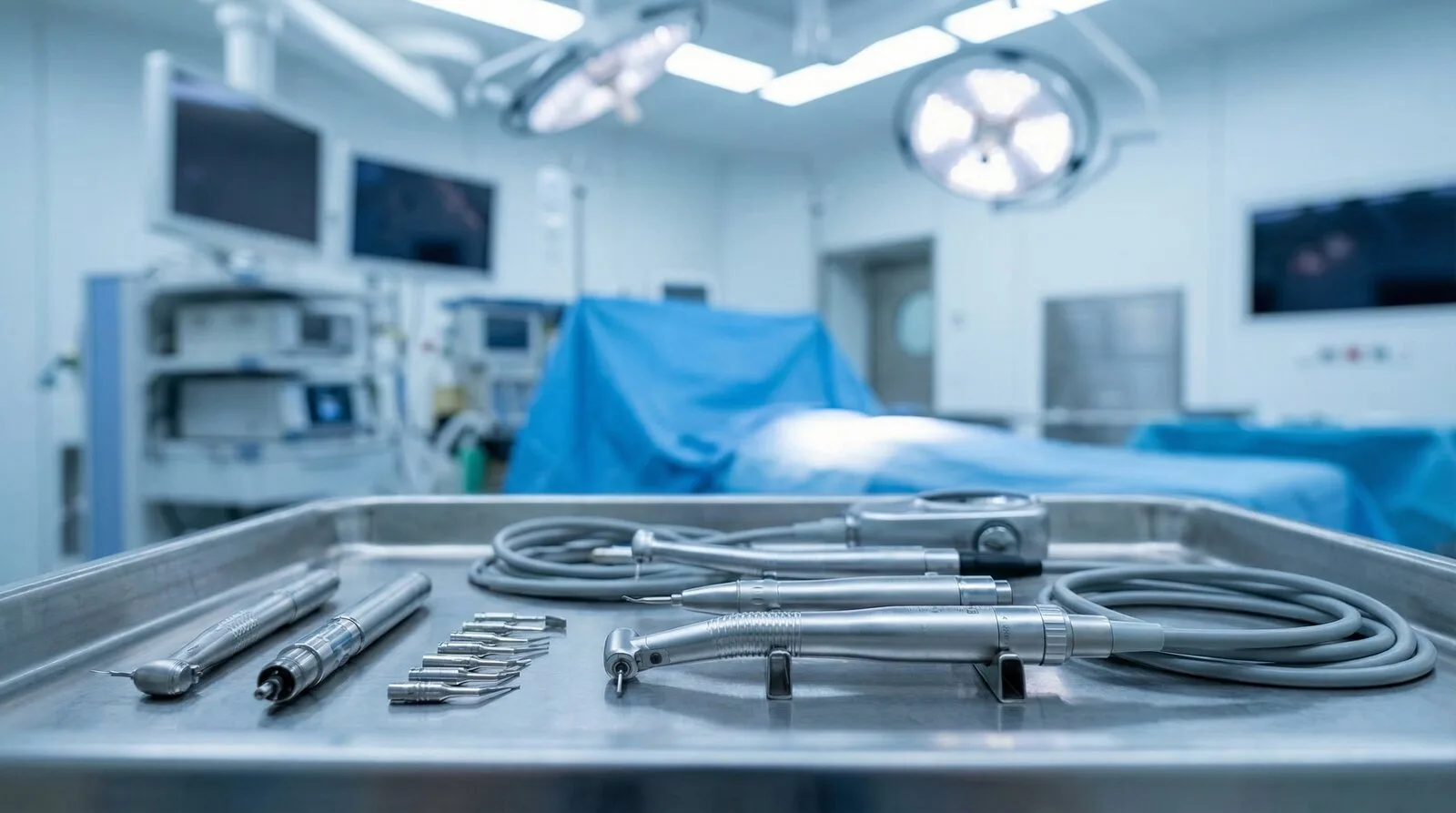
At a glance: Ultrasonic rhinoplasty uses a piezoelectric (piezo) instrument to cut or reshape the nasal bones. It can play a part in treating a bony hump or bony asymmetry, but it does not refine the nasal tip on its own, and it does not replace cartilage grafts or functional planning. Studies suggest less swelling, bruising, and pain early in recovery, although the quality of that evidence is limited. None of this guarantees a recovery without discomfort, or a better final result for every patient.
About my current practice: I, Dr. Walter Zamarian Jr., no longer perform rhinoplasty, either on its own or combined with other procedures. This article remains available as educational content only and is not an offer to evaluate or schedule rhinoplasty.
The term has caught on partly because it sounds modern, and the technology genuinely is useful. What matters is understanding exactly where it works. The piezo instrument acts mainly on the nasal bones. The nasal tip, the cartilages, any grafts, the skin, breathing, and overall facial harmony still depend on the surgical technique as a whole.
What is the piezo instrument in rhinoplasty?
A piezo device uses ultrasonic vibration to cut or sculpt mineralized tissue such as bone. In rhinoplasty, it can be used for steps such as reducing a bony hump, smoothing the bridge of the nose (the nasal dorsum), and performing osteotomies, which are planned cuts in the nasal bones.
The technology came from fields such as maxillofacial surgery and dentistry, where precision in bone is essential. In nasal surgery, its value shows up when the bony work needs to be delicate, symmetrical, and controlled.
What ultrasonic rhinoplasty does best
The main advantage of the piezo instrument is that it allows the bone to be reshaped more gradually and under closer visual control. Instead of relying only on traditional osteotomes and rasps, the surgeon can sculpt bone with finer movements, especially in areas where small irregularities could otherwise become visible.
A 2022 systematic review found less swelling (edema), bruising (ecchymosis), and pain in the early postoperative period, but rated the supporting evidence as weak because of the quality of the underlying studies. A 2024 meta-analysis of clinical trials also identified early benefits and stressed the need for long-term research. These findings do not show that every nose will have a better final result with piezo.
What the piezo instrument does not do
This is the most important point: ultrasonic rhinoplasty does not correct everything. On its own, the piezo instrument does not refine the nasal tip, does not replace cartilage grafts, does not treat thick skin, does not set realistic expectations, and does not turn poor planning into good surgery.
A bulbous nasal tip, for example, depends on the alar (tip) cartilages, the skin, structural support, and tip techniques. A high bridge, a bony hump, or bony asymmetry, on the other hand, may benefit more directly from piezo.
Most common indications
Ultrasonic rhinoplasty may be considered when there is meaningful work to be done on the nasal bones. The most frequent indications include:
- Bony hump: when a raised bridge needs to be reduced or smoothed in a controlled way.
- Asymmetric nasal bridge: when one side needs a different adjustment from the other.
- Thin skin: because small bony irregularities can be more visible.
- Complex osteotomies: when more controlled bone cuts help reposition the bridge.
- Selected secondary rhinoplasty: when the anatomy has already been altered and precision in the bone may be useful.
None of these indications is automatic. The same patient may have a bony hump and, at the same time, need tip refinement, functional correction, or grafts. The device is only one part of the plan.
When it makes less of a difference
Not every structural rhinoplasty needs piezo. When the main problem lies in the nasal tip, the cartilage, the alar base, or thick skin, the advantage of piezo may be small or nonexistent. It does not replace sutures, grafts, septal support, or an analysis of proportions.
The same is true for noses that need little or no bony work. In those cases, a well-performed conventional technique may be enough. The decision should start from the anatomy, not from the appeal of the technology’s name.
Recovery: less bruising for everyone?
Recovery after rhinoplasty depends on many factors: the osteotomies, bleeding, skin, technique, medications, blood pressure, postoperative care, and each person’s individual response. Piezo may reduce trauma during the bony stage, but swelling, bruising, and discomfort can still occur.
Some patients have less bruising around the eyes; others still bruise. The time before returning to social activities also varies. That is why, when I performed rhinoplasty, I preferred to explain that ultrasonic rhinoplasty may support a more comfortable recovery in selected cases, but should not be presented as a recovery without swelling.
Aftercare stays the same: relative rest, keeping the head elevated, taking the right medications, avoiding injury, not handling the nose, and attending follow-up visits. These points are covered in detail in the article on rhinoplasty recovery.
Ultrasonic rhinoplasty and the final result
The final result of a rhinoplasty depends on how the bridge, the tip, the base, breathing, and facial harmony come together. Piezo can help achieve a smoother bony bridge, but it does not determine the final appearance by itself.
With thin skin, a subtle bony irregularity may show more. With thick skin, the skin may soften irregularities but can also limit definition. In every case, planning should take the whole face into account, as I explain in the article on the ideal nose and facial proportions.
Secondary rhinoplasty and piezo
In secondary (revision) rhinoplasty, the anatomy may be altered by scarring, asymmetry, bony irregularities, or loss of support. In some cases, piezo helps with controlled bony work. In others, the greater challenge lies in the cartilage, grafts, skin, or breathing function.
For that reason, I did not regard ultrasonic rhinoplasty as an automatic solution for revisions. It can be useful within a broader plan, especially when there is a clear indication for reshaping bone.
Risks and limitations
Every surgical procedure carries risks. With ultrasonic rhinoplasty, swelling, bruising, bleeding, infection, asymmetry, irregularities, changes in sensation, breathing difficulty, the need for revision, and dissatisfaction with the result all remain possible. The device does not eliminate these risks.
There is also a learning curve. Piezo requires adequate exposure, familiarity with the instruments, and an understanding of when its use genuinely adds value. The deciding factors are still the right indication and the execution of the operation as a whole.
How the choice between piezo and conventional technique is made
At a consultation with the responsible surgeon, the evaluation considers the nasal bridge, any bony hump, the width of the nasal bones, the tip, the skin, the septum, breathing, and expectations. If the bony work is significant and piezo adds precision or reduces trauma, it may be indicated. If the case is mainly about cartilage or the tip, the priority may lie with other techniques.
I am Dr. Walter Zamarian Jr., a plastic surgeon in Londrina, Brazil (medical license CRM-PR 17.388; plastic surgery specialty registration RQE 15.688), and a member of the Brazilian Society of Plastic Surgery (SBCP) and the American Society of Plastic Surgeons (ASPS). I have performed more than 8,000 operations over two decades of practice; today, by deliberate choice, I perform three facelifts a week, about 150 a year. This article draws on my earlier experience with rhinoplasty and is intended for education only. In rhinoplasty, the experience of the responsible surgeon matters more than the name of the instrument used.
Frequently asked questions about ultrasonic rhinoplasty
What is ultrasonic rhinoplasty?
Ultrasonic rhinoplasty is the use of piezoelectric instruments to cut or sculpt the nasal bones with greater control. It works mainly on the nasal bones and does not replace the other steps of rhinoplasty.
Does ultrasonic rhinoplasty cause less bruising?
It may reduce swelling and bruising in some cases, especially when osteotomies are performed, but bruising and swelling can still occur. Recovery depends on the technique, the individual patient, postoperative care, and the extent of the surgery.
Does piezo improve the nasal tip?
Not directly. The piezo instrument works mainly on the nasal bones. Tip refinement depends on cartilage, sutures, grafts, skin, and structural support.
Is ultrasonic rhinoplasty always better than conventional rhinoplasty?
No. Ultrasonic rhinoplasty can be advantageous in cases with significant bony work, but a well-indicated conventional technique remains appropriate for many patients. The best choice depends on the anatomy and the surgical plan.
Technical references
- Piezoelectric Osteotomy versus Conventional Osteotomy in Rhinoplasty: A Systematic Review and Meta-analysis.
- Piezosurgery and Conventional Osteotomies in Rhinoplasty: Systematic Review.
- Piezosurgery Compared to Conventional Osteotomy in Rhinoplasty.
- Interventions to Decrease Postoperative Edema and Ecchymosis after Rhinoplasty.
When judging whether an indication is sound, it helps to notice whether the surgeon explains why piezo would or would not be used in your case. That criterion is part of the guide on how to choose a rhinoplasty surgeon.
Read Also
This page in other languages: Português (BR)

Dr. Walter Zamarian Jr.
Plastic surgeon in Londrina, Brazil (CRM-PR 17.388 | RQE 15.688), full member of SBCP and ASPS. He has worked in plastic surgery for more than 20 years, with a focus on individualized planning, patient safety, Deep Plane facelift, eyelid surgery, facial fat grafting, and female intimate surgery.
Follow this blog on Google
Want to find more articles from this blog on Google? Add Dr. Walter Zamarian Jr. to your preferred sources.
Leave a comment