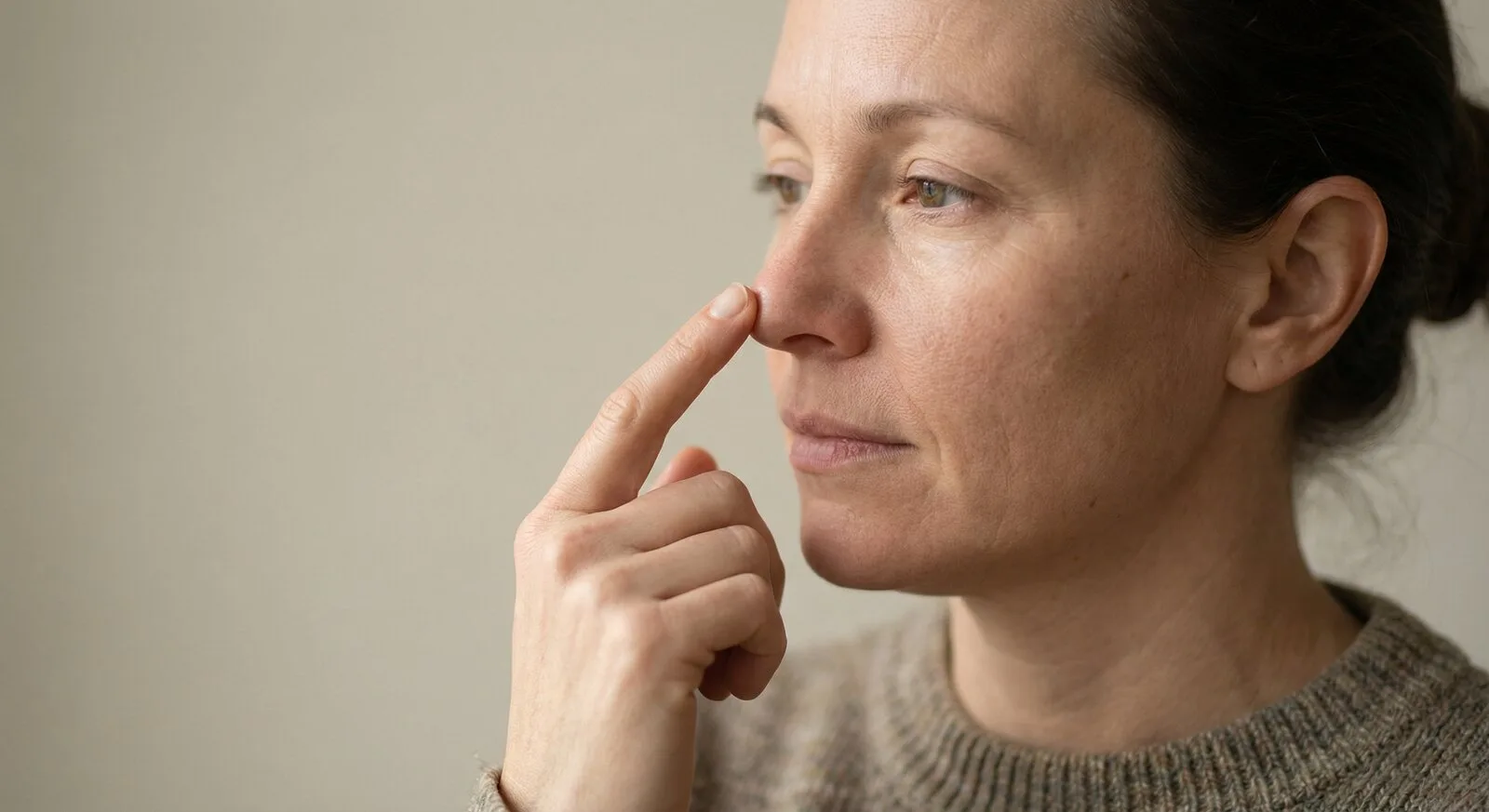
Quick answer: A bulbous nasal tip is a rounded, broad or poorly defined tip. Thick skin, wide tip cartilages and limited support can contribute, often together. Rhinoplasty may refine the tip when there is an appropriate anatomical indication, but skin and healing limit how much definition is possible. Not every rounded tip needs surgery. I start by distinguishing the cause of the appearance from the wish to make the nose smaller.
About my current practice: I no longer perform rhinoplasty. I am keeping this article available for educational purposes.
Two noses can look similarly rounded while having very different anatomy. One may have broad lower lateral cartilages; another may have a thick skin envelope that obscures the framework beneath it. A tip with limited projection may also look broader or flatter than expected.
In this article, I explain those causes and the limits they place on refinement. That is a different question from choosing a complete surgical plan. Understanding why the tip looks rounded helps make a discussion of treatment more realistic.
Why does the tip look bulbous?
The nasal tip consists of skin, tissue beneath the skin, cartilage, ligaments and central support. I would not reduce an assessment to the amount of tissue that might be removed. Shape, strength, breathing and the way the tip relates to the rest of the face all matter.
Thick skin
Thicker skin may include a more substantial layer of fibrofatty tissue and more active oil glands. It can soften the visible outline of the underlying cartilage. Even after the framework is refined, the skin may limit how sharply that change shows at the surface.
This does not mean that improvement is impossible. It does mean that expectations should reflect the skin envelope. The systematic review on rhinoplasty in thick-skinned noses discusses the need for an individualized approach to these patients.
Broad or weak tip cartilages
The lower lateral, or alar, cartilages help shape the nasal tip. Width, curvature, divergence and limited support may contribute to a broad, square or rounded appearance.
Refining sutures, conservative reshaping and cartilage grafts may help organize that framework. Removing too much cartilage, however, can weaken the tip and affect the nasal valve. I consider preservation of support part of the same discussion as appearance.
Tissue beneath the skin and limited projection
A substantial layer of tissue between the skin and cartilage can add fullness. In selected cases, careful thinning of that tissue, sometimes called defatting, may be considered. It must remain conservative because the skin needs a reliable blood supply.
A tip that projects too little can also appear bulbous. In that situation, support and proportion may matter more than reduction. The goal may be to improve projection and define the tip’s contours rather than simply remove volume.
A rounded tip is not the same as a wide nasal base
During my work in rhinoplasty, I assessed skin thickness, cartilage shape, tip projection, nostril width, bridge height, symmetry and breathing together. The relationship between the nose, chin, lips and eyes was also part of the assessment.
Someone may describe the whole nose as broad when the main concern is actually the nostril base, a low bridge or a tip that lacks projection. These are different anatomical issues. The term “bulbous nose” is a description of appearance, not a diagnosis that automatically identifies one treatment.
How can the tip be refined?
The techniques are selected according to anatomy and function. I describe them here to explain the reasoning, not as a recipe that every nose should follow.
Refining sutures
Sutures can help control tip width, projection and rotation. Interdomal sutures bring the tip-defining points closer together; transdomal sutures may modify the curve of the cartilage. Other sutures help organize symmetry and support.
The aim is a stable contour compatible with the skin, not a tightly pinched tip. Sutures alone may not create the desired definition beneath very thick skin.
Conservative cartilage reshaping
When the lower lateral cartilages are broad, a conservative reduction of their upper portion may be considered. Enough structure must remain to avoid pinching, collapse, irregularity or loss of nasal-valve support.
This balance between refinement and reinforcement is central to structural rhinoplasty. I explain the broader distinction in structural versus preservation rhinoplasty.
Cartilage grafts
Grafts may reinforce a weak tip, improve projection or create more defined contours. Examples include a columellar strut, shield graft or cap graft. Cartilage may come from the septum, ear or rib, depending on what is needed and available.
The amount must be proportionate. Too much can produce stiffness, prominence or an artificial appearance. Too little support may not achieve the intended change beneath a thick skin envelope.
Managing thick skin
Careful reduction of tissue beneath the skin may help selected patients, but aggressive thinning can threaten the skin’s blood supply and create irregularities. Thick skin calls for planning and patience. Internal support, healing and follow-up may be more important than an attempt to make the skin envelope excessively thin.
Refinement should not erase facial identity
A rounded tip may be part of a person’s familial or ethnic features. Refinement does not need to mean removing those characteristics or making every nose look alike.
In noses with thick skin, a low bridge or weak cartilage, surgery may involve building support as much as reducing tissue. I consider breathing, facial proportions and a natural appearance together rather than treating a narrow tip as an end in itself.
What can reasonably be expected?
Thick skin can limit visible tip definition and influence the course of swelling. The appearance continues to evolve over months, and follow-up needs to distinguish swelling and scar tissue from the underlying framework. The 2023 systematic review supports planning adapted to the individual rather than a standardized result.
When imaging or simulation is used, I regard it as a communication tool. It can help explain a direction of change but cannot predict exactly how skin, swelling and healing will respond. The 3D rhinoplasty simulation article discusses those limits.
What about steroid injections after surgery?
In selected cases, locally injected corticosteroid may be considered for persistent swelling or particular scar-related changes. It is not a universal step in recovery. Concentration, amount, placement and timing require clinical judgment because inappropriate use can produce depressions, skin changes or irregularities.
I am describing a possible supervised treatment, not recommending self-treatment. The technical review on rhinoplasty indications and techniques provides context for postoperative management.
Why might a tip remain broad after surgery?
Possible reasons include an untreated underlying cause, a thick skin envelope or loss of support. Revision planning is more complex when internal scar tissue, limited remaining cartilage or breathing problems are involved.
The priority is to understand the cause and restore appropriate support and function, rather than pursue an extremely thin tip. The revision rhinoplasty guide explains why a second operation needs its own assessment.
Questions that make a discussion more useful
During my earlier work with bulbous tips, the assessment was about separating what could be refined from what needed to be preserved. A useful discussion should explain skin thickness, cartilage shape, breathing, risks, swelling and realistic limits.
For the wider procedure context, read the bulbous nose rhinoplasty information page. This article focuses on causes and expectations; that page describes the surgical approach in more detail.
Frequently asked questions
What causes a bulbous nasal tip?
Thick skin, broad lower lateral cartilages, substantial tissue beneath the skin and limited tip projection or support may contribute. More than one factor is often involved.
Can rhinoplasty make the tip narrower?
It may refine the tip when the anatomy supports that goal. The degree of visible definition depends on skin, cartilage, support and healing. Thick skin can make the change less sharply defined.
Does thick skin rule out rhinoplasty?
No. It changes the planning and expectations. Additional structural support, individualized follow-up and patience with swelling may be important.
Is the result immediate and permanent?
No result should be described in absolute terms. Structural changes may be lasting, but healing, swelling, skin characteristics, aging and individual anatomy continue to influence appearance.
Technical references
- Rhinoplasty for Thick-Skinned Noses: A Systematic Review.
- Endonasal suture techniques in tip rhinoplasty.
- NCBI Bookshelf: Rhinoplasty.
- Rhinoplasty: indications and techniques.
This article in other languages: Português
Read Also
This page in other languages: Português (BR)

Dr. Walter Zamarian Jr.
Plastic surgeon in Londrina, Brazil (CRM-PR 17.388 | RQE 15.688), full member of SBCP and ASPS. He has worked in plastic surgery for more than 20 years, with a focus on individualized planning, patient safety, Deep Plane facelift, eyelid surgery, facial fat grafting, and female intimate surgery.
Follow this blog on Google
Want to find more articles from this blog on Google? Add Dr. Walter Zamarian Jr. to your preferred sources.
Leave a comment