At a glance: In the first days after rhinoplasty, protect your nose from pressure and bumps, keep your head elevated, and follow your team’s prescriptions and hygiene instructions. Don’t blow your nose or go back to exercise that carries a risk of impact until you are cleared. Recovery does not end when the splint comes off. Persistent bleeding, fever, foul-smelling discharge, or pain that keeps getting worse means you should contact your team; shortness of breath or a change in your vision needs immediate care.
About my current practice: I no longer perform rhinoplasty. This article remains available as educational content only.
This guide brings together general guidance on recovering from rhinoplasty. It does not replace the specific instructions you receive after your own surgery, because every case can differ: the technique used, whether a septoplasty was done at the same time, the use of grafts, thick skin, a secondary (revision) rhinoplasty, or a functional problem that was corrected.
The first 24 to 48 hours
In the first few hours, patients are usually discharged once the surgical and anesthesia team has assessed them. Drowsiness, light bleeding, a blocked nose, swelling, discomfort, and a feeling of pressure are common. The nasal splint protects the bridge of the nose (the dorsum) and helps hold the structure in place during the earliest phase of healing.
Some protocols use nasal packing or internal splints; others do not. With packing, breathing through your mouth can be uncomfortable, but the packing is usually removed after a short time, as your team directs. Without packing, breathing through your nose may still be limited by swelling inside it.
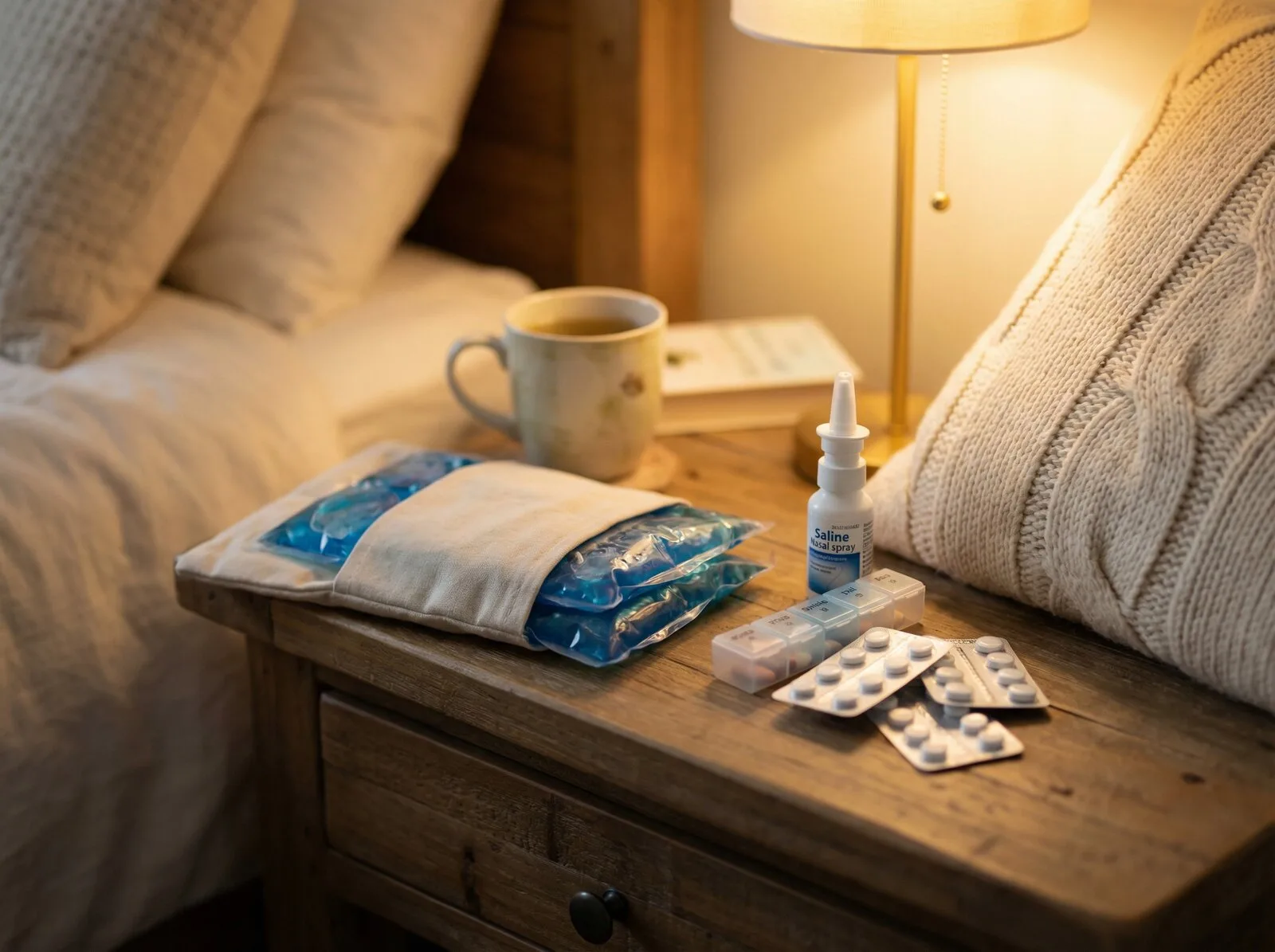
- Keep your head elevated: it helps control swelling and bleeding.
- Cold compresses: use them only as your team instructs, without resting ice or compresses directly on your nose and without pressing on the splint.
- Light meals: they reduce nausea and spare you heavy chewing in the first days.
- Medications: take them exactly as prescribed, and do not add anti-inflammatories, blood thinners, or herbal products on your own.
- Relative rest: short walks may be recommended, but physical exertion should be avoided.
Saline nasal rinses
Rinsing the nose with saline is one of the most important parts of rhinoplasty aftercare. It helps clear crusts, secretions, and leftover blood, makes you more comfortable, and helps your breathing recover. How you rinse, how often, and when you start all depend on the surgery and should follow your team’s instructions.
Do not blow your nose early on: the pressure can increase bleeding, dislodge clots, or irritate the lining of the nose. If you need to sneeze, do it with your mouth open. Cotton swabs, tweezers, or any handling inside the nose without guidance can injure that lining.
The first week: splint, stitches, and early swelling
The first week is usually when swelling is most visible. Swelling, bruising, and discoloration around the eyes can appear, especially when osteotomies or other bone work were part of the operation. Techniques such as ultrasonic (piezo) rhinoplasty may reduce trauma in some cases, but they do not rule out bruising or swelling.
The splint, and the stitches when they are used, are usually removed at a scheduled follow-up visit. When you see your nose for the first time, it is essential to remember that it is still swollen. Temporary asymmetry, a tip that looks turned up, a stiff bridge, and a sense that your nose looks strange can all be part of this phase.
Weeks 2 to 4: a gradual return to routine
Between the second and fourth weeks, many patients go back to light social and work activities. When you can return depends on the kind of work you do, your commute, exposure to heat, physical effort, and the chance of getting bumped. Desk jobs usually allow an earlier return than physically demanding work or settings where injury is a risk.
Exercise should be cleared step by step. Light walking may be allowed first; weight training, intense running, swimming, and contact sports take longer. Your nose is still healing, and an impact during this phase can compromise how it evolves.
Glasses, sun, and skin protection
Glasses that rest on the bridge of the nose can press on bones and cartilage that are still healing. How long you need to avoid them depends on the type of rhinoplasty, whether osteotomies were done, and how stable the bridge is. When needed, alternatives such as contact lenses or ways of supporting the frames off the bridge can be used, always as your surgeon advises.
Sun protection matters too. Strong sun can worsen swelling, blotchiness, and darkening of the skin over bruised areas or scars. Sunscreen, physical barriers such as a hat, and avoiding direct exposure all help the quality of your recovery.
Nasal taping
Nasal taping with paper surgical tape (such as Micropore) may be recommended to help control swelling and help the skin settle over the new structure. It is especially useful in some cases of thick skin or a tip that stays swollen. Still, the tape should never be applied with excessive force, and it does not replace your follow-up visits.
Patients with a bulbous tip or thick skin may need longer follow-up, as I explain in my article on the bulbous nasal tip. The tip is usually the last area to become defined.
Months 2 to 6: gradual refinement
After the first month, the nose usually looks more natural, but it is still far from fully mature. Lingering swelling can change how the bridge, the tip, and the symmetry look. In some patients, particularly those with thick skin, refinement of the tip is slow.
During this period, follow-up visits check your breathing, scarring, swelling, sensation, cosmetic progress, and whether your care routine needs adjusting. Following your postoperative instructions remains important even when you already feel well.
The final result: when to judge it
There is no single date by which every nose has matured. The ASPS describes contour refinement continuing for up to a year. Any assessment should take into account your skin, how you heal, and how extensive the surgery was; whether you need longer follow-up is decided at your visits.
That is why realistic expectations are essential. Early photos can cause anxiety because they capture swelling and temporary asymmetry. My article on realistic expectations in plastic surgery explains why a result has to be judged within the right biological timeframe.
Warning signs
Some symptoms call for contacting your team or seeking urgent care: heavy or persistent bleeding, fever, pain that keeps getting worse and does not improve with medication, significant redness, foul-smelling discharge, shortness of breath, changes in vision, an injury to the nose, chest pain, or a painful, swollen calf.
These signs should never be brushed off. Most recoveries go well, but problems caught early are handled more safely. The same realistic-expectations article goes deeper into the real risks of plastic surgery.
Why follow-up matters after rhinoplasty
I am Dr. Walter Zamarian Jr., a plastic surgeon in Londrina, Brazil (medical license CRM-PR 17.388; plastic surgery specialty registration RQE 15.688), a member of the Brazilian Society of Plastic Surgery (SBCP) and of the American Society of Plastic Surgeons (ASPS), with more than 8,000 operations over two decades. Today, by deliberate choice, I perform three facelifts a week, about 150 a year. Like my rhinoplasty overview, this article is educational. Follow-up visits with the surgeon who performed your operation are where instructions get adjusted, breathing is assessed, and the cosmetic outcome is tracked realistically.
Choosing a surgeon is not only about how the operation is done but also about how recovery is managed. That criterion is part of my guide on how to choose a rhinoplasty surgeon.
Frequently asked questions about rhinoplasty aftercare
How long does the nasal splint stay on after rhinoplasty?
The splint usually stays on for about a week, but that can vary with the technique and the surgeon’s instructions. When it comes off, your nose will still be swollen, so what you see should not be taken as the final appearance.
When does swelling after rhinoplasty improve?
Swelling eases gradually over the first few weeks, but residual swelling, especially in the tip, can persist for months. With thick skin or a secondary rhinoplasty, definition can take longer.
Can I wear glasses after rhinoplasty?
Glasses that rest directly on the bridge of the nose should be avoided until your surgeon clears them, especially if osteotomies were performed. How long depends on your case and on how stable the nasal structure is.
When can I go back to exercise?
Physical activity returns gradually. Light walking may be allowed earlier, while intense workouts and contact sports take longer and should depend on your surgeon’s assessment.
Sources
- American Society of Plastic Surgeons: Rhinoplasty Recovery.
- CDC: Surgical Site Infection Basics.
- American College of Surgeons: Surgical Wound Care.
- Interventions to Decrease Postoperative Edema and Ecchymosis after Rhinoplasty.
Read Also
This page in other languages: Português (BR)

Dr. Walter Zamarian Jr.
Plastic surgeon in Londrina, Brazil (CRM-PR 17.388 | RQE 15.688), full member of SBCP and ASPS. He has worked in plastic surgery for more than 20 years, with a focus on individualized planning, patient safety, Deep Plane facelift, eyelid surgery, facial fat grafting, and female intimate surgery.
Follow this blog on Google
Want to find more articles from this blog on Google? Add Dr. Walter Zamarian Jr. to your preferred sources.
Leave a comment