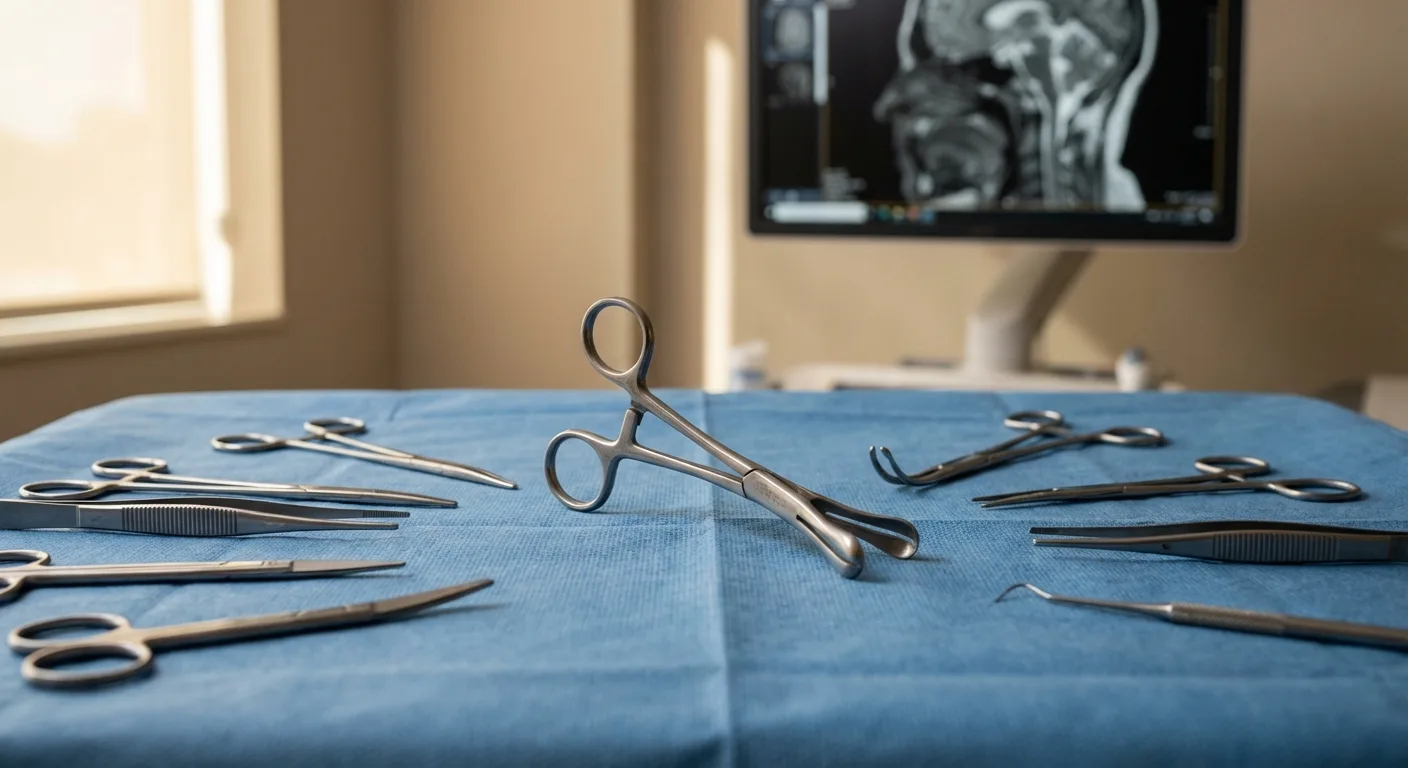
At a glance: Open rhinoplasty adds an incision across the columella, the strip of skin between the nostrils, to give a wider view of the nasal structures. Closed rhinoplasty uses incisions inside the nose. The choice depends on the changes needed, the anatomy, and the surgeon’s experience. A meta-analysis published in 2025 found no significant difference in swelling or outcomes between the two approaches; that does not prove they are equivalent in every case, and it does not justify promising a faster recovery with either one.
About my current practice: I no longer perform rhinoplasty. This article remains available as educational content only.
What is the difference between open and closed rhinoplasty?
Both approaches can be used to perform a rhinoplasty. The difference is in how the surgeon gains access. In the open approach, there are incisions inside the nose plus a small incision across the columella, the strip of skin between the nostrils. In the closed approach, the incisions stay inside the nostrils.
This difference mainly changes how well the surgeon can see the nasal tip, the alar cartilages, the septum, the bridge (dorsum), and where grafts are placed. It does not change the need for a diagnosis: the nose has to be evaluated in terms of its bones, cartilage, skin, breathing function, and proportion to the face.
Open rhinoplasty
The open approach gives a wider view of the nasal structures. This can help when the surgery involves a complex tip, asymmetries, cartilage grafts, reconstruction, secondary (revision) rhinoplasty, or a functional correction done at the same time.
The columellar scar is usually small and well placed, but it does exist. How it looks in the end depends on technique, tension, skin thickness, individual healing, aftercare, and the time it takes to mature. Swelling of the tip can be more noticeable early on, especially with thick skin.
Closed rhinoplasty
In the closed approach, the surgeon works through incisions inside the nose. It can be useful when a case calls for more limited adjustments to the bridge, small tip corrections, or work on a relatively symmetric nose that does not need major reconstruction.
The closed approach avoids the external incision on the columella, but it offers a more limited direct view. Depending on the case and the surgeon’s experience, that can make some extensive maneuvers harder. The 2025 meta-analysis did not consistently show less swelling, so that advantage should not be promised.
How the approach is chosen
The choice between open and closed should be driven by anatomy, not only by a fixed preference. The right question is: which approach allows the plan to be carried out with more control and less risk for this particular nose?
- Complex nasal tip: may favor the open approach when there is asymmetry, or when rotation, projection, sutures, or grafts are involved.
- Simple bridge work: may allow the closed approach when the correction is limited and the tip does not need reconstruction.
- Deviated septum and breathing: may call for a septorhinoplasty, with the approach chosen according to the extent of the deviation and the state of the nasal valves.
- Thick skin: requires planning for support and definition.
- Revision: usually needs a wider view, because there is internal scarring, weakened cartilage, or altered anatomy.
Structural, preservation, and ultrasonic rhinoplasty
The surgical approach should not be confused with the philosophy behind the surgery. Structural rhinoplasty uses support, sutures, and grafts when the anatomy needs to be reinforced. Preservation rhinoplasty tries to keep existing structures when that is possible and safe. Ultrasonic rhinoplasty refers to a technology for working on the bones more selectively.
These concepts can be combined in different ways. One case may be structural and open; another may include preservation elements; another may use ultrasonic technology on the bridge. To go further, read my comparison of structural vs. preservation rhinoplasty.
Scarring, swelling, and recovery
The scar from the open approach sits on the columella. It tends to mature over months, but it should not be promised as invisible. Thicker skin, a tendency toward raised scars, smoking, local tension, and inadequate aftercare can all affect the result.
Swelling also varies. The nasal tip, thick skin, revision surgery, grafts, osteotomies (controlled cuts in the nasal bones), ultrasonic rhinoplasty, and an associated functional procedure all change the recovery. The timeline should be discussed individually.
Cartilage grafts
Grafts may be needed to support the tip, the nasal valve, the bridge, or the sides of the nose (the alae). They can come from the septum, the ear, or a rib, depending on what is needed and available. The open approach makes placement easier in many cases, but whether grafts are indicated depends on the surgical plan.
When the nasal structure needs reinforcing, the discussion is not purely aesthetic. Inadequate support can affect shape, breathing, and stability. See also my article on cartilage grafts in rhinoplasty.
Frequently asked questions about open vs. closed rhinoplasty
Does open rhinoplasty leave a scar?
Yes, there is an incision on the columella. It is usually small and planned in an inconspicuous area, but how it looks depends on individual healing, technique, and aftercare.
Is recovery faster after closed rhinoplasty?
That cannot be guaranteed. Recovery depends on how extensive the surgery is, the tissues involved, and your individual response. The comparison published in 2025 found no significant difference in swelling between the approaches; choosing the closed approach only because of a promise of faster swelling resolution would not be appropriate.
Which approach is better for the nasal tip?
When the tip needs reconstruction, has significant asymmetry, or requires grafts, the open approach can offer more visual control. For limited adjustments, the closed approach may be enough.
Is preservation rhinoplasty open or closed?
It can be either. “Preservation” describes the philosophy of keeping structures when appropriate; “open” or “closed” describes the access. The combination depends on the anatomy.
Does the patient choose the approach?
Patients should understand the options and voice their concerns, but the technical choice has to respect safety, anatomy, and the surgical plan.
What should be evaluated before this decision?
The evaluation with the surgeon in charge considers the front view, profile, base of the nose, skin, tip, bridge, septum, nasal valves, breathing, previous surgeries, and expectations. The decision between open and closed comes after that examination, not before it.
My training includes the Pitanguy school and learning from Dr. Tim Marten and Dr. Mike Nayak in the United States during ASAPS meetings. That experience broadens my technical repertoire, but the final decision is always individual: what the nose needs in order to be treated safely and coherently.
I am Dr. Walter Zamarian Jr., a plastic surgeon in Londrina, Brazil (medical license CRM-PR 17.388; plastic surgery specialty registration RQE 15.688), a member of the Brazilian Society of Plastic Surgery (SBCP) and of the American Society of Plastic Surgeons (ASPS), with more than 8,000 operations over two decades. Today, by deliberate choice, more than 90% of my operations are deep plane facelifts with fat grafting, three a week (about 150 a year). Learn more about my training and career.
Source
Read Also
This page in other languages: Português (BR)

Dr. Walter Zamarian Jr.
Plastic surgeon in Londrina, Brazil (CRM-PR 17.388 | RQE 15.688), full member of SBCP and ASPS. He has worked in plastic surgery for more than 20 years, with a focus on individualized planning, patient safety, Deep Plane facelift, eyelid surgery, facial fat grafting, and female intimate surgery.
Follow this blog on Google
Want to find more articles from this blog on Google? Add Dr. Walter Zamarian Jr. to your preferred sources.
Leave a comment