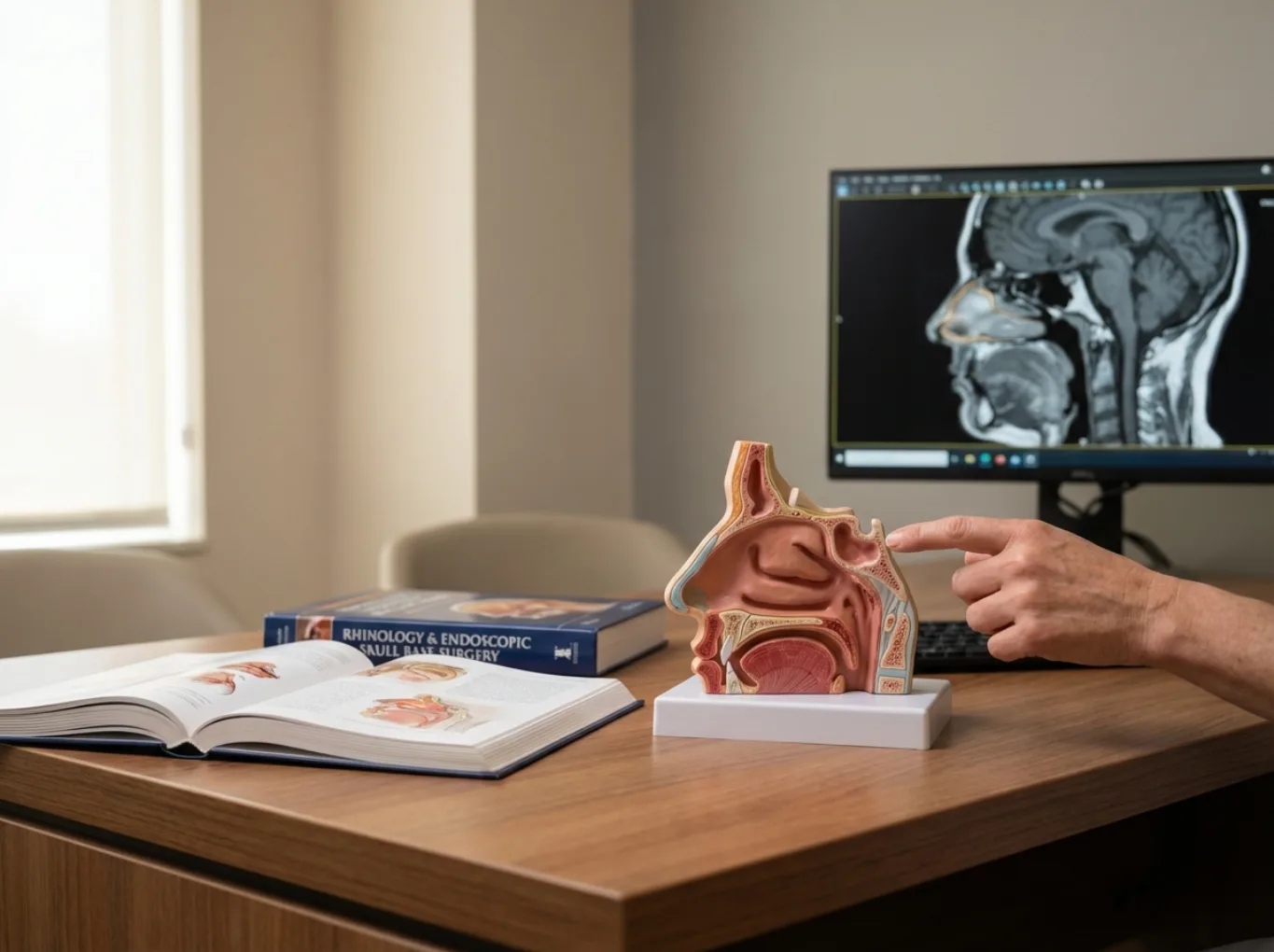
Quick answer: Cartilage grafts may be used in rhinoplasty to support the tip, rebuild weak structures, refine contours or support the nasal valve. They are not necessary in every operation. Septal, ear and rib cartilage have different properties; the choice depends on the amount and strength of support needed. Harvesting and using cartilage also involves risks, including donor-site pain and scarring, warping, infection and resorption. I consider those trade-offs part of the decision, especially in revision surgery.
About my current practice: I no longer perform rhinoplasty. I am keeping this article available for educational purposes.
Rhinoplasty is not simply a matter of making the nose smaller. In my experience with nasal surgery, a stable shape and effective breathing often depended on repositioning, reinforcing or rebuilding structures. A cartilage graft is one tool for that work. Its value comes from the problem it solves, not from the fact that a graft is being used.
What is a cartilage graft?
A graft is a piece of cartilage shaped during surgery and placed where support or contour correction is needed. It may come from the patient’s nasal septum, ear or rib. The source, shape and position depend on the job the graft needs to do.
In structural rhinoplasty, grafts form part of a reconstructive approach: preserving, repositioning and reinforcing structures rather than relying only on removal. Preservation techniques may need fewer grafts in some cases, but weakness, asymmetry or functional problems can still require additional support. I discuss that distinction in structural versus preservation rhinoplasty.
Different grafts have different jobs
The technical names can be confusing. I find it more useful to start with their purpose:
- Spreader grafts sit in the middle part of the nose and may help maintain or restore the internal nasal valve, particularly when the nose is narrow, deviated or at risk of collapse.
- Septal extension grafts attach to the septum and help control tip projection, rotation and support.
- Columellar struts provide support between the tip cartilages when the existing structure is weak.
- Alar batten grafts reinforce the lateral nasal wall in selected cases of collapse or external-valve weakness.
- Alar rim grafts support the edge of the nostril when retraction, asymmetry or pinching is a concern.
- Camouflage grafts soften contour irregularities, particularly under thin skin or in revision surgery.
These are not interchangeable pieces. The appropriate graft in the appropriate position may improve structure, function or contour. Too much reinforcement can also make the nose stiff or create an unnatural appearance. The aim is proportionate support.
Where does the cartilage come from?
Nasal septum
The septum is often the first source considered when enough suitable cartilage is available. It provides relatively straight, firm material that can be useful for structural grafts. Harvesting must preserve the support of the nose and avoid compromising breathing.
Previous surgery changes this discussion. Some septal cartilage may already have been used, and what remains may not provide the amount or strength required for reconstruction.
Ear cartilage
Cartilage from the bowl of the ear is curved and flexible. Those qualities can be useful for contour grafts, parts of the nasal tip or nostril, and selected revision problems.
A scar can often be placed behind the ear, but a less visible scar does not mean there are no donor-site risks. Pain, altered sensitivity, a collection of blood, asymmetry and healing all need to be discussed.
Rib cartilage
Rib cartilage may be considered when a larger amount of material or stronger support is needed. Examples include some revision operations, substantial reconstruction or a nose with little suitable septal cartilage remaining.
It provides abundant material but requires a chest incision and adds donor-site considerations. Pain, scarring, contour changes and bleeding can occur; less common but more significant complications also need to be addressed during consent. The graft itself may warp, partially resorb or require further adjustment. The systematic review of autologous rib-cartilage complications discusses these trade-offs.
A patient’s own cartilage, donor cartilage or a synthetic implant?
Autologous cartilage means tissue taken from the same patient. It is often useful because of its compatibility with the surrounding tissues. During my work in rhinoplasty, it was my preference when technically appropriate. I would not turn that preference into a rule for every patient or every reconstructive problem.
A patient’s own cartilage is not free of complications. Resorption, displacement, infection, irregularities and asymmetry remain possible. Donor cartilage and synthetic materials require their own discussion of evidence and risks rather than being treated as one category.
Synthetic nasal implants may be associated with infection, visibility, movement or extrusion, which means exposure or passage of the material through the surrounding tissue. The right comparison depends on the material, the operation and the patient’s anatomy.
Can a graft improve breathing?
It may help when obstruction is related to structural weakness, narrowing of the nasal valve or collapse of the lateral wall. Some changes after previous surgery also require structural reconstruction.
However, a graft is not a general treatment for every blocked nose. Rhinitis, enlarged turbinates, septal deviation, valve problems, scar tissue and internal anatomy need to be assessed together. In some operations the graft’s purpose is primarily functional; in others it is mainly support, contour or prevention of a structural problem.
I explain the relationship between form and breathing on the rhinoplasty information page.
Risks and limits to discuss before surgery
I would include the following in a discussion about cartilage grafting:
- Resorption: some graft volume can be lost over time. Material and preparation affect behavior; fragment size alone cannot predict the outcome.
- Warping: cartilage, particularly rib cartilage, may curve after shaping.
- Visibility or palpable edges: thin skin may reveal even small contour irregularities.
- Asymmetry: healing, swelling, pre-existing anatomy and positioning can all contribute.
- Displacement, infection or extrusion: these are possible even with the patient’s own cartilage.
- Donor-site problems: pain, scarring, sensitivity changes, bleeding or contour irregularity may occur where the cartilage is taken.
These risks are a reason for careful indication and follow-up, not a reason to assume that grafts should always be avoided. They also explain why a plan should describe what a graft is intended to achieve and what it cannot guarantee.
When additional support matters most
Grafts may be particularly relevant when the tip is weak, the skin is thick, the nostril rim is retracted, the nasal valve collapses or previous trauma or surgery has reduced support. Revision surgery can be more demanding because scar tissue and limited remaining cartilage change the options. The revision rhinoplasty guide explains that wider context.
With thick skin, simply removing more tissue does not necessarily create better definition. Internal support and realistic expectations are important because the skin affects how the underlying framework becomes visible.
Nasal filler is a different kind of intervention. It may camouflage selected contours but does not reconstruct the nasal framework in the same way as surgery or replace assessment of a breathing complaint. It also has vascular risks of its own. I explain the distinction in non-surgical versus surgical rhinoplasty.
Frequently asked questions
Does every rhinoplasty need cartilage grafts?
No. Grafts are considered when support, reconstruction, nasal-valve treatment or a particular contour problem calls for them. The existing anatomy and the goals of the operation guide the choice.
When might rib cartilage be needed?
It may be an option when there is not enough suitable septal cartilage, particularly in some revisions, traumatic injuries or substantial reconstructions. Its quantity and strength must be weighed against donor-site and graft-related risks.
Can a cartilage graft bend or be absorbed?
Yes. Warping, partial resorption, displacement and irregularity are possible. Selection, preparation, shaping and fixation are intended to reduce those risks, not eliminate them.
Is more grafting always better?
No. The amount and position should fit the structural problem. Excessive reinforcement can produce stiffness or an unnatural contour; inadequate support may fail to address the original weakness.
Can synthetic material automatically replace my own cartilage?
No. Different materials have different properties and complications. The decision requires an individual comparison rather than an assumption that one is a direct substitute for another.
Further reading
For a broader understanding of nasal anatomy and planning, start with the rhinoplasty information page. The following sources support the technical discussion:
- American Society of Plastic Surgeons: rhinoplasty risks and safety.
- Structural grafts and suture techniques in functional and aesthetic rhinoplasty.
- Autologous costal-cartilage complications in rhinoplasty.
This article in other languages: Português
Read Also
This page in other languages: Português (BR)

Dr. Walter Zamarian Jr.
Plastic surgeon in Londrina, Brazil (CRM-PR 17.388 | RQE 15.688), full member of SBCP and ASPS. He has worked in plastic surgery for more than 20 years, with a focus on individualized planning, patient safety, Deep Plane facelift, eyelid surgery, facial fat grafting, and female intimate surgery.
Follow this blog on Google
Want to find more articles from this blog on Google? Add Dr. Walter Zamarian Jr. to your preferred sources.
Leave a comment