
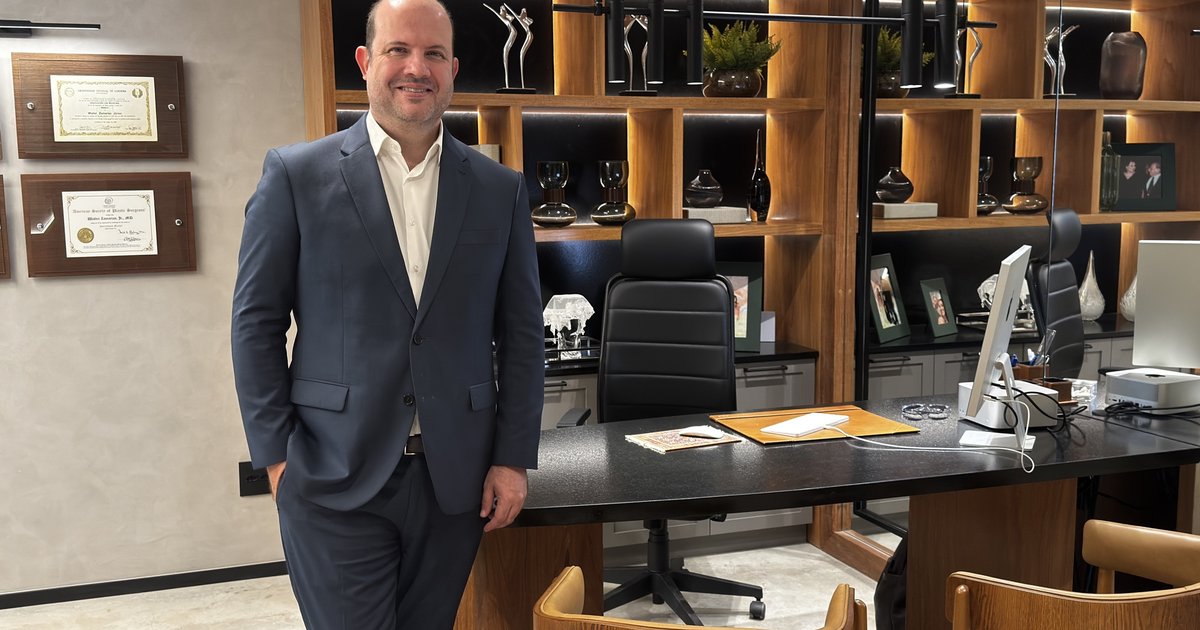
By Dr. Walter Zamarian Jr. — CRM-PR 17,388 | RQE 15,688
The rise of GLP-1 medications like Ozempic (semaglutide) and Wegovy has transformed weight loss treatment worldwide. But many patients are discovering an unexpected side effect: significant facial volume loss that can add years to their appearance — even as their body looks better than ever.
This phenomenon, widely known as “Ozempic face,” has driven a surge in facial rejuvenation consultations. As a plastic surgeon specializing in Deep Plane facelift combined with facial fat grafting, I’m uniquely positioned to address this complex problem. Here’s what you need to know.
What Is “Ozempic Face”?
When patients lose significant weight — whether through GLP-1 medications, bariatric surgery, or diet — the face loses fat volume alongside the body. Unlike body fat, facial fat loss is almost always undesirable. It leads to:
- Hollow cheeks and sunken temples
- Deepened nasolabial folds (nose-to-mouth lines)
- Sagging skin that has lost its underlying support
- Visible jowls as skin drapes over a diminished fat pad
- A gaunt, aged appearance despite improved body contour
The irony is cruel: patients who worked hard to improve their health end up looking older. This is where modern facial surgery can make a dramatic difference.
Why a Traditional Facelift Isn’t Enough
A standard facelift — even a well-executed SMAS facelift — addresses skin laxity and sagging. But it does nothing to restore lost volume. Tightening deflated tissues without adding volume can actually make the problem worse, creating a “pulled” or skeletal appearance.
This is precisely why I developed my approach of combining the Deep Plane facelift with fat grafting — what I call Regenerative Deep Plane. For post-Ozempic patients, this combination is not just beneficial; it’s essential.
The Regenerative Deep Plane Approach for Ozempic Face
My approach to post-GLP-1 facial rejuvenation involves two simultaneous procedures:
1. Deep Plane Facelift: Restoring Structure
The Deep Plane technique lifts and repositions the deep facial tissues — the SMAS, muscles, and fat pads — as a single composite unit. This addresses the sagging and laxity caused by volume loss. By working below the SMAS layer and releasing retaining ligaments, I can achieve a natural repositioning that lasts 10-15 years.
2. Fat Grafting: Restoring Volume
Using the patient’s own fat (harvested from the abdomen, flanks, or thighs via gentle liposuction), I carefully inject precise amounts into the areas of volume loss:
- Cheeks and malar region — restoring youthful fullness
- Temples — correcting hollowness
- Nasolabial folds — softening deep creases
- Perioral area — addressing marionette lines
- Under-eye hollows — when combined with blepharoplasty
The Regenerative Bonus
Beyond volume restoration, transplanted fat carries adipose-derived stem cells that actively improve skin quality. Post-Ozempic patients often notice improved skin texture, luminosity, and elasticity — benefits that fillers simply cannot provide.
Fillers vs. Fat Grafting for Ozempic Face
| Feature | Dermal Fillers | Fat Grafting |
|---|---|---|
| Duration | 6-18 months | Years to permanent |
| Volume capacity | Limited (2-6 mL typical) | Substantial (20-60 mL) |
| Natural feel | Good but foreign material | Excellent — your own tissue |
| Skin quality improvement | Minimal | Significant (stem cells) |
| Ongoing cost | Repeated treatments needed | One procedure |
| Risk of complications | Migration, Tyndall effect | Partial reabsorption (planned for) |
| Best for | Minor volume loss, maintenance | Significant volume loss (Ozempic face) |
For the level of volume loss seen in post-Ozempic patients, fillers are typically insufficient. They would require repeated large-volume injections, accumulating cost and risk over time. Fat grafting provides a definitive solution.
Timing: When Should You Consider Surgery?
I recommend patients:
- Reach their target weight or be within 5-10 kg of it
- Maintain stable weight for at least 3-6 months before surgery
- Continue or discontinue GLP-1 — either is fine, as long as weight is stable
- Be in good overall health — the weight loss journey itself improves surgical candidacy
Operating too early — while weight is still dropping — risks the need for revision as further volume loss occurs.
What International Patients Should Know
I regularly treat patients from the United States, Europe, and other countries who travel to Brazil for surgery. The combination of:
- World-class training (Pitanguy Institute + Deep Plane specialization in the US)
- Extensive experience (+8,000 surgeries over 20+ years)
- Significant cost savings compared to US and European pricing
- Excellent medical infrastructure in Londrina, with direct flights from São Paulo
makes Brazil an attractive destination for this type of comprehensive facial surgery. My team assists with logistics, accommodation, and post-operative care for international patients.
Frequently Asked Questions
Can I still take Ozempic after the facelift?
Yes. Once your weight is stable and you’ve healed from surgery, you can continue GLP-1 medication for weight maintenance. The key is weight stability — not whether you’re on medication.
Will the fat survive if I’m on Ozempic?
Fat graft survival is primarily determined by technique, not by GLP-1 use. I use precise micro-injection techniques that maximize graft survival. I typically overcorrect slightly to account for normal reabsorption in the first 3-6 months.
How much younger will I look?
Most patients report looking 10-15 years younger after Deep Plane + fat grafting. The specific result depends on individual anatomy, degree of volume loss, and skin quality.
Is it just for Ozempic patients?
No. The Regenerative Deep Plane approach is my standard technique for most facelift patients. It’s particularly beneficial for post-Ozempic patients because they tend to have more significant volume loss, but anyone with facial aging and volume loss can benefit.
Take the First Step
If Ozempic or other GLP-1 medications have helped you achieve your weight loss goals but left you with unwanted facial aging, you don’t have to choose between a healthier body and a youthful face. Modern surgical techniques can give you both.
Schedule a consultation — available in-person in Londrina, Brazil, or via telemedicine for international patients. I’ll assess your specific situation and create a personalized surgical plan.
Dr. Walter Zamarian Jr.
CRM-PR 17,388 | RQE 15,688
Member SBCP | ASPS
Learn about my training and qualifications
drwalterzamarianjr
Dr. Walter Zamarian Jr. é cirurgião plástico em Londrina-PR (CRM-PR 17.388 | RQE 15.688), membro titular da SBCP e da ASPS. Formado em Medicina pela UEL, com especialização no Instituto Ivo Pitanguy (38a Enfermaria da Santa Casa do Rio de Janeiro) e treinamento nos EUA em lifting facial Deep Plane, rinoplastia estruturada e cirurgia íntima feminina. Com mais de 20 anos de experiência e 8.000+ cirurgias realizadas, é referência em rejuvenescimento facial e cirurgia genital feminina.
Deixe um comentário