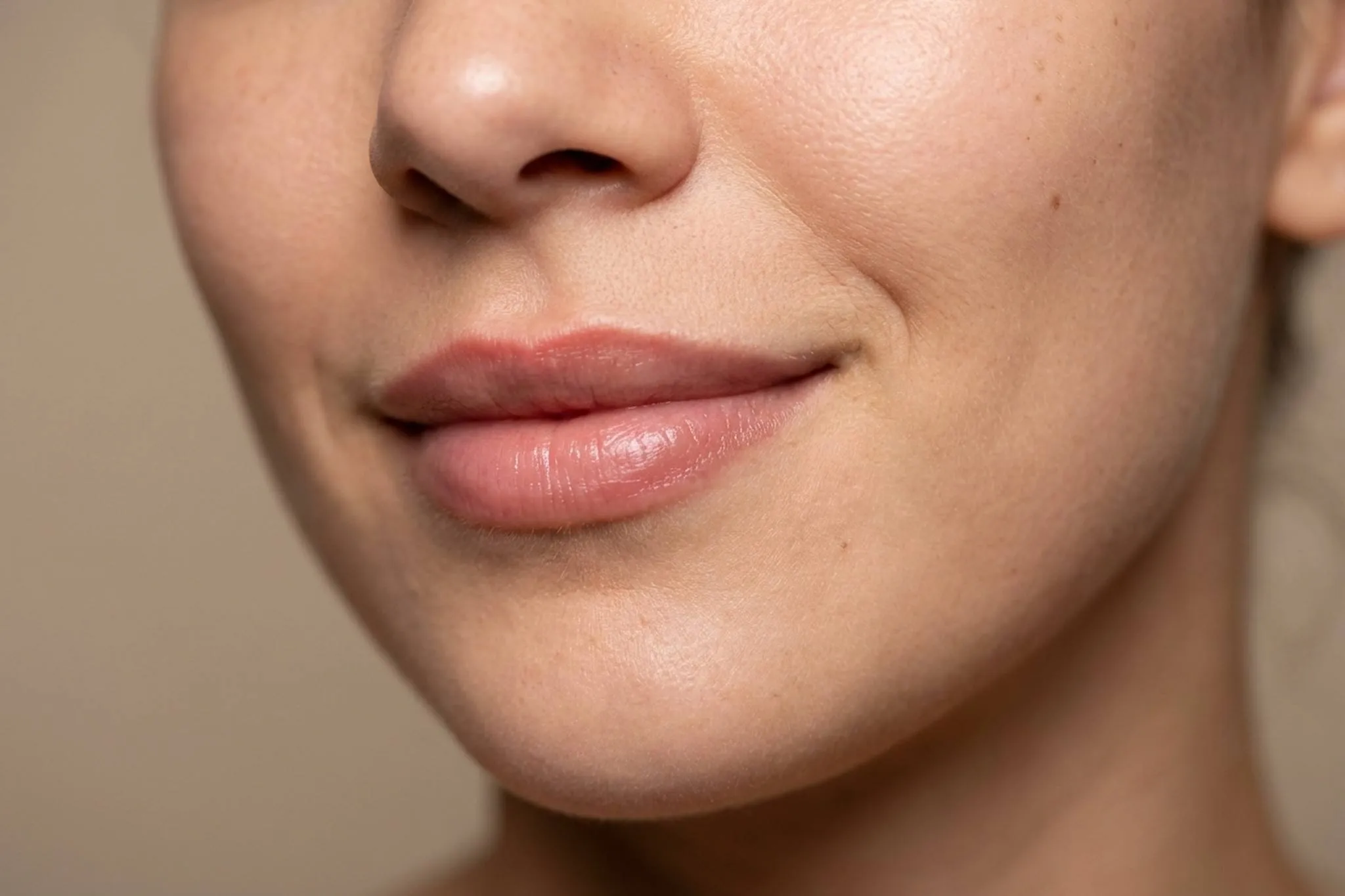
Lip Lift in Londrina, Brazil: the upper lip lift surgery that transforms your smile permanently
If the space between your nose and upper lip seems too long, if the redness of your upper lip has practically disappeared over the years, or if you feel that your smile has lost the vivacity it had in your youth, you have probably researched lip fillers. And you have probably discovered that fillers, no matter how good they are, do not solve the fundamental problem: they add volume but do not shorten the distance between the nose and mouth. This is where the lip lift comes in.
The upper lip lift is a sleek and precise surgery that does something no filler can do: it shortens the philtrum -- that strip of skin between the base of the nose and the red edge of the lip -- restoring the upper lip's projection, curvature, and exposure of the redness that time has taken away. The result is permanent, natural, and profoundly transforms the balance of the lower third of the face.
As a plastic surgeon in Londrina, Brazil (CRM-PR 17,388 | RQE 15,688), with over twenty years of experience and more than eight thousand plastic surgeries performed, I have learnt that details make all the difference. The lip lift is a surgery of millimetres -- literally. Each millimetre more or less in the excision of skin completely alters the result. Therefore, it is a procedure that requires not only technical mastery but also a refined aesthetic eye and accumulated experience. It is one of the surgeries that gratifies me the most to perform, precisely because of this combination of surgical precision and aesthetic transformation.
What is the philtrum and why does it elongate
The philtrum — the distance between the base of the nasal columella and the Cupid's bow — measures, in a young and balanced face, between eleven and thirteen millimetres in women and between thirteen and fifteen millimetres in men. This measurement is fundamental in the perception of facial youth: a short philtrum conveys vitality and sensuality; a long philtrum gives the face an air of ageing and fatigue.
As the years go by, the combination of gravity, loss of collagen, and maxillary bone resorption causes the philtrum to progressively elongate. The upper lip, which in youth generously showed the redness, begins to invert inward. The Cupid's bow flattens. The upper teeth, which used to appear naturally when smiling and even at rest, disappear behind an increasingly long curtain of skin. This process is subtle — it happens over decades — but the cumulative effect is dramatic.
And it is not just ageing. Some people are born with a naturally long philtrum, an anatomical characteristic that can cause aesthetic discomfort from adolescence. For these patients, the lip lift is even more transformative because it resolves something that has always bothered them.
Subscribe to my YouTube channel:
Subscribe on YouTubeThe subnasal bullhorn technique: how I perform the lip lift
The technique I use is known as bullhorn lip lift, or subnasal bullhorn elevation. The name comes from the shape of the incision, which follows the curvature of the base of the nose and extends laterally, resembling the silhouette of a bullhorn viewed from the front. This design is not random: it precisely follows the natural contours where the nose meets the skin of the lip, ensuring that the resulting scar remains hidden in the natural shadow of the nasal base.
The pre-operative planning
Before touching any instrument, I dedicate a considerable amount of time to planning. I take precise measurements of the lip philtrum at rest and during a smile. I assess the relationship between the upper and lower lip — ideally, the ratio is one to one and a half to one to two, with the lower lip slightly fuller. I observe the exposure of the upper teeth, the projection of the vermilion, the definition of the Cupid's bow, and the symmetry between the right and left sides.
The surgical drawing is made with the patient sitting, looking straight ahead. I mark the lower incision following the junction between the alar base and the skin of the lip, outlining the columella. The upper incision, which determines how much skin will be removed, is planned to the millimetre. In general, I remove between three and five millimetres of skin — it seems little, but the visual impact is extraordinary.
The surgery itself
The procedure is performed under local anaesthesia with light sedation, in the theatre of my clinic in Londrina, Brazil. It lasts between forty-five minutes and one hour. The surgical sequence is as follows:
- Anaesthetic infiltration: I apply local anaesthesia with a vasoconstrictor in the subnasal region. The patient feels no pain throughout the procedure.
- Incision in bullhorn: I make the incision following the previous markings, along the base of the nasal wings and outlining the columella. The curved shape ensures that the scar conceals perfectly.
- Skin excision: I remove the strip of skin in the shape of a bullhorn. The amount is personalised — I never use a standard measurement, as each face is unique.
- Release of deep tissues: I carefully release the adhesions between the skin and the orbicularis muscle to reduce tension during closure. This step is crucial for a quality scar.
- Layered closure: I suture in two to three layers, starting with the deep muscular plane and finishing with fine sutures in the skin. This meticulous closure distributes tension and minimises the scar.
Why the bullhorn technique is superior
There are other approaches to the lip lift — such as the direct vermilion lip technique or the Italian technique with an incision inside the nostrils — but I consider the subnasal bullhorn superior for several reasons. First, it allows for uniform shortening of the entire philtrum, not just the central portion. Second, the scar is located at the natural junction between the base of the nose and the skin of the lip, an area that naturally casts a shadow and hides marks. Third, the result is more natural because it elevates the lip as a whole, preserving the naturalness of the Cupid's bow.
Who is the lip lift recommended for
Over the years, I have identified patient profiles that benefit greatly from this surgery. If you recognise yourself in one or more of the situations below, the lip lift may be the solution you are looking for:
Long lip philtrum — congenital or acquired
The most classic recommendation. If the distance between the nose and the upper lip exceeds fifteen millimetres in women or seventeen millimetres in men, there is room for significant improvement. Some patients are born with this elongated proportion; others develop it with ageing. In both cases, the result of the lip lift is gratifying.
Thin or inverted upper lip
When the upper lip is naturally thin or when the vermilion begins to hide due to inversion of the edge, the lip lift restores the exposure of the vermilion without adding artificial volume. The difference compared to fillers is philosophical: while hyaluronic acid inflates the lip from the outside in, the lip lift reveals the lip that already exists by elevating the skin that covered it.
Loss of dental exposure
In youth, it is normal for the upper teeth to appear two to three millimetres below the edge of the lip at rest. With the elongation of the philtrum, these teeth become hidden. The lip lift restores the so-called dental show, returning that youthful smile that shows the upper incisors even when you are not smiling openly.
Dissatisfaction with temporary fillers
Many patients come to my clinic after years of spending on lip fillers every six to twelve months. They are tired of the constant maintenance, the result that fluctuates between freshly applied and almost absorbed, and the impossibility of fillers resolving the length of the philtrum. The lip lift offers a definitive result and, when desired, can be combined with a session of facial fillers after healing for additional volume.
Complement to facelift or rhinoplasty
The lip lift combines beautifully with other facial surgeries. Patients undergoing deep plane facelift often benefit from simultaneous lip lift, as rejuvenation of the lower third is incomplete without addressing the lip. Similarly, after a rhinoplasty that projects the nasal tip, the philtrum may appear proportionally longer, making the lip lift a logical complement.
Who should not undergo the procedure
The lip lift is not recommended for patients with a tendency to keloids or hypertrophic scars in the facial region, as the subnasal scar could become visible. I also advise against the procedure for patients with unrealistic expectations — those who expect to achieve lips as full as a twenty-year-old model from a surgery that, by nature, elevates but does not increase volume. In these situations, I clearly explain what is possible and what is not, and I often suggest more suitable alternatives.
Lip lift and balance with the lower third of the face
The upper lip does not exist in isolation. It is part of a complex aesthetic system that includes the nose, chin, jaw, and lower lip. When I assess a patient for a lip lift, I am actually analysing the entire proportion of the lower third of the face.
The nose-lip relationship
The nasolabial angle — formed between the columella and the upper lip when viewed in profile — is fundamental. In women, the ideal is between ninety-five and one hundred and five degrees. The subnasal lip lift can subtly alter this angle, slightly projecting the base of the lip forward. In patients with a closed nasolabial angle, this can be advantageous; in patients who already have an open angle, I need to adjust the technique to avoid excessive opening.
The ratio of upper and lower lip
The balance between the lips is crucial for a natural result. By elevating the upper lip and exposing more vermilion, I alter this ratio. If the patient has a thin lower lip, the isolated elevation of the upper lip may create imbalance. In these cases, I discuss the possibility of complementing with fat graft or filler in the lower lip to maintain balance.
The role of the chin and jaw
A retruded chin can accentuate the impression of a long philtrum, as it alters the visual perception of lip projection. In some cases, I recommend chin surgery or genioplasty in conjunction with the lip lift to achieve a truly balanced result. Excellent facial plastic surgery is precisely that: treating the face as a whole, not as isolated parts.
When I combine lip lift with other surgeries
It is common to perform the lip lift in the same surgical time as other procedures. The most common combinations in my practice include:
- Lip lift + deep plane facelift: the most complete rejuvenation of the middle and lower third of the face.
- Lip lift + rhinoplasty: optimises the nose-lip relationship in a single surgical time.
- Lip lift + blepharoplasty: global rejuvenation of the focal points of the face — eyes and mouth.
- Lip lift + facial fat graft: elevation of the lip combined with restoration of lost facial volume.
The pre-operative stage: preparation for the best result
The preparation for the lip lift is simple, but every detail matters. During the consultation, in addition to a detailed aesthetic evaluation, I request basic laboratory tests and, when necessary, a pre-operative cardiac assessment.
Necessary tests
- Complete blood count
- Coagulation profile (PT with INR + APTT)
- Fasting blood glucose
Medications to be discontinued
Two weeks before and two weeks after the surgery, I advise discontinuing:
- Acetylsalicylic acid (Aspirin, AAS, Bufferin)
- Non-steroidal anti-inflammatory drugs (ibuprofen, diclofenac)
- High doses of Vitamin E
- Ginkgo biloba and other herbal medicines with anticoagulant action
- High doses of Omega 3
Smoking should be stopped for the same period. Nicotine compromises the blood microcirculation of the skin and can significantly impair the quality of the scar — and in a surgery that relies on an impeccable scar, such as the lip lift, cigarettes are the number one enemy.
Care for cold sores
Patients with a history of cold sores receive antiviral prophylaxis with aciclovir or valaciclovir starting two days before the surgery and continuing for seven days afterwards. A reactivation of herpes in the post-operative period could compromise healing and leave undesirable marks.
What to expect from the consultation
I dedicate time to understand your expectations, show results from previous patients (preserving anonymity), and explain in detail what the surgery can and cannot achieve. I take standardised photographs — frontal, profile, and three-quarter views — which I use for planning and for post-operative comparison. I leave the consultation with the certainty that you understand the procedure, the risks, the post-operative care, and the expected result. This transparency is the foundation of the trust that sustains the entire doctor-patient relationship.
Post-operative care for the lip lift: what to expect at each stage
The post-operative care for the lip lift is one of the most straightforward among facial surgeries. There is no need for hospitalisation — you return home on the same day, accompanied by a responsible adult.
First 24 hours
There will be moderate swelling in the lip area and some discomfort, easily controlled with common painkillers. The predominant sensation is of tension in the lip, not actual pain. Apply cold compresses with damp gauze over the dressing, without pressure, at intervals of twenty minutes. Keep your head elevated while sleeping. Avoid foods that require wide mouth opening — no hamburgers in the first few days.
First week
The swelling peaks around the second to third day and begins to gradually decrease. Bruising (purple spots) is rare in the lip lift, but may occur discreetly. You can eat normally with a soft and warm diet in the first three days, progressing to soft solid foods. Oral hygiene should be done carefully, using a soft toothbrush and avoiding direct contact with the sutures.
Return to the clinic in five to seven days for suture removal. This moment is special: even with residual swelling, the transformation is already visible and tends to be positively surprising.
Second to fourth week
The residual swelling continues to decrease. The scar will be pink and slightly raised — this is absolutely normal and is part of the maturation process. Makeup can be applied over the scar after ten days. Avoid direct sun exposure in the area for at least three months, using sunscreen with a factor of fifty.
Two to six months
The scar matures progressively, becoming lighter and flatter. During this period, the texture and colour of the scar approach that of the surrounding skin. The lip settles into its new position. This is where the final result emerges: elegantly curved upper lip, visible vermilion, shortened and proportional philtrum. Patients who have previously had herpes and followed the prophylaxis correctly do not experience complications during this phase.
Final result
Between six months and a year, the scar reaches its final maturity. In the vast majority of cases, it is practically imperceptible — a fine line that blends with the natural shadow at the base of the nose. The result of the lip lift is permanent. Unlike fillers that dissolve, or Botox that loses effect, the skin removed does not grow back. Your lip will continue to age naturally, but will always appear younger and more balanced than if you had not undergone the surgery.
Risks and complications: complete transparency
As a plastic surgeon with over two decades of experience, I have learned that honesty about risks is as important as technical skill. The lip lift is considered a low-risk procedure, but no surgery is free from possible complications.
Visible scar
This is the most discussed risk. The scar from the lip lift subnasally, when performed with the proper technique and meticulous layered closure, tends to be excellent. Factors that influence: genetics of healing, smoking (which compromises circulation), early sun exposure, and post-operative care. In my experience, the scar is imperceptible at normal social distance in over ninety-five percent of cases.
Asymmetry
Every human face has natural asymmetries. Pre-existing asymmetries may become more evident after surgery. This is why meticulous pre-operative planning, with millimetric markings in a seated position, is essential. I assess each side separately and adjust the excision when necessary.
Temporary loss of sensitivity
It is common to experience numbness or altered sensitivity in the skin of the upper lip in the first days to weeks. This happens because small sensory nerve branches are inevitably severed during the excision. Sensitivity returns progressively in the vast majority of cases within weeks to a few months.
Infection
Extremely rare in the perioral region when proper hygiene is maintained and antibiotic prophylaxis is used. I prescribe antibiotics for five days and advise strict local care.
Insufficient or excessive result
Insufficient skin removal results in a result that is too subtle; excessive removal may leave the lip permanently elevated, making complete lip closure difficult. This is why the surgeon's experience is crucial. I prefer to be conservative in the first approach — it is always possible to remove a little more in a future revision, but it is impossible to return skin that has already been removed.
Lip lift versus lip fillers: understand the differences
This is the most frequent question I hear in the consultation. I need to be clear: the lip lift and lip fillers with hyaluronic acid are completely different procedures that address distinct problems. Understanding this difference avoids frustrations and misguided expectations.
What fillers do
Hyaluronic acid is injected into the vermilion or at the transition between skin and mucosa to add volume. It plumps the lip, making it fuller and more defined. It is excellent for lips that are thin in volume but proportional in philtrum length. It lasts between six and twelve months and needs to be reapplied.
What the lip lift does
The lip lift does not add volume. It shortens the skin covering the lip, revealing the vermilion that was hidden. It is like lifting a curtain: the lip that was there, concealed, becomes visible. The effect is permanent.
The ideal combination
In many cases, the best strategy is to combine the two: first the lip lift to correct the philtrum length and reveal the vermilion; then, after complete healing (three to four months), a session of fillers to add volume, if desired. This combination delivers the most complete possible result: short, curved, voluminous, and defined lip.
The long-term cost-benefit
A patient who spends between GBP 290 and GBP 580 per year on lip fillers will have spent, over a decade, between GBP 2,900 and GBP 5,800 — without ever having resolved the issue of a long philtrum. The lip lift, with a one-time cost, permanently resolves the structural issue. It is the same logic I apply when comparing facelift with palliative aesthetic treatments: surgery resolves, non-surgical procedures alleviate.
The scar from the lip lift: the major concern and the truth
I will be direct: yes, the lip lift leaves a scar. Any surgery that incises the skin leaves a scar. The relevant question is not whether there is a scar, but whether it is visible. And the answer, in the vast majority of cases, is that it becomes practically imperceptible.
Why the scar is well hidden
Three factors contribute to the excellent scar outcome:
- Strategic location: the incision follows the junction between the base of the nose and the skin of the upper lip. This area naturally casts a shadow that conceals any scar line.
- Layered closure: by suturing the deep muscular plane before the skin plane, I eliminate tension on the skin. Scars widen when there is tension; without tension, they remain thin.
- Appropriate sutures: I use fine absorbable sutures in the deep plane and ultra-delicate nylon or polypropylene sutures on the skin, which are removed early to avoid marks from the sutures.
Care that optimises the scar
After suture removal, I advise using silicone strips or silicone gel over the scar for at least three months. Silicone maintains the ideal hydration and appropriate pressure on the scar, promoting a faster and flatter maturation. Strict sun protection with factor fifty is essential — post-inflammatory hyperpigmentation is the main aesthetic enemy during this phase.
When the scar may become more evident
Patients with very fair and thin skin may have a more noticeable scar in the first months, although it tends to improve over time. Patients prone to hypertrophic or keloid scars should be evaluated with special care. Smokers have compromised healing. And patients who do not follow post-operative instructions — especially regarding sun protection — may have scars that are more visible than expected.
Lip lift in men: a growing demand
Although most of my lip lift patients are women, the male demand for this surgery has increased significantly. Lip ageing in men is as real as in women, with the difference that the moustache — when present — conceals part of the elongated philtrum.
In men, I adapt the technique specifically. The excision tends to be more conservative, as an excessively elevated male lip can appear artificial. The goal is not to create sensual lips, but to restore youthful proportion and natural dental exposure. In men who have a moustache, the scar is completely hidden under the hair, which is an additional advantage.
For patients seeking a more complete male facial rejuvenation, the lip lift can be combined with male facelift, creating a natural transformation that respects the masculine and natural features of the face.
The difference between lip lift and lip flip
A common confusion. The lip flip is a non-surgical procedure that uses botulinum toxin applied to the orbicularis muscle around the lips to relax it and allow the vermilion to slightly evert. The effect is subtle, temporary (lasting two to three months), and recommended for those who have a habit of contracting the lip when smiling. It does not shorten the philtrum, does not remove skin, and is not permanent. It is a reasonable alternative for those who desire only a subtle touch without surgery, but it can never compare to the result of the surgical lip lift.
My training and why you can trust me for your lip lift
I graduated from the State University of Londrina and had the privilege of being a student of Professor Ivo Pitanguy, the greatest name in Brazilian plastic surgery and one of the most respected in the world. With him, I learned not only surgical techniques but the philosophy that each patient deserves the best possible version of themselves — not a standardised version, but a unique version that respects their anatomy and identity.
Over more than twenty years of practice and over eight thousand surgeries performed, I have developed a keen clinical eye for facial proportions. I am a full member of the Brazilian Society of Plastic Surgery (SBCP) and the American Society of Plastic Surgeons (ASPS). I regularly participate in national and international congresses, keeping myself updated with the advances in the specialty.
The lip lift requires millimetric precision. There is no margin for error. Every extra millimetre of skin removed can mean the difference between a stunning natural result and an excessive result that is difficult to correct. It is a surgery that demands experience, aesthetic sensitivity, and technical mastery — three qualities that I strive to improve every day.
The consultation as a starting point
If you are considering the lip lift, the first step is to book an in-person consultation at my clinic in Brazil. I will examine your face in detail, assess the proportions of the lower third, measure your lip philtrum, check the quality of your skin and lip projection, and we will talk openly about your expectations and what I can deliver. If I believe that the lip lift is not the best option for you, I will say so honestly. I prefer to lose a surgery than to have an unsatisfied patient.
My clinic is located at Rua Engenheiro Omar Rupp, 186, in Londrina, Brazil. You can book your consultation directly via WhatsApp +55 43 99192-2221. It will be a pleasure to welcome you.
Frequently asked questions about lip lift
Does the lip lift hurt?
The surgery is performed under local anaesthesia with sedation, so you do not feel any pain during the procedure. In the postoperative period, the predominant sensation is tension in the lip, easily controlled with common painkillers such as dipyrone or paracetamol. Most patients report mild to moderate discomfort in the first two to three days, which improves quickly.
How long does the lip lift surgery take?
The procedure lasts between forty-five minutes and one hour. When performed together with other facial surgeries, such as facelift or rhinoplasty, the total time increases proportionally, but the lip lift itself is quick.
Is the scar from the lip lift visible?
The subnasal bullhorn lip lift scar is positioned at the junction between the base of the nose and the skin of the lip, an area that naturally casts a shadow. With proper layered closure technique and correct postoperative care (topical silicone and sun protection), the scar becomes practically imperceptible in over ninety-five percent of cases.
When can I return to work after the lip lift?
Most patients return to professional activities between five and seven days, when the sutures are removed. In the first few days, swelling in the lip is noticeable, but can be concealed with makeup from the tenth day. Activities that require physical effort should be avoided for two weeks.
Is the result of the lip lift permanent?
Yes. The skin removed does not grow back. The shortening of the lip philtrum is definitive. Naturally, the ageing process continues, but your lip will always look younger and more balanced than if you had not undergone the procedure.
Can I have lip fillers along with the lip lift?
Not simultaneously. I recommend waiting at least three to four months after the lip lift for the healing to be complete and the tissues stabilised. After this period, hyaluronic acid fillers can complement the result by adding volume to the vermilion, if desired.
Does the lip lift change the shape of the nose?
No. The incision is made at the base of the nose, but it does not alter the nasal structure. In some cases, there may be a slight elevation of the alar base, almost imperceptible. Patients who wish to change the shape of their nose should consider a rhinoplasty in conjunction.
What is the minimum age for a lip lift?
There is no strict minimum age. The procedure is recommended from the moment the proportion of the lip philtrum is out of the balanced standard and causes dissatisfaction. I have young patients in their early twenties with congenitally long philtrums who benefit greatly from the surgery. And I have patients over sixty who undergo the lip lift as part of a broader facial rejuvenation.
Does the lip lift interfere with speech or eating?
In the first few days, mouth opening may be limited by swelling and suture tension, which slightly hinders speech and eating. This normalises completely within one to two weeks. In the long term, there is no functional interference.
How many millimetres of skin are removed in the lip lift?
Generally, between three and five millimetres, depending on individual anatomy. It may seem little, but in such a delicate area, a few millimetres make a dramatic difference. The exact amount is planned during the consultation, based on precise measurements of the lip philtrum and the facial proportions of each patient.
Book via WhatsApp
If you have made it this far, it is because you are seriously considering the lip lift. The next step is simple: book a consultation with me. My team is ready to assist you, answer your questions, and find the best time for your assessment.
Learn more about the first consultation, the pricing, and the guidelines for pre-surgical preparation and post-operative recovery.
Are you ready for this new change? Book now!

Dr. Walter Zamarian Jr.
Plastic Surgeon in Brazil
Rua Engenheiro Omar Rupp, 186
Londrina - Brazil
ZIP 86015-360
Brazil
YouTube Channel: Dr. Walter Zamarian Jr.
Follow on Instagram: @drwalterzamarianjr
Follow on TikTok: @drwalterzamarianjr
Search on our website:
This page in other languages:
Portuguese (BR) | English (US) | English (UK) | Italian | French | Spanish