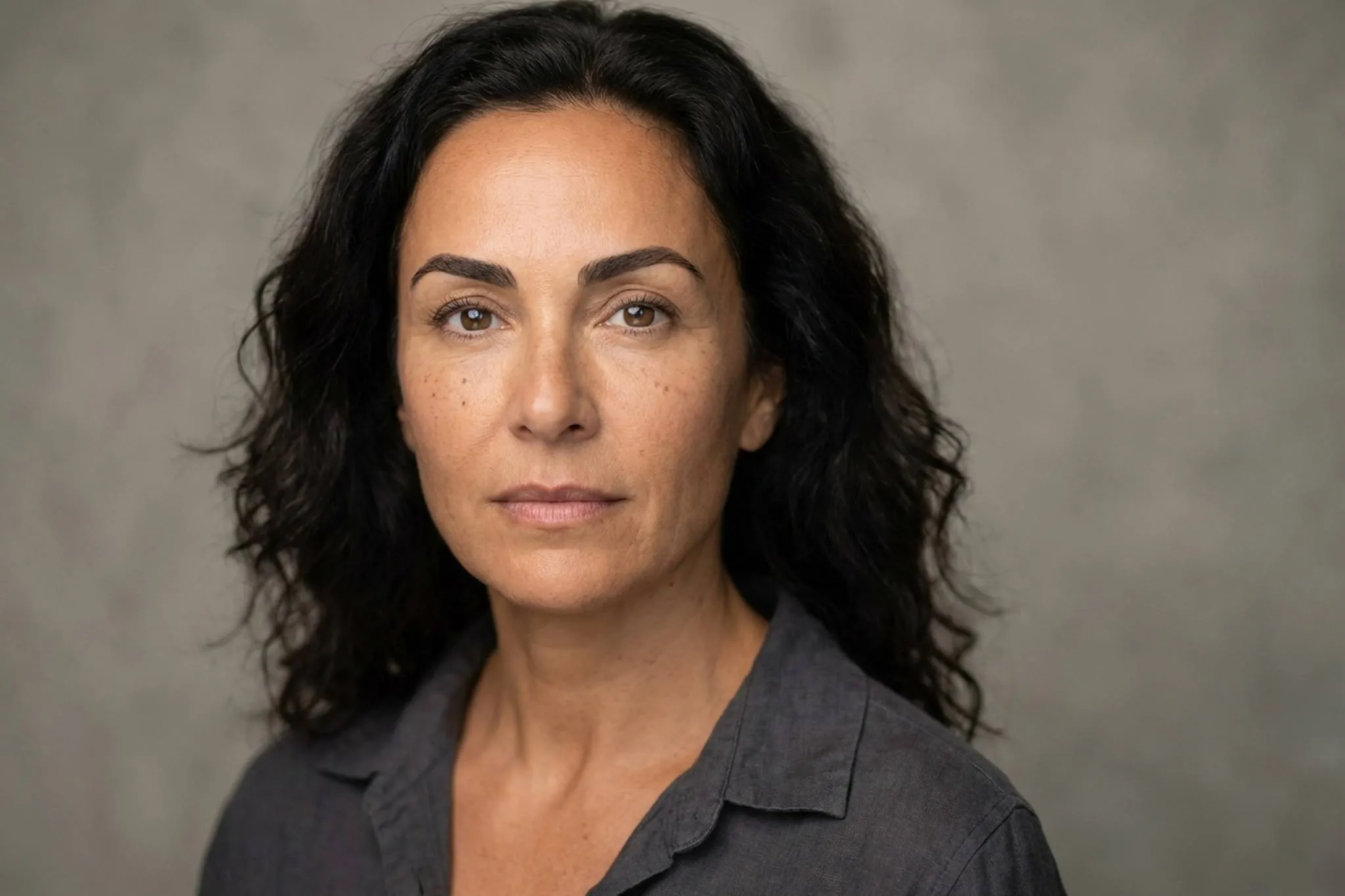
Brow Lift in Brazil: rejuvenate your look without an artificial appearance
If you feel that your eyes look tired, heavy, or sad -- even after a good night's sleep -- the problem may not be with the eyelids, but with the eyebrows. The drooping of the eyebrows is one of the most underestimated causes of ageing in the upper third of the face, and many people spend years trying to resolve this issue with botulinum toxin or makeup, without realising that the definitive solution is surgical.
The eyebrow lift, also known as brow lift or forehead lift, is a surgery that repositions the eyebrows at the correct height, smooths out the horizontal wrinkles of the forehead and the expression lines between the eyebrows (glabella). The result is a more open, youthful, and rested look -- without that permanent surprised appearance that often frightens those researching the procedure. As a plastic surgeon in Brazil, I frequently combine this procedure with a deep plane facelift for comprehensive facial rejuvenation.
Why eyebrows droop over time
The ageing of the upper third of the face involves multiple factors. The skin of the forehead progressively loses elasticity and collagen. The soft tissues that support the eyebrows weaken under the constant action of gravity. And the depressor muscles — those that pull the eyebrows down, such as the corrugator, procerus, and the orbital portion of the orbicularis — gain mechanical advantage over the frontalis muscle, the only one that lifts the eyebrows.
The result of this unequal battle is predictable: the eyebrows descend, especially at the lateral portion (the tail of the eyebrow), creating a look of fatigue and sadness. In many cases, the droop is so significant that excess skin projects over the upper eyelids, simulating a blepharoplasty when, in fact, the real problem lies above.
During more than twenty years of practice in facial plastic surgery and over eight thousand surgeries performed, I have learned to recognise this diagnostic subtlety. Correcting the eyelid without addressing the eyebrow is like adjusting the curtain without fixing the rail: the result will never be ideal.
Subscribe to my YouTube channel:
Subscribe on YouTubeThe eyebrow lift techniques I perform
There is no single eyebrow lift technique that is ideal for all patients. Throughout my career, I have mastered all the approaches described in the literature, and during the consultation, I choose the most suitable one for the anatomy and goals of each person. I will explain each of them so that you understand the differences.
Endoscopic eyebrow lift
The endoscopic technique is currently the most popular approach and the one I use most frequently. Through three to five small incisions of approximately two centimetres, hidden behind the hairline, I introduce a high-definition camera and delicate instruments to release the forehead tissues from the frontal bone.
With the camera, I have an enlarged and detailed view of all the structures — nerves, vessels, muscles — which allows me to work with millimetric precision. I release the ligaments that attach the tissues to the bone, selectively weaken the depressor muscles (corrugator and procerus, responsible for expression lines and the downward pull of the eyebrows), and reposition the entire tissue complex to a higher position.
The fixation is done with absorbable devices that keep the tissues in the new position until natural healing consolidates the result. The advantages of the endoscopic technique are evident: minimal incisions, virtually invisible scars, faster recovery, and a lower risk of altering the sensitivity of the scalp.
Temporal lift (limited incision)
The temporal lift is a technique I use when the problem is concentrated on the droop of the lateral tail of the eyebrow — the portion that most contributes to a tired and sad appearance. Through incisions of about three centimetres in the temporal region, hidden in the hair, I selectively elevate the outer portion of the eyebrow without manipulating the central forehead area.
This approach is particularly effective when combined with upper blepharoplasty, as both surgeries complement each other perfectly. It is also excellent for patients who do not have significant wrinkles on the forehead and only wish to correct the lateral droop.
Coronal lift (classic)
The coronal technique uses a continuous incision from ear to ear, positioned a few centimetres behind the hairline. Although it has been the gold standard for decades, I now reserve it for specific cases that require significant tissue mobilisation or for patients with very short foreheads who benefit from the recession of the hairline.
The coronal technique offers maximum control over the final position of the eyebrows and allows for simultaneous treatment of forehead wrinkles, glabellar lines, and eyebrow asymmetry comprehensively.
Direct lift
The direct lift removes a strip of skin immediately above the eyebrow. It is a technique I reserve for very specific situations — usually male patients with very thick eyebrows that conceal the scar, or cases of facial paralysis where the precision of repositioning is critical. Its advantages are the simplicity and predictability of the result.
Who is a candidate for eyebrow lift
The recommendation for eyebrow lift goes far beyond age. I have patients in their thirties with significant droop and patients in their sixties with eyebrows in the ideal position. What determines the need for surgery are specific signs that I carefully evaluate during the consultation.
Signs suggesting the need for the procedure
- Eyebrows below the orbital rim: when the eyebrow has dropped to the level of the orbital bone or below it, elevation is essential.
- Pronounced lateral droop: the tail of the eyebrow has dropped significantly, giving a sad appearance to the gaze.
- Excess skin on the upper eyelids of supercilary origin: what appears to be excess skin on the eyelid is, in fact, a consequence of the droop of the eyebrow pushing the tissues down.
- Deep horizontal wrinkles on the forehead: caused by the constant effort of the frontal muscle trying to compensate for the droop of the eyebrows.
- Deep vertical lines in the glabella: those wrinkles between the eyebrows caused by hyperactivity of the corrugator.
- Significant asymmetry between the eyebrows: one eyebrow visibly lower than the other.
- Permanently tired or grumpy appearance: even when you are rested and in a good mood, people ask if you are tired or irritated.
The differential diagnosis with blepharoplasty
One of the most common mistakes I see is the recommendation of isolated blepharoplasty when the real problem is eyebrow ptosis. I perform a simple test in the office: with my fingers, I elevate your eyebrows to the ideal position and observe how much excess skin remains on the eyelid. If the excess disappears or decreases drastically, the primary recommendation is eyebrow lift, not blepharoplasty.
In many cases, the best strategy is to combine both procedures: the eyebrow lift repositions the eyebrow and eliminates the supercilary excess skin, while blepharoplasty treats the genuine excess of eyelid skin and under-eye bags. The combined result is significantly superior to that of any isolated procedure.
The ideal position of the eyebrows: science and art
Positioning the eyebrows naturally is one of the skills that most differentiates an experienced facial plastic surgeon. It is not simply about lifting — if it were, any doctor could do it. The challenge lies in finding the exact position that rejuvenates without making it look artificial, that opens the gaze without creating surprise.
Differences between female and male eyebrows
In women, the ideal eyebrow has an arched shape, with the highest point located at the junction between the middle third and the lateral third. The medial portion starts at the level of the orbital rim, and the lateral tail is slightly above the inner corner. This geometry gives femininity and expressiveness to the gaze.
In men, the ideal eyebrow is straighter, thicker, and positioned closer to the orbital rim. The arch should be subtle or practically non-existent. An excessively arched or elevated male eyebrow feminises the face in an undesirable way. That is why eyebrow lift in men requires differentiated surgical planning, something I discuss in detail during the consultation.
My personalised approach
Before the surgery, I conduct a complete facial analysis. I use precise markings on the face to define the final position of each segment of the eyebrow: medial portion, arch, and tail. I consider facial symmetry (which is never perfect — every face has natural asymmetries), the shape of the eyes, the height of the forehead, the hairline, and, fundamentally, the desires of the patient.
This meticulous analysis is what differentiates a natural result from an artificial one. In over two decades of experience, I have developed a refined clinical eye for this evaluation, and it is during the consultation that I establish the detailed surgical plan that will guide the entire surgery.
How the endoscopic eyebrow lift is performed
The surgery lasts between one and a half to two hours when performed in isolation. When combined with blepharoplasty or facial lifting, the total time is adjusted according to the combined procedures. I perform the surgery under general anaesthesia or sedation with local anaesthesia, depending on the extent of the procedure and the patient's preference.
Step by step of the endoscopic technique
I start with the infiltration of anaesthetic solution with vasoconstrictor in the forehead and scalp region. This reduces bleeding and facilitates dissection. Next, I make the incisions — usually three in the frontal region and two in the temporal region — all hidden in the hair, approximately two centimetres behind the hair implantation line.
Through the first central incision, I introduce the endoscope — a high-definition camera with only four millimetres in diameter — which projects the enlarged image onto a monitor. With this privileged view, I begin the dissection in the subperiosteal plane, that is, immediately over the frontal bone, beneath the periosteum.
The dissection advances towards the upper orbital rim, progressively releasing the tissues that attach the forehead to the skull. Upon reaching the rim, I carefully identify and preserve the supraorbital nerve and the supratrochlear nerve — responsible for the sensitivity of the forehead — while releasing the retaining ligaments that prevent the elevation of the tissues.
Selective weakening of the depressor muscles
With the tissues released, I have direct access to the muscles responsible for expression lines and the downward pull of the eyebrows. The corrugator of the eyebrow (which creates vertical wrinkles between the eyebrows when you frown) and the procerus (which pulls the skin of the glabella down) are partially resected or detached.
I do not completely remove these muscles. This would create an unsightly depression and eliminate important facial expressions. Partial and selective reduction is sufficient to significantly soften the wrinkles and reduce the downward force on the eyebrows, without compromising the ability for natural expression.
Elevation and fixation
With the tissues fully mobilised and the muscles weakened, I elevate the entire forehead-eyebrow complex to the previously planned position. The fixation is performed with bioabsorbable devices that anchor to the bony table of the skull and keep the tissues elevated until healing consolidates the result in its new position — a process that takes about four to six weeks.
The incisions are closed with staples or sutures that will be removed between seven and ten days after the surgery.
Brow lift combined with other procedures
The brow lift is rarely performed in isolation. In the vast majority of cases, I combine it with other facial procedures for a balanced and complete result. Modern facial plastic surgery seeks overall natural balance, not isolated corrections.
With blepharoplasty
This is the most frequent combination. The upper blepharoplasty removes genuine excess skin from the eyelid, while the brow lift repositions the eyebrow and eliminates the excess from above. The lower blepharoplasty can be added to treat under-eye bags and dark circles. The rejuvenation of the upper third of the face is complete.
With deep plane facelift
When ageing also affects the middle and lower thirds of the face, the combination with the deep plane facelift offers comprehensive facial rejuvenation. The brow lift addresses the forehead and gaze, while the deep plane repositions the cheeks, jawline, and neck. The result is a complete and balanced transformation.
With facial fat grafting
The fat grafting restores lost volume in the temples, cheekbones, and grooves, as well as delivering stem cells that regenerate the skin from within. When combined with the brow lift, the result is enhanced: in addition to the eyebrows being in the ideal position, the face gains contour and radiance.
With botulinum toxin in the postoperative period
About three to four weeks after surgery, the application of botulinum toxin to the residual wrinkles of the forehead and crow's feet complements the surgical result beautifully. The combination of structural surgery with periodic maintenance is the smartest strategy for ageing gracefully.
Postoperative recovery: what to expect day by day
The recovery from endoscopic brow lift is considerably smoother than most patients imagine. The incisions are small, the dissection is delicate, and postoperative discomfort is generally mild.
First 24 to 48 hours
You will leave the surgery with a compressive dressing around your head. There will be moderate swelling in the forehead and upper eyelids — gravity causes the forehead swelling to descend to the eyelids. Cold compresses in the first 48 hours significantly help control the swelling. You will sleep with the head elevated at 45 degrees.
Discomfort is managed with common painkillers. Most patients report a sensation of pressure or pulling in the forehead, not actual pain. There may be temporary numbness in the scalp and forehead, which is expected and resolves progressively over weeks to months.
First week
The compressive dressing is removed the next day and replaced with a light elastic band. The staples or sutures are removed between seven and ten days. Swelling peaks around the second or third day and then decreases progressively. Bruises (purple spots) may appear on the forehead and eyelids, resolving in ten to fourteen days.
Second and third weeks
Most patients are presentable for social activities between ten and fourteen days. Makeup can be used carefully to conceal residual bruises. Avoid direct sun exposure, intense physical exercise, and any activity that increases pressure in the head.
One to three months
The result gradually refines. Subtle residual swelling continues to subside, scars mature and become practically invisible within the hair. Scalp sensitivity returns gradually. During this period, the final result begins to consolidate.
Final result
Between three and six months, you will see the complete result of the brow lift. The eyebrows will be in the planned position, the forehead wrinkles will have been significantly reduced, and your gaze will convey the youth and energy you feel inside. The result is long-lasting: although the natural ageing process continues, the eyebrows will remain in a significantly better position than they would have been without surgery for many years.
Risks and complications: total transparency
Like any surgical procedure, the brow lift presents risks. I believe that honesty about these risks is fundamental for a trusting relationship between surgeon and patient. I will discuss each of them frankly.
Temporary sensitivity alteration
Numbness or decreased sensitivity in the forehead and scalp is the most common side effect. It occurs because dissection inevitably affects small sensory nerve branches. In the endoscopic technique, this alteration is usually transient, resolving within weeks to a few months. It rarely persists beyond six months.
Asymmetry
Light asymmetry between the eyebrows may occur and, in many cases, reflects pre-existing facial asymmetries that have become more evident after surgery. Significant asymmetries may require surgical touch-up, although they are rare with proper planning.
Haematoma
The accumulation of blood under the tissues is infrequent in endoscopic lifting, thanks to the small incisions and the delicate nature of the dissection. When it occurs, it is usually small and absorbed spontaneously.
Alopecia at the scars
Hair loss around the incisions is rare but possible. The incisions are positioned parallel to the hair follicles to minimise this risk. When it occurs, it is usually temporary.
Motor nerve injury
Injury to the frontal branch of the facial nerve — which controls forehead movement — is the most feared complication, yet extremely rare when the surgery is performed by an experienced surgeon who masters facial anatomy. The endoscopic technique, with its direct visualisation of structures, offers additional protection against this complication.
Unsatisfactory result
Insufficient or excessive elevation may occur. That is why meticulous preoperative planning is so important. I prefer to be conservative in the elevation — a subtle and natural result is always preferable to excessively elevated eyebrows that give a permanent expression of surprise.
Brow lift versus botulinum toxin: when each option is recommended
This is a question I often hear in the office: "Doctor, can't I just solve it with Botox?" The answer is: it depends. Botulinum toxin and surgical brow lift address different issues, although the symptoms may seem similar.
What botulinum toxin can do
Botulinum toxin temporarily paralyses the depressor muscles of the eyebrow. By weakening the corrugator, procerus, and lateral portion of the orbicularis, the eyebrow rises slightly — typically between one and three millimetres. This subtle elevation may be sufficient for young patients with minimal droop who only want a "refresh" in their gaze.
Additionally, the toxin effectively smooths dynamic wrinkles of the forehead and glabella. The effect lasts between four and six months, requiring periodic reapplications.
What botulinum toxin cannot do
The toxin does not remove excess skin. It does not reposition tissues that have significantly descended. It does not treat genuine forehead sagging. And its lifting capacity is limited to a few millimetres — insufficient for cases of moderate to severe brow ptosis.
Moreover, prolonged use of botulinum toxin in the forehead may paradoxically worsen brow droop in the long term. By repeatedly paralysing the frontalis muscle (the only muscle that lifts the eyebrows) over the years, progressive muscle atrophy reduces the natural support capacity of the eyebrows.
When to recommend surgery
When the droop is greater than three millimetres, when there is significant excess skin on the forehead, when the wrinkles are deep and static (present even without expression), or when the patient is tired of constant reapplications without satisfactory results — in these scenarios, surgical elevation is the definitive answer.
For many patients, the best strategy is the combination: surgery corrects the structural position and removes excess tissues, while botulinum toxin maintains and refines the result over time.
The consultation: where it all begins
The consultation for brow lift is a moment of detailed evaluation and meticulous planning. I take time to understand not only your anatomy but also your desires, expectations, and concerns.
What I evaluate during the consultation
- Current position of the eyebrows: I measure the distance between the brow and the orbital rim at multiple points.
- Degree of ptosis: I quantify in millimetres the droop in relation to the ideal position.
- Asymmetries: every face has natural asymmetries that I need to consider in planning.
- Quality of the forehead skin: elasticity, thickness, sun damage.
- Height and shape of the forehead: determine the most suitable technique.
- Hairline: influences the position of the incisions.
- Musculature of the area: hyperactivity of the depressor muscles and compensation of the frontalis.
- Relationship with the eyelids: I determine if there is a recommendation for combined blepharoplasty.
Preoperative exams
- Complete blood count
- PT with INR + APTT
- Creatinine and urea
- Fasting blood glucose
- Total proteins and fractions
- Urinalysis
- ECG (electrocardiogram)
- Pre-operative cardiac assessment
Medications to be discontinued
Fifteen days before and fifteen days after surgery, you should discontinue:
- Acetylsalicylic acid (Aspirin, AAS, Bufferin)
- Non-steroidal anti-inflammatory drugs
- High doses of Vitamin E
- Ginkgo biloba and other herbal remedies
- High doses of Omega 3
- Arnica
Smoking should be stopped for the same period. Nicotine compromises microcirculation and increases the risk of scarring complications.
My education and experience
I graduated from the State University of Londrina and had the privilege of being a student of Professor Ivo Pitanguy, the greatest name in Brazilian plastic surgery and one of the most respected in the world. With him, I learned not only surgical techniques but a philosophy of respect for the patient and an incessant pursuit of excellence.
Over more than twenty years of practice (CRM-PR 17,388 | RQE 15,688), I have performed over eight thousand plastic surgeries. I am a full member of the Brazilian Society of Plastic Surgery (SBCP), the American Society of Plastic Surgeons (ASPS), and the AExPI. I regularly participate in national and international congresses, keeping myself updated with the advances in the specialty.
The brow lift is a procedure that requires a deep understanding of facial anatomy, refined aesthetic sensitivity, and technical mastery -- especially when performed endoscopically. Visualising the structures on a monitor, working with long instruments in confined spaces, demands specific training and significant experience. International patients seeking a forehead lift in Brazil value the combination of expertise and affordability that my practice offers.
Why trust me
I do not promise miracles. I promise honesty, refined technique, and complete dedication to your result. If during the consultation I perceive that brow lifting is not the ideal procedure for you, or that your expectations are not realistic, I will say this clearly. I prefer to lose a surgery than to make a patient unhappy.
My commitment is to natural results. Eyebrows that appear to be in the right position — not operated on, not artificial, not frozen. The goal is for people to comment on how rested and youthful you look, without exactly realising what has changed.
Frequently asked questions about brow lifting
Does brow lifting leave visible scars?
In the endoscopic technique, the incisions are about two centimetres and are hidden behind the hairline. When healed, they are practically undetectable, even with wet or tied-up hair. In the temporal technique, the scars are located within the hair in the temple area. The only technique that may leave a more apparent scar is the direct lift, which is located just above the eyebrow — that is why I reserve it for very specific cases.
Does the surgery hurt a lot?
The pain is surprisingly mild in most cases. Patients report more of a sensation of pressure or pulling in the forehead than actual pain. Common painkillers manage discomfort well in the first few days. The feeling of temporary numbness in the forehead and scalp is more bothersome than the pain itself.
How long does the result of brow lifting last?
The result is long-lasting, typically between seven and ten years. Natural ageing continues, but the eyebrows will remain in a significantly better position than they would without surgery. Factors such as skin quality, sun exposure, genetics, and lifestyle influence the longevity of the result.
Can I combine brow lifting with other procedures?
Yes, and in most cases, this combination is highly recommended. The most common combinations are with blepharoplasty, deep plane facelift, and facial fat grafting. Performing multiple procedures in the same surgical time reduces costs, total recovery, and provides a more balanced result.
Can the eyebrow look too raised, with a surprised expression?
This is a legitimate concern. The appearance of a permanent surprised look occurs when there is excessive elevation, especially in the medial portion of the eyebrow. My approach is conservative and personalised: I elevate only what is necessary, respecting the natural anatomy and the patient's desires. The goal is a subtle and natural result, not a dramatic transformation.
Is brow lifting recommended for men?
Yes, as long as the planning considers the anatomical and aesthetic differences between male and female eyebrows. In men, the eyebrow should remain straighter and closer to the orbital rim. The elevation is more subtle and the arch more discreet. The endoscopic technique is especially suitable for men as it preserves the virility of the gaze. The male facelift can be combined when recommended.
When can I return to work?
For remote work or activities that do not require public appearance, seven to ten days. For activities that require an impeccable appearance, two weeks. For intense physical exercise, three to four weeks. Each patient has an individual recovery pace.
Can Botox replace surgical brow lifting?
Only in very mild cases. Botulinum toxin raises the eyebrows by one to three millimetres and lasts four to six months. For moderate to severe ptosis, excess skin, or deep static wrinkles, surgery is the only definitive solution. In many patients, the best strategy is to combine: surgery for structural correction and botulinum toxin for maintenance and refinement.
Does brow lifting change facial expression?
When performed with the appropriate technique, the surgery improves facial expression without eliminating it. The partial weakening of the depressor muscles softens excessive wrinkles but preserves the ability for natural expression. You will still be able to furrow your brow, raise your eyebrows, and express emotions normally — just in a softer and more balanced way.
What is the cost of brow lifting?
The cost varies according to the technique used, the combination with other procedures, and the complexity of the case. During the consultation, after a complete evaluation, I present a detailed and transparent quote. Consider that it is a one-off cost with long-lasting results — unlike botulinum toxin, which requires reapplications every four to six months, accumulating significant costs over the years.
Is there a minimum or maximum age for the surgery?
There is no fixed age. What matters is the clinical need and the patient's health conditions. I have performed brow lifts on patients as young as thirty-five with significant ptosis and on patients as old as seventy in excellent clinical condition. A pre-operative cardiac assessment is essential to ensure safety at any age.
Book via WhatsApp
If you have made it this far, it is because you are seriously considering brow lifting. The next step is simple: book a consultation with me. My team is ready to assist you, answer your questions, and find the best time for your evaluation.
Learn more about the first consultation, the pricing, and the guidelines for pre-surgical preparation and post-operative recovery.
Are you ready to rejuvenate your gaze? Book now!

Dr. Walter Zamarian Jr.
Plastic Surgeon in Londrina - Brazil
Rua Engenheiro Omar Rupp, 186
Londrina - Brazil
ZIP 86015-360
Brazil
YouTube Channel: Dr. Walter Zamarian Jr.
Follow on Instagram: @drwalterzamarianjr
Follow on TikTok: @drwalterzamarianjr
Search on our website:
This page in other languages:
Portuguese (BR) | English (US) | English (UK) | Italian | French | Spanish