rhinoplasty Archives - Dr. Walter Zamarian Jr.

Categoria: rhinoplasty

  • 3D rhinoplasty simulation: what it can and cannot show

    3D rhinoplasty simulation: what it can and cannot show

    Surgeon and patient reviewing a single 3D nasal model during rhinoplasty planning

    3D rhinoplasty simulation can make a consultation more precise because it turns abstract words such as “refined”, “straighter” or “more balanced” into a shared visual reference. It helps patient and surgeon discuss proportions, profile, tip rotation, dorsal lines and facial harmony using the patient’s own anatomy.

    But the most important point is also the most ethical one: a simulation is a planning aid, not a promise. It can clarify goals and limits, but it cannot override skin thickness, cartilage strength, scar biology, swelling, breathing constraints or the way living tissue heals.

    Medical review: reviewed by Dr. Walter Zamarian Jr., plastic surgeon in Londrina, Brazil (CRM-PR 17.388 | RQE 15.688), member of the SBCP and ASPS, with 20+ years of experience and 8,000+ surgeries performed. Last medical review: May 22, 2026.

    What 3D rhinoplasty simulation actually does

    During a rhinoplasty consultation, 3D imaging creates a digital model of the face and nose. The model can be viewed from several angles and adjusted to explore possible changes such as dorsal hump reduction, tip refinement, tip rotation, bridge contour, nasal length and the relationship between the nose, lips and chin.

    The value is not that the computer “knows” the final result. The value is that it gives patient and surgeon a common language. Many misunderstandings in rhinoplasty come from two people using the same word but imagining different noses. A visual model reduces that ambiguity.

    What simulation can help you understand

    • Profile balance: how bridge height, tip projection and chin relationship affect facial harmony.
    • Tip rotation and projection: how small changes can alter the front and side view.
    • Dorsal lines: how a straight, slightly curved or softer bridge may fit different faces.
    • Ethnic identity: how refinement can be planned without erasing facial heritage in ethnic rhinoplasty.
    • Structural limits: when a requested change would risk airway support, skin envelope or long-term stability.

    What simulation cannot predict

    A responsible consultation must make the limits explicit. 3D simulation cannot perfectly predict swelling, scar tissue, cartilage memory, bone healing, skin contraction, asymmetry, subtle texture changes or how the nose will settle over 12 to 18 months.

    It also cannot replace the physical examination. Skin thickness, nasal valve support, septal deviation, turbinate issues, previous trauma, previous surgery and breathing symptoms must be evaluated clinically. For patients with airway concerns, the plan may involve septorhinoplasty rather than cosmetic rhinoplasty alone.

    Why breathing must stay in the conversation

    A nose can look smaller on a simulation and still be a poor surgical plan if the airway would be compromised. Rhinoplasty is not digital sculpting; it is surgery on skin, bone, cartilage and breathing structures.

    Planning must respect septal support, internal and external nasal valves, tip framework and the strength needed to maintain shape over time. This is one reason structural rhinoplasty principles matter, especially when the patient wants a narrower or more defined nose.

    How simulation fits into structural and ultrasonic rhinoplasty

    In structural rhinoplasty, the surgical plan is built around support and long-term stability, not only surface contour. The simulation can help define the aesthetic direction, but the operating plan must translate that direction into cartilage grafts, bone work, sutures and airway-preserving choices.

    When bone refinement is needed, ultrasonic rhinoplasty may be part of the strategy in selected cases. Even then, the simulation remains a guide; tissue response and healing still determine the final appearance.

    When simulation can be misleading

    Simulation becomes risky when it is used as marketing instead of medical planning. It should not be presented as a contract, an exact digital match, or a way to choose an unrealistic nose from a screen.

    Warning signs include a model that ignores breathing, a surgeon who agrees to every requested change without explaining anatomy, images that make the nose dramatically smaller without structural discussion, or a consultation focused on the screen while skipping physical examination.

    Special considerations in revision rhinoplasty

    In revision rhinoplasty, simulation can still be useful, but its uncertainty is higher. Scar tissue, missing cartilage, altered blood supply, previous grafts and unpredictable healing make the relationship between digital plan and surgical result less direct.

    For this reason, revision patients need a more conservative conversation. The simulation should define priorities and limits, not create the illusion that every detail can be controlled.

    International patients: remote planning has limits

    For patients traveling from the United States, Canada, Europe or other regions, simulation can make the preliminary conversation more productive. High-quality photographs or a digital consultation may help identify goals, proportions and questions before the patient travels to Londrina.

    However, remote planning cannot replace the in-person consultation before surgery. The final plan must be confirmed after physical examination, breathing assessment, review of medical history and discussion of risks, recovery and travel timing.

    Questions to ask during your simulation consultation

    • Which parts of this simulation are surgically realistic for my anatomy?
    • What change would increase the risk of breathing problems?
    • How does my skin thickness affect the likely definition?
    • Would my case require cartilage grafts or septal work?
    • What could make the final result differ from this model?
    • How long should I wait before judging the final contour?

    Medical risks still matter

    Rhinoplasty can involve bleeding, infection, anesthesia reaction, swelling, numbness, pain, discoloration, scarring, septal perforation, breathing difficulty, asymmetry, smell changes and possible additional surgery. These risks must be discussed even when the simulation looks reassuring.

    For general safety information, patients can review resources from the American Society of Plastic Surgeons, Mayo Clinic, Johns Hopkins Medicine and Cleveland Clinic.

    Frequently asked questions

    Can 3D simulation show my exact final rhinoplasty result?

    No. 3D simulation can show a surgical goal and improve communication, but it cannot show the exact final result. Skin, cartilage, swelling, scar tissue, breathing anatomy and healing all influence the outcome.

    Is 3D simulation useful for thick skin rhinoplasty?

    Yes, but the limits must be discussed clearly. Thick skin can soften tip definition and make small sculptural changes less visible, so the model should be interpreted conservatively.

    Does simulation replace the in-person consultation?

    No. Simulation may support remote pre-consultation, but surgery should only be planned after in-person examination, breathing assessment and review of medical history.

    Can simulation help avoid revision rhinoplasty?

    It can reduce communication errors and clarify expectations, but it cannot eliminate revision risk. Surgical execution, anatomy, healing and patient goals all affect the need for future refinement.

    Next step

    If you are considering rhinoplasty, use 3D simulation as a tool for a better conversation, not as a promise. A safe plan should connect your aesthetic goals with breathing, structure, skin, long-term support and realistic recovery.

    WhatsApp: +55 43 99192-2221
    Address: R. Eng. Omar Rupp, 186 – Jardim Londrilar, Londrina/PR, Brazil
    CRM-PR: 17.388 | RQE: 15.688

  • Rhinoplasty Emotional Readiness: Mental Preparation

    Rhinoplasty Emotional Readiness: Mental Preparation

    Medical review: Dr. Walter Zamarian Jr. – plastic surgeon in Londrina, Brazil, CRM-PR 17.388, RQE 15.688, full member of the Brazilian Society of Plastic Surgery (SBCP) and member of the American Society of Plastic Surgeons (ASPS). Last reviewed on May 22, 2026.

    Dr. Zamarian has 20+ years of medical experience and 8,000+ surgeries performed, with focused work in structural rhinoplasty, ultrasonic rhinoplasty, rhinoseptoplasty and revision rhinoplasty.

    Rhinoplasty emotional readiness means more than wanting a different nose. It means having stable motivation, realistic expectations, a support system, and enough tolerance for the uncertainty that comes with swelling and healing.

    Rhinoplasty can change nasal structure, breathing function and facial balance in selected patients, but it is not a treatment for body dysmorphic disorder, anxiety, depression, trauma, partner pressure or self-worth concerns.

    What emotional readiness means

    Emotional readiness means the decision comes primarily from the patient, not from a partner, family member, social media comparison or a filtered image. A patient can feel nervous and still be ready; anxiety alone does not decide the answer. The more important question is whether the patient can understand risks, accept uncertainty and make a decision without emotional urgency.

    A good consultation should explore both anatomy and motivation. The discussion should include what bothers the patient, how long it has been a concern, what has already been tried, what the patient expects surgery to change, and what surgery cannot responsibly promise.

    Normal anxiety versus warning signs

    Normal pre-surgical anxiety can include fear of anesthesia, concern about swelling, second thoughts before surgery and worry about how family or friends will react. These feelings are common before elective surgery and should be discussed openly.

    Warning signs include obsessive mirror checking, repeated reassurance seeking, avoiding daily life because of the nose, inability to tolerate small imperfections, panic when discussing realistic limits, belief that surgery will fix self-worth, or pressure from a partner or online comparison. In these situations, mental-health support may be safer than proceeding directly to surgery.

    Body dysmorphic disorder and rhinoplasty

    Body dysmorphic disorder (BDD) is a mental-health condition in which a perceived flaw becomes the focus of intense distress, repetitive checking, avoidance or reassurance seeking. In rhinoplasty candidates, BDD symptoms deserve serious attention because surgery may not relieve the underlying distress.

    When BDD is suspected, delaying surgery and involving a qualified mental-health professional is appropriate. This is not rejection; it is risk management. Surgery can change anatomy, but it cannot reliably treat a perception disorder.

    Realistic expectations and 3D simulation

    3D simulation can help communication during a rhinoplasty consultation, but it is not a prediction or guarantee. Skin thickness, cartilage strength, scar behavior, swelling, breathing anatomy and healing all influence the outcome.

    The goal of simulation is to test direction, proportion and limits. It should not be used as a contract for an exact nose. Patients who need a perfect match between simulation and surgery may need more time before deciding.

    Emotional recovery after surgery

    Emotional recovery after rhinoplasty can be uneven. Swelling, bruising, nasal congestion, a splint, taping and temporary changes in facial expression can make the early weeks feel uncertain. The nose seen shortly after cast removal is still healing.

    Individual recovery varies. Some patients adapt quickly; others feel frustrated by swelling or by the slow pace of refinement. This does not mean the operation has failed, but it does mean the patient needs realistic preparation before surgery.

    Support system and social media boundaries

    A support system should include practical help after anesthesia, transportation, medication reminders and someone who understands that early swelling is not the final appearance. For international patients, the support plan should also include travel timing, hotel logistics and remote follow-up.

    Social media can distort expectations during recovery. Comparing a healing nose to edited images, influencer posts or other patients at different healing stages can increase anxiety. Limiting comparison during the first months is often healthier than searching for reassurance online.

    When to delay surgery

    Rhinoplasty should be delayed when motivation is unstable, when the decision is driven by someone else, when the patient expects surgery to fix mental health or relationships, when BDD red flags are strong, or when anxiety/depression/trauma is not adequately supported.

    Delaying surgery can be the most responsible medical recommendation. A safer decision later is better than a rushed procedure performed during emotional distress.

    Procedure risks still matter

    Emotional readiness does not remove surgical risk. Rhinoplasty risks include swelling, bruising, infection, bleeding, anesthesia reaction, breathing changes, scarring, asymmetry, numbness, septal problems, dissatisfaction and the possibility of revision surgery.

    For patients with breathing concerns, rhinoseptoplasty may be discussed. For patients with previous nasal surgery, revision rhinoplasty requires especially careful expectation setting. Patients considering preservation of ethnic features can also review ethnic rhinoplasty principles.

    How Dr. Zamarian approaches emotional readiness

    Dr. Zamarian evaluates rhinoplasty candidates by combining facial analysis, nasal structure, breathing function, previous procedures, skin thickness, expectations, motivation and emotional readiness. The goal is to decide whether surgery is appropriate now, whether more preparation is needed, or whether non-surgical support should come first.

    Out-of-town and international patients can begin with an online consultation to review photographs, goals, medical history and whether an in-person evaluation in Londrina is appropriate.

    Frequently asked questions

    Is it normal to feel anxious before rhinoplasty?

    Yes, anxiety before rhinoplasty can be normal. It becomes more concerning when anxiety is extreme, urgent, tied to self-worth, driven by outside pressure or accompanied by obsessive checking and inability to tolerate uncertainty.

    Can rhinoplasty improve my confidence?

    Rhinoplasty should not be promised as a way to improve confidence, relationships, anxiety, depression or self-worth. It may change nasal anatomy in selected patients, but emotional outcomes depend on many factors beyond surgery.

    Can I have surgery if I have anxiety or depression?

    Anxiety or depression does not automatically rule out rhinoplasty, but these conditions should be stable and supported. In some cases, coordination with a therapist or psychiatrist is safer before scheduling surgery.

    How do I know if I should delay rhinoplasty?

    Consider delaying rhinoplasty if you feel pressured, expect surgery to fix your self-worth, cannot tolerate uncertainty, repeatedly seek reassurance, or feel unable to accept a result that is improved but not perfect.

    Is 3D simulation reliable for emotional preparation?

    3D simulation can support communication, but it is not a prediction or guarantee. It should help clarify direction and limits, not create a rigid expectation of an exact postoperative nose.

  • Rhinoplasty in Brazil: guide for international patients

    Rhinoplasty in Brazil: guide for international patients

    Rhinoplasty in Brazil for international patients should be approached as a medical decision, not as a promise of a perfect nose or a trip planned only around price. Before scheduling surgery, the patient needs a clear plan for nasal anatomy, breathing, medical history, travel logistics, time in Londrina, the return flight and remote follow-up after going home.

    This guide is written for English-speaking patients who are considering rhinoplasty in Brazil and want to understand what should be checked before travelling: surgeon qualifications, online consultation, mandatory in-person consultation, possible techniques, recovery, insurance, passport, visa or eVisa requirements and warning signs after surgery.

    Medical review

    Written and reviewed by Dr. Walter Zamarian Jr., plastic surgeon in Londrina, CRM-PR 17.388, RQE 15.688, member of SBCP and ASPS, with 20+ years of experience and 8,000+ surgeries performed. Last reviewed: May 23, 2026.

    An online evaluation can help prepare the case, but the final surgical indication always requires an in-person consultation, physical examination, breathing assessment and individualized discussion of risks.

    Quick answer for international patients

    Rhinoplasty in Brazil can be considered when the patient plans safety, anatomy, breathing, time in Londrina, return flight and remote follow-up before surgery. Online consultation helps organize the case, but it does not replace the in-person evaluation required before any operation.

    Why Brazil may be an option for rhinoplasty

    Brazil has a strong tradition in plastic surgery and significant clinical experience in facial procedures. For an international patient, the most important criterion is not the destination itself, but the quality of medical reasoning: whether rhinoplasty is indicated, which technique fits the anatomy and how nasal function will be protected or improved.

    Dr. Walter Zamarian Jr. sees local and international patients in Londrina, Paraná, for procedures such as rhinoplasty, ultrasonic rhinoplasty, septorhinoplasty and revision rhinoplasty. The technique depends on skin thickness, cartilage strength, septal deviation, breathing, previous surgery and realistic expectations.

    Online consultation: useful, but limited

    The online consultation allows the team to review goals, photos, medical history, allergies, medications, previous nasal surgery and breathing symptoms. It also helps verify whether the patient can organize travel, insurance, passport, visa or eVisa requirements, accommodation, a companion and enough recovery time in Brazil.

    Online consultation cannot finalize the surgical indication. The in-person examination is essential to evaluate the skin, nasal tip, septum, nasal valves, nasal axis, relationship with the chin and overall facial balance. In selected cases, a chin implant or chin surgery discussion may be relevant for profile balance, but it is never automatic.

    In-person consultation in Londrina

    Before surgery, the patient must be evaluated in Londrina to confirm the indication, review tests, discuss risks, sign consent and adjust the surgical plan. For international patients, this step is especially important because poor case selection can create problems after the patient has already returned home.

    Computer simulation can help communicate proportions and limits. It should not be interpreted as an exact prediction of the final result. Healing, swelling, skin thickness, cartilage quality, asymmetry and previous surgery all influence the outcome.

    Structural, preservation, ultrasonic and functional rhinoplasty

    Structural rhinoplasty rebuilds and stabilizes the nasal framework using support techniques and, when needed, cartilage grafts. It may be useful when the nose has weak cartilage, deviation, valve collapse, previous surgery or a functional breathing component.

    Preservation rhinoplasty aims to maintain more native structures when anatomy allows. It can be appropriate for some patients, but it is not the best choice for every nose. The decision between preservation and structural rhinoplasty should come from the examination, not from marketing language.

    Ultrasonic rhinoplasty may be used to work on nasal bones with precision in selected cases. Septorhinoplasty combines aesthetic correction with functional correction of the septum or nasal airway when there is nasal obstruction, septal deviation or valve dysfunction.

    Passport, visa, insurance and travel planning

    Before buying tickets, the patient should verify official entry rules for Brazil according to nationality. Passport, visa and eVisa requirements can change, so patients should check official government and consular sources before booking flights.

    Travel and health insurance should be discussed before leaving the country. Medical tourism has specific risks: distance from the surgical team after returning home, need for local care if a complication occurs, flight changes, language barriers and long-travel risks such as deep vein thrombosis and pulmonary embolism.

    How long to stay in Londrina

    The exact stay depends on surgical complexity and early recovery. International patients should allow time for the in-person consultation, surgery, early postoperative checks, splint removal when applicable and medical clearance before the return flight. For many patients, staying close to two weeks is more prudent than leaving too early, but the timeline can change.

    The return flight should be planned after medical evaluation. Bleeding, unusual pain, infection, breathing difficulty, significant malaise or unexpected swelling can change the travel date. Safety has to come before the itinerary.

    Recovery and final result

    The first days can involve swelling, bruising, nasal congestion, fatigue, mouth breathing and manageable discomfort. The external splint is often removed between 7 and 10 days, depending on the protocol and early healing. Heavy lifting, intense exercise and trauma to the nose should be avoided for the period defined by the medical team.

    The nose changes slowly. The final result of rhinoplasty often stabilizes between 12 to 18 months, and sometimes longer in thick skin, revision cases or prolonged swelling. Remote follow-up helps monitor progress, but it does not replace local medical evaluation if a warning sign appears.

    Risks and warning signs

    Like any surgery, rhinoplasty has risks. These include hematoma, bleeding, infection, reaction to anesthesia, breathing obstruction, septal perforation, asymmetry, visible or hypertrophic scarring, changes in sensation, skin suffering or necrosis, need for secondary surgery, deep vein thrombosis and pulmonary embolism.

    After returning home, patients should seek urgent medical evaluation for fever, shortness of breath, chest pain, significant bleeding, worsening pain, sudden asymmetric swelling, purulent drainage, vision changes, severe malaise or breathing difficulty. These situations should not be managed only by remote messages.

    Costs and individualized quotes

    The cost of rhinoplasty for an international patient should not be presented as a universal table. It depends on complexity, surgical time, septorhinoplasty needs, revision surgery, grafts, hospital, anesthesia, tests, stay and follow-up. A responsible quote is individualized after case review.

    Choosing surgery abroad should never be based only on price. The most important criteria are surgeon qualification, anesthesia safety, hospital structure, clarity of the surgical plan, ability to stay long enough in Londrina and a realistic plan for follow-up after returning home.

    Frequently asked questions

    Is rhinoplasty in Brazil safe?

    Rhinoplasty in Brazil can have a good safety profile when the patient is well selected, the surgeon is qualified, surgery is performed in an appropriate facility and follow-up is organized. Risk is never zero and must be discussed before consent.

    How long should an international patient stay in Londrina?

    An international patient should stay long enough for the in-person consultation, surgery, early checks and medical clearance before the return flight. Around two weeks is a prudent starting point for many cases, but the timeline can change with complexity and healing.

    Structural rhinoplasty or preservation rhinoplasty?

    Structural rhinoplasty rebuilds and supports the nasal framework, while preservation rhinoplasty keeps more native structures when anatomy allows. The best choice depends on skin, cartilage, breathing, septum and previous surgery.

    Does simulation show the final result?

    No, simulation helps communicate goals and limits, but it does not guarantee the final result. Healing, swelling, skin thickness, cartilage, pre-existing asymmetries and maturation time affect the outcome.

    Can breathing be corrected during rhinoplasty?

    Yes, when the examination confirms a functional indication, septorhinoplasty can address septal deviation, nasal valve problems or breathing obstruction together with aesthetic planning. The indication depends on in-person evaluation.

    When should I seek medical care after returning home?

    Seek prompt medical care for fever, shortness of breath, chest pain, significant bleeding, worsening pain, sudden asymmetric swelling, purulent drainage, vision changes or breathing difficulty. These signs may require urgent local evaluation.

    Next step

    If you are considering rhinoplasty in Brazil, the first step is an online consultation to organize your information, review limits and prepare the in-person consultation in Londrina. The final surgical decision should always be made after direct medical examination.

  • Non-Surgical Rhinoplasty: Limits and Filler Risks

    Non-Surgical Rhinoplasty: Limits and Filler Risks

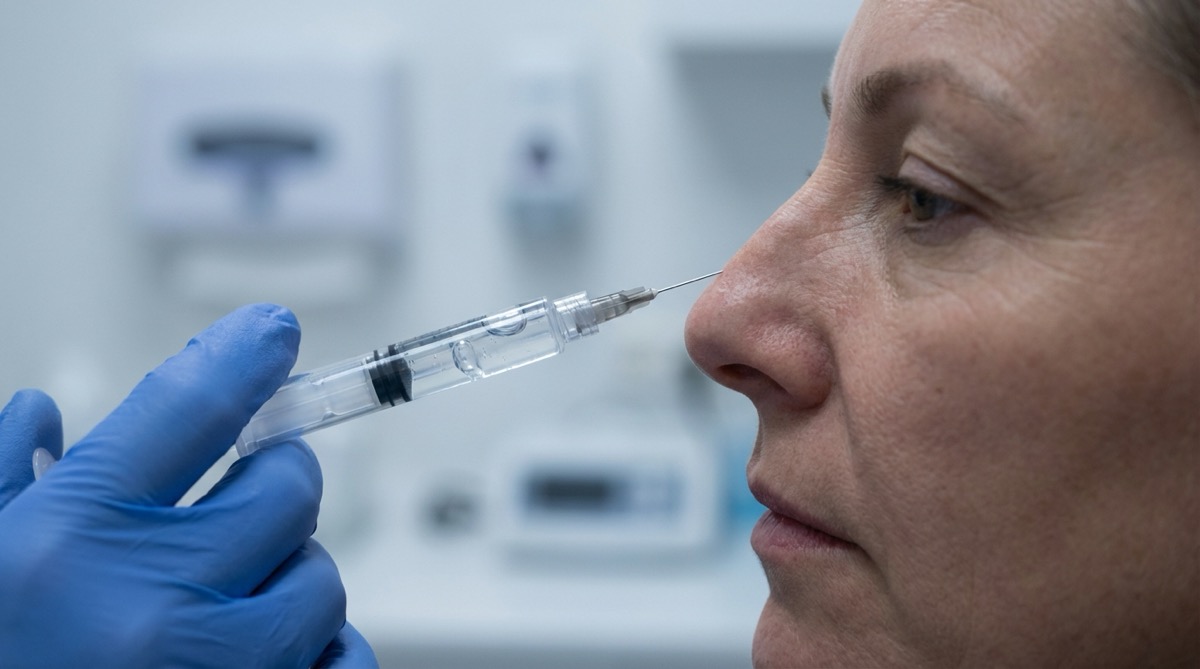
    Non-surgical rhinoplasty can camouflage small contour irregularities by adding filler, but it cannot make the nose smaller, reshape bone or cartilage, correct the septum, or improve nasal breathing. When the goal is reduction, tip refinement, structural support or airway improvement, the discussion usually needs to shift toward structural rhinoplasty or septorhinoplasty.

    The appeal is easy to understand. A “liquid nose job” sounds faster than surgery, and in selected cases a small amount of hyaluronic acid filler can soften a dorsal irregularity or improve a subtle contour. The problem is that marketing often presents nasal filler as a shortcut to rhinoplasty, when anatomically it is a different procedure with different limits and a distinct risk profile.

    Medical review

    Written and reviewed by Dr. Walter Zamarian Jr., plastic surgeon in Londrina, Brazil. CRM-PR 17.388, RQE 15.688, full member of the Brazilian Society of Plastic Surgery (SBCP) and member of the American Society of Plastic Surgeons (ASPS). 20+ years of experience and 8,000+ surgeries performed. Last reviewed: May 24, 2026.

    What non-surgical rhinoplasty can do

    Non-surgical rhinoplasty uses injectable filler, most often hyaluronic acid, to create optical changes on the outside of the nose. It may be considered for small and specific goals: smoothing a minor dorsal indentation, camouflaging a small bump by filling around it, softening a mild asymmetry or refining a small contour irregularity after previous surgery.

    The key word is small. Filler works by adding volume. In the nose, even a tiny amount can be visible because the anatomy is compact and the skin envelope is tight. That same fact is also why overcorrection, migration or repeated treatment can gradually make the nose look wider or less defined.

    What filler cannot do to the nose

    Nasal filler does not remove tissue. It does not narrow nasal bones, sculpt cartilage, reduce a bulbous tip, correct a deviated septum or open the internal nasal airway. It can create a smoother line in selected patients, but it cannot perform the work of structural rhinoplasty.

    • It cannot make the nose smaller: filler adds volume, even when the profile looks smoother.
    • It cannot refine cartilage structurally: a wide or bulbous tip depends on cartilage, skin thickness and support.
    • It cannot narrow bone: wide nasal bones require surgical assessment and, in selected cases, controlled osteotomies or ultrasonic rhinoplasty.
    • It cannot improve breathing: obstruction from septal deviation, valve collapse or turbinate problems requires functional evaluation and may require septorhinoplasty.
    • It cannot replace revision surgery: some small irregularities can be camouflaged, but significant deformity after prior surgery may require revision rhinoplasty.

    Why the nose is a high-risk filler area

    The nose is a vascular danger zone. Its arteries have connections with vessels that supply the skin, eye and central face. If filler enters or compresses a blood vessel, blood flow can be reduced or blocked. This is called vascular occlusion, and it can evolve quickly.

    Possible complications include severe pain, skin blanching, livedo, blisters, skin necrosis, scarring, infection, nodules, migration, asymmetry and, rarely, visual symptoms, blindness or stroke. These events are uncommon, but they are real and time-sensitive. The fact that hyaluronic acid filler can sometimes be dissolved with hyaluronidase does not make nasal filler a casual procedure.

    Warning signs after nasal filler include increasing pain, white or dusky skin, mottled color change, new blisters, rapidly worsening swelling, fever, pus, eye pain, blurred vision, vision loss, severe headache or neurological symptoms. These symptoms require immediate contact with the treating physician or emergency care.

    Repeated filler can make later rhinoplasty harder

    Another problem is not dramatic in the first hour, but it matters over time. Repeated nasal filler can accumulate, spread, create puffiness, obscure anatomy, trigger inflammation, form nodules or contribute to fibrosis. A nose that started with a small dorsal bump can become wider and less defined after repeated injections.

    If a patient later decides to have surgery, residual filler and scarred tissue planes can make surgical assessment more complex. In many cases, I prefer to dissolve hyaluronic acid filler and allow tissues to settle before planning rhinoplasty. The interval depends on the amount, product, location and tissue response.

    When structural rhinoplasty is the more appropriate discussion

    Surgery becomes the more relevant conversation when the patient wants the nose smaller, the tip more refined, the bridge narrower, the septum corrected, the airway improved or the nose structurally supported. These are not filler goals; they are bone, cartilage, septum and soft-tissue goals.

    Rhinoplasty also has risks and should not be presented as a simple upgrade. Risks include bleeding, infection, anesthesia reaction, septal perforation, persistent or new breathing changes, asymmetry, irregularity, skin suffering or necrosis, altered sensation, visible scarring and possible revision. The advantage is that surgery can address anatomy that filler cannot change, but the decision must be individualized.

    Non-surgical rhinoplasty versus surgical rhinoplasty

    QuestionNasal fillerStructural rhinoplasty
    Can it reduce the nose?No, it adds volumeCan reduce or refine selected structures
    Can it improve breathing?NoCan when functional correction is included
    Can it reshape cartilage?NoYes, when indicated
    Is it temporary?YesMore durable, but still affected by healing and aging
    Can it be reversed?Hyaluronic acid filler may be dissolved in selected casesSurgical revision may be needed for structural changes
    Main risk profileVascular occlusion, necrosis, visual symptoms, nodules, migrationSurgical, anesthetic, respiratory, cicatricial and revision risks

    Frequently asked questions

    Can non-surgical rhinoplasty make my nose smaller?

    No. Non-surgical rhinoplasty cannot make the nose smaller because filler adds volume. It may camouflage a small bump in selected patients, but the total volume of the nose does not decrease.

    Is nasal filler dangerous?

    Nasal filler is a medical procedure in a high-risk vascular area. Severe complications are uncommon, but they can include vascular occlusion, skin necrosis, visual symptoms, blindness, infection and nodules.

    Can filler be dissolved before rhinoplasty?

    Many hyaluronic acid fillers can be treated with hyaluronidase before rhinoplasty, but timing must be individualized. The surgeon needs to know what was injected, where it was placed, when it was done and how the tissue responded.

    Is filler a good test before surgery?

    Filler is not a true preview of surgical rhinoplasty because it adds volume, while surgery can reduce, reshape and support the nose. Imaging and consultation are more useful for discussing surgical possibilities and limits.

    How do I choose safely?

    The safest way to choose is an in-person evaluation of nasal shape, skin thickness, cartilage, septum, breathing, prior fillers, prior surgery and expectations. Photos can start the conversation, but they do not replace examination.

    How I approach this decision

    In consultation, I first separate cosmetic contour from structural anatomy and breathing. If the issue is a small contour depression and the patient understands the temporary nature and vascular risk, filler may be discussed cautiously. If the issue is size, width, tip shape, deviation, previous surgery or airway function, the conversation usually belongs in the rhinoplasty or septorhinoplasty category.

    For more context, read about structural rhinoplasty, facial fillers, septorhinoplasty, ultrasonic rhinoplasty, revision rhinoplasty and facial fat grafting. The right choice is the one that matches anatomy, safety and goals, not the one that sounds fastest online.

  • Structural Rhinoplasty in Brazil: Safety Guide for International Patients

    Structural Rhinoplasty in Brazil: Safety Guide for International Patients

    Structural rhinoplasty in Brazil can be considered by international patients only when surgeon credentials, hospital safety, anesthesia, travel logistics, postoperative time in Londrina and mandatory in-person evaluation are planned before surgery. A virtual consultation can start the discussion, but it cannot replace examination of the nose, breathing, skin, cartilage and expectations.

    Many patients from outside Brazil contact the clinic because they are looking for experienced rhinoplasty care and a clear plan. The decision should not be based on price or travel appeal. In a YMYL medical context, the important questions are: who is operating, where the surgery takes place, how anesthesia is handled, how long the patient remains nearby, and what happens if recovery does not follow the expected course.

    Medical review

    Written and reviewed by Dr. Walter Zamarian Jr., plastic surgeon in Londrina, Brazil. CRM-PR 17.388, RQE 15.688, full member of the Brazilian Society of Plastic Surgery (SBCP) and member of the American Society of Plastic Surgeons (ASPS). 20+ years of experience and 8,000+ surgeries performed. Last reviewed: May 24, 2026.

    What structural rhinoplasty means

    Structural rhinoplasty is a surgical approach that treats the nose as a framework of bone, cartilage, septum, skin and airway function. Instead of only removing tissue, the operation may use cartilage support, precise reshaping and functional assessment to improve form and, when indicated, breathing.

    The plan depends on the patient’s anatomy. Septal cartilage is often the preferred graft source when available. Ear cartilage or rib cartilage may be considered in selected cases, especially revision surgery or noses that need stronger support. Skin thickness, ethnic features, facial proportions, prior trauma, previous surgery and airway symptoms all change the plan.

    Some patients need aesthetic rhinoplasty only. Others need septorhinoplasty because breathing and structure are connected. Some may benefit from ultrasonic rhinoplasty for selected bone work, while revision cases require a different level of planning through revision rhinoplasty.

    How international patients should evaluate safety

    Before traveling for rhinoplasty, international patients should verify medical credentials, board certification, the surgeon’s RQE in plastic surgery, hospital or surgical facility standards, anesthesia team, postoperative availability and emergency plan. In Brazil, RQE and SBCP membership are important trust signals because they show formal specialist registration and plastic surgery training.

    Virtual screening is useful for an initial discussion, but it remains preliminary. Surgery should not be confirmed as final until the in-person consultation in Londrina, where I examine the nose, assess breathing, review photographs, discuss expectations, evaluate medical history and confirm whether the plan remains appropriate.

    Travel planning: what needs to be organized

    International rhinoplasty requires more planning than local surgery. Patients need a valid passport, official visa guidance for their nationality, travel insurance that covers medical contingencies when possible, accommodation close enough for follow-up, a responsible adult for the early recovery period and enough time in Londrina for postoperative checks.

    Visa and entry rules change, so patients should check official Brazilian government or consular sources before buying tickets. Flight timing also matters, because returning too early can make it harder to manage bleeding, swelling, pain, infection, breathing concerns or other unexpected symptoms.

    Remote follow-up after returning home is helpful, but it does not replace urgent local medical care if warning signs occur. Patients should know where they would seek emergency help in their home country if they develop fever, bleeding, chest pain, shortness of breath, calf swelling or sudden breathing problems.

    Recovery timeline for patients traveling to Brazil

    The exact timeline depends on the operation, swelling, skin thickness, bleeding tendency, airway work and whether revision or rib cartilage is involved. Many patients need at least 10 to 14 days in Brazil, but this is individualized. A longer stay may be safer for complex cases.

    • First days: swelling, bruising, nasal congestion, fatigue and limited activity are expected.
    • First week: splint and early postoperative checks are managed in person.
    • Before flying: the nose, bleeding risk, breathing, pain, swelling and general condition must be reviewed.
    • After returning home: remote follow-up can monitor progress, but urgent symptoms require local care.
    • Long term: swelling can continue to refine for months, especially in the nasal tip and thicker skin.

    Risks that must be discussed before surgery

    Rhinoplasty is surgery and carries risk even when performed by an experienced surgeon. Possible complications include bleeding, hematoma, infection, anesthesia reaction, septal perforation, persistent or new breathing obstruction, asymmetry, contour irregularity, skin suffering or necrosis, altered sensation, visible scarring and need for revision surgery.

    Travel adds another layer. Long flights and limited mobility can increase the importance of planning around deep vein thrombosis and pulmonary embolism risk, especially in patients with risk factors. Warning signs such as chest pain, shortness of breath, fainting or calf swelling require urgent evaluation.

    Questions international patients should ask

    Is virtual consultation enough to schedule surgery?

    Virtual consultation is a preliminary screening tool, not a substitute for in-person evaluation. The final indication should be confirmed in Londrina after examination, breathing assessment and medical review.

    How long should I stay in Brazil after rhinoplasty?

    The stay is individualized, but international patients should usually plan enough time for early in-person follow-up before flying. Complex cases, revision surgery or airway work may require a longer stay.

    Can rhinoplasty improve breathing?

    Rhinoplasty can improve breathing when the plan includes functional correction of septal deviation, valve collapse or other airway problems. When breathing is a concern, the discussion should include septorhinoplasty rather than cosmetic change alone.

    Is Brazil the right place for every patient?

    No. Traveling for surgery is not appropriate for every patient. Medical history, recovery support, ability to stay in Brazil, language, travel risk, expectations and access to urgent care after returning home all matter.

    What should I verify before choosing a surgeon?

    Verify specialist registration, RQE, plastic surgery training, hospital or facility standards, anesthesia support, postoperative follow-up and whether the surgeon gives a balanced explanation of risks, limits and alternatives.

    How I plan rhinoplasty for international patients

    My process begins with a careful review of photographs, concerns, breathing symptoms, prior procedures and medical history. If the case appears appropriate for travel, the plan remains conditional until in-person consultation confirms anatomy and safety. I also discuss whether ethnic rhinoplasty, ultrasonic bone work, septorhinoplasty or revision strategies are relevant.

    For related information, read about structural rhinoplasty, ultrasonic rhinoplasty, septorhinoplasty, revision rhinoplasty, ethnic rhinoplasty or start with the international patient contact page. A safe trip for surgery is built on planning, not urgency.