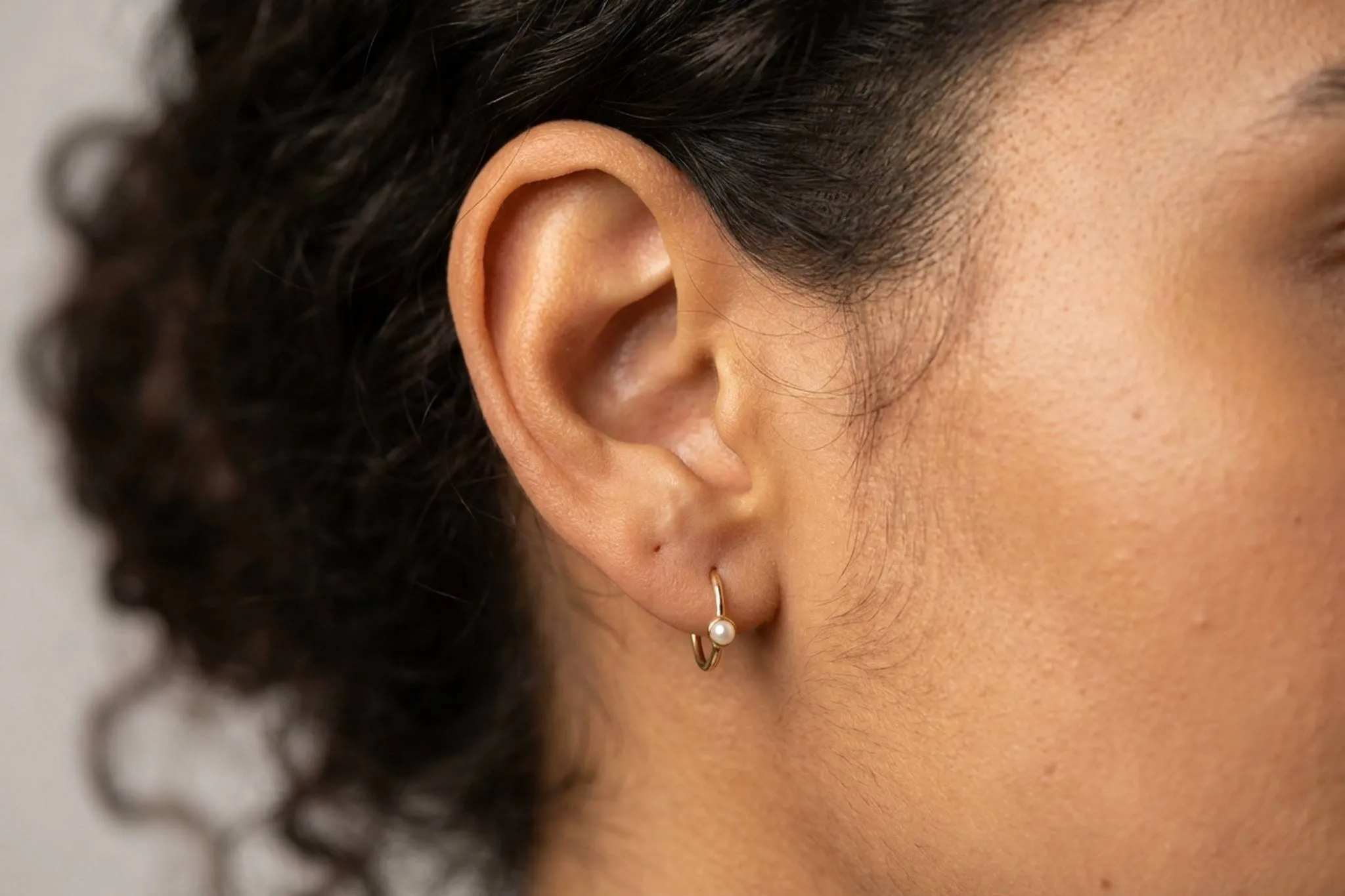
Earlobe Repair in Brazil: the surgery that fixes torn or stretched earlobes
If you are reading this page, you probably have a torn earlobe from an earring that was pulled, or that hole that has been stretching over the years from the weight of heavy earrings. Perhaps you used ear gauges in your teenage years and now wish to reverse the modification. Whatever the cause, I want you to know: earlobe repair surgery -- also known as lobuloplasty or torn earlobe surgery -- is one of the most rewarding procedures I perform as a board-certified plastic surgeon in Brazil.
I say this because, although it is a relatively simple procedure, the impact on self-esteem is enormous. The earlobe is a small but extremely visible structure. A torn or deformed earlobe draws attention, limits the use of earrings, and can cause embarrassment in daily life. The good news? The correction is quick, done with local anesthesia at my clinic in Brazil, and the results are excellent.
Over more than twenty years of practice in plastic surgery and more than eight thousand procedures performed, I have developed a special sensitivity for these surgeries that, although smaller in scale, require millimeter precision. After all, we are talking about a structure where every millimeter makes a difference in the final aesthetic result.
What is lobuloplasty?
Lobuloplasty is the plastic surgery to repair the earlobe. It corrects partial or complete fissures (totally divided earlobe), excessively stretched holes from heavy earrings or gauges, and congenital or traumatic deformities of the earlobe. The procedure reconstructs the natural anatomy of the earlobe, restoring its rounded and symmetrical shape.
It is important to differentiate lobuloplasty from otoplasty, which corrects prominent ears. Lobuloplasty exclusively treats the earlobe, while otoplasty remodels the cartilage of the ear as a whole. In some cases, both procedures can be combined in the same surgical session.
Most common causes of damaged earlobes
Throughout my career, I have identified that earlobes arrive damaged at my office for four main reasons. Understanding the cause is essential to plan the best repair technique.
Heavy earrings worn for many years
This is the most common scenario. The earring hole, which initially was a small opening, gradually elongates over decades. Large hoop earrings, earrings with heavy stones, and bulky jewelry exert a constant pull on the earlobe tissue. Over time, the earlobe loses elasticity — especially after the age of forty, when collagen production decreases — and the hole transforms into an elongated fissure. In some cases, the earring even slips out through the bottom of the earlobe.
Trauma from tearing
Accidents where the earring is pulled sharply — by a child, during sports, when putting on a shirt, or getting caught on something — can tear the earlobe partially or completely. This type of injury is more dramatic visually, but paradoxically can be simpler to correct, as the edges of the tear are usually regular and fresh.
Use of ear gauges
Ear gauges (also known as plugs or stretchers) that progressively expand the earlobe hole can create openings several centimeters in diameter. When the patient decides to reverse the modification, lobuloplasty is the only way. In these cases, the repair is more complex, as there is significant tissue loss and the earlobe needs to be reconstructed practically from scratch.
Keloids and previous scars
Some people develop keloids (excessive scars) at the earring holes, creating hard and aesthetically undesirable nodules. Lobuloplasty can remove these keloids and reconstruct the earlobe, although in these cases special care is needed in the postoperative period to avoid recurrence.
Who is a candidate for lobuloplasty?
Lobuloplasty is recommended for men and women of any age who present one or more of the following conditions:
- Completely torn lobe (a fissure that goes from the hole to the lower edge).
- Excessively enlarged earring hole, making it unsafe to wear earrings.
- Deformed lobe from gauges that the patient wishes to reverse.
- Keloids on the lobe that need to be removed and the lobe reconstructed.
- Asymmetry between the lobes caused by trauma or irregular earring use.
- Elongated lobes due to age, which have become pendulous and disproportionate.
There are few contraindications. Patients with diseases that compromise healing (decompensated diabetes, for example), active infections at the site, or unrealistic expectations should be evaluated on a case-by-case basis. During the consultation, I examine each situation individually and explain exactly what I can and cannot achieve.
Lobuloplasty combined with other facial procedures
Frequently, patients who come to me for a facelift or a blepharoplasty take the opportunity to correct the lobes at the same surgical time. Similarly, those undergoing otoplasty can combine lobuloplasty if necessary. This combined approach is safe and avoids a second anesthesia.
Procedures such as facial fillers with hyaluronic acid can also be useful for lobes that have lost volume with age, but they do not replace lobuloplasty when there is tearing or structural deformity. In cases of volume loss without tearing, fat grafting is another option that offers a more lasting result.
Surgical techniques I use in lobuloplasty
There is no single technique that works for all cases. The choice of technique depends on the type of injury, the amount of available tissue, and the desired outcome. Over two decades, I have mastered various approaches that allow me to offer the best solution for each specific situation.
Direct excision technique (for complete tears)
When the lobe is completely divided, the most commonly used technique consists of removing the skin that has healed along the edges of the tear, creating raw (living) surfaces that will be sutured together. It’s like turning an old scar into a fresh wound so that it can heal properly.
I make the incisions with millimeter precision, removing the minimum amount of tissue necessary to preserve the natural size of the lobe. The suture is done in two layers: internal absorbable sutures for strength, and external stitches with fine nylon sutures to ensure the best aesthetic appearance of the scar.
Z or L flap technique (to avoid notching)
An important concern in lobuloplasty is to avoid notching on the lower edge of the lobe. When closing a tear in a straight line, the scar can contract during healing and create a visible indentation on the lobe's margin. To avoid this, I use local flaps in the shape of a Z or L that redistribute the tension of the scar and preserve the natural rounded contour.
This technique is especially important in tears that extend to the edge of the lobe. The small triangular flap I create during surgery acts like a puzzle piece that fits perfectly, eliminating any risk of deformity in the contour.
Technique for very enlarged holes (without complete tearing)
When the earring hole is very enlarged but the lobe has not completely torn, I use a different approach. I remove the excess skin around the hole, transforming the oval and elongated orifice into edges that can be sutured precisely. The result is an intact lobe, ready to be pierced again after complete healing.
Reconstruction for former gauge users
This is the most challenging scenario. When large diameter gauges have expanded the hole for months or years, there is real tissue loss and thinning of the remaining lobe. Reconstruction involves more elaborate flaps, potentially reducing the size of the lobe, but restoring a natural and symmetrical appearance. In extreme cases, a second procedure may be necessary for refinement.
How the procedure works step by step
Lobuloplasty is an outpatient surgery, meaning you come to the office, have the procedure, and go home the same day. There is no need for hospitalization. Here’s how each step works:
Consultation and planning
During the consultation, I thoroughly examine your lobes, assess the type and extent of the injury, the quality of the available tissue, and your healing capacity. I photograph the lobes from multiple angles for documentation and surgical planning. We discuss your expectations: do you want to wear earrings again? Prefer not to pierce again? This directly influences the technique I will choose.
Local anesthesia
The surgery is performed under local anesthesia with lidocaine and epinephrine. I apply the anesthetic with an ultra-fine needle, causing only slight momentary discomfort. In a few minutes, the lobe becomes completely insensitive. You remain awake and comfortable throughout the procedure, which lasts between twenty and forty minutes per ear.
The actual surgery
With the lobe anesthetized, I make the planned incisions with a scalpel, remove the scar tissue from the edges of the tear, and suture in layers. Each stitch is placed with extreme care — remember, we are working on a structure of a few centimeters where every detail is visible. I use fine sutures (nylon 5-0 or 6-0) to minimize the marks from the stitches.
Dressing and instructions
At the end, I apply a light dressing with micropore. You receive a prescription for over-the-counter pain medication (the pain is minimal) and a topical antibiotic. The instructions are simple: do not sleep on the operated ear in the first few days, avoid trauma to the site, and return for a follow-up as scheduled.
Recovery and post-operative care for lobuloplasty
One of the great advantages of lobuloplasty is the extremely smooth recovery. Since it is a localized procedure under local anesthesia, the impact on your daily life is minimal.
First 24 to 48 hours
There may be slight swelling and sensitivity in the lobe, easily controlled with acetaminophen (Tylenol). Most patients report minimal discomfort, very different from pain. Keep the dressing clean and dry. Avoid wetting the lobes in the shower — protect them with a shower cap or simply be careful when washing your hair.
First week
The stitches are removed between seven and ten days after the surgery. Until then, continue with the topical antibiotic as directed. You can work normally the day after the procedure — there are no activity restrictions, except to avoid contact sports or any situation that could traumatize the ears.
First month
After the stitches are removed, the scar will be pink and slightly raised. This is completely normal. I recommend using micropore over the scar for thirty days to modulate healing and minimize scar widening. The scar will mature and gradually lighten.
Three to six months
The scar reaches its maturity. At this point, it will be thin, light, and practically imperceptible, especially on lighter skin. In patients prone to hypertrophic scarring, I may recommend complementary treatments such as corticosteroid injections or silicone sheets.
When can I start wearing earrings again?
This is the question I hear the most. I recommend waiting at least three months before piercing the lobe again. And when you do the new piercing, it is essential that it is positioned in healthy tissue, not over the scar. I advise that the new hole be made in a slightly different position from the previous one, in a location I indicate during the follow-up consultation.
After the new piercing, I recommend initially wearing light earrings (thin hoops, small studs) and avoiding heavy earrings for at least another three months. The idea is to give the tissue time to strengthen before subjecting it to weight again.
Possible risks and complications
Lobuloplasty is a low-risk surgery, but like any surgical procedure, it has potential complications that you should be aware of. My philosophy is always total transparency with my patients.
Visible scar
Every surgery leaves a scar. In lobuloplasty, the scar is inevitable, but with proper technique and post-operative care, it becomes very discreet. The location of the scar depends on the technique used, but it generally lies on the anterior part or the edge of the lobe, where it is partially disguised by the natural anatomy.
Keloid or hypertrophic scar
Patients with a history of keloids deserve special attention. The earlobe is, in fact, one of the body regions most prone to keloid formation. If you have had a keloid anywhere on your body, we will discuss preventive strategies before the surgery, such as the use of beta therapy (superficial radiotherapy) in the first hours after the procedure, corticosteroid injections, and compression with pressure earrings.
Asymmetry
No face is perfectly symmetrical, and lobes are no exception. I do my best to achieve symmetry between both sides, but small differences may exist and are usually imperceptible.
Recurrence of tearing
If the patient returns to wearing very heavy earrings or suffers new trauma, the lobe may tear again. Therefore, post-operative education is a fundamental part of my work: I advise on the type and weight of appropriate earrings, the importance of removing them while sleeping, and how to protect the lobes during physical activities.
Infection
Extremely rare when post-operative instructions are followed. The use of topical antibiotics and proper hygiene of the site practically eliminates this risk.
Lobuloplasty for earlobe rejuvenation
In addition to repairing tears and enlarged holes, lobuloplasty has a use that many people are unaware of: the rejuvenation of the aged earlobe.
As the years go by, earlobes undergo the same changes as the rest of the face. They lose collagen, lose subcutaneous fat, become saggy and elongated. Those full and rounded earlobes of youth transform into thin, pendulous earlobes with horizontal creases. This change is subtle but significantly contributes to an aged appearance.
Reduction of the elongated earlobe
I can reduce earlobes that have become excessively long with age by removing a wedge of tissue from the lower region and reconstructing a younger and more natural contour. This surgery is often combined with a facelift, which naturally pulls the earlobe during the repositioning of facial tissues.
Filling of the atrophic earlobe
Earlobes that have lost volume and become thin as paper can be filled with hyaluronic acid or, preferably, with fat grafting. The filling restores youthful fullness to the earlobe and significantly improves how earrings are positioned.
It is impressive how this small intervention can rejuvenate the appearance of the ear and, by extension, the entire facial profile. Full and well-contoured earlobes are a sign of youth that often goes unnoticed until we restore them.
Care for earrings after lobuloplasty
An essential part of the long-term success of lobuloplasty is changing habits with earrings. It is pointless to repair the earlobe if you go back to making the same mistakes that caused the initial problem.
Golden rules to protect your earlobes
- Avoid heavy earrings on a daily basis. Reserve large and heavy earrings for special occasions and for short periods.
- Remove earrings before sleeping. The pressure of the pillow against the earring can deform the earlobe over time.
- Use earring supports (larger disc backs or silicone supports) that distribute the weight and reduce pressure on the hole.
- Prefer lightweight materials for earrings: titanium, hollow 18k gold, or surgical steel are lighter than solid silver or costume jewelry with stones.
- Alternate between wearing and not wearing earrings to give your earlobes a break.
- Never pull earrings to remove them. Open the clasp carefully.
Positioning of the new hole
When the time comes to re-pierce (after three months), it is ideal that this is done by me or under my guidance. I assess the scar tissue, identify the area with the greatest thickness and resistance, and mark the exact point for the new hole. This prevents the hole from being over the scar — which would weaken the repair — and ensures that the earring is aesthetically well positioned.
The hole should be made with a specific needle and not with a piercing gun, which causes excessive trauma to the tissue. After piercing, use hypoallergenic earrings (titanium or gold) in the first months to avoid allergic reactions that could compromise healing.
How much does lobuloplasty cost in Brazil?
I understand that the financial investment is a legitimate concern. The cost of lobuloplasty varies according to the complexity of the case: whether it is one or two earlobes, whether there is a simple tear or a need for more elaborate reconstruction, and whether it will be combined with other procedures.
In general, lobuloplasty is one of the most accessible procedures in plastic surgery. Since it is performed in an office with local anesthesia, there are no costs for an operating room, anesthesiologist, or hospital stay. This makes the cost significantly lower than larger surgeries.
What is included in the cost
- Pre-operative consultation and evaluation.
- The surgical procedure itself.
- Surgical materials (sutures, anesthetic, dressings).
- Post-operative follow-up appointments.
- Guidance on the ideal timing and positioning for the new hole.
During the consultation, after evaluating your specific case, I present the exact cost and payment options. I do not provide estimates over the phone or WhatsApp, as I consider it essential to examine each patient in person before determining the treatment plan and associated costs.
Compare with the cost of living with the problem
Many patients spend fortunes on expensive earrings that they cannot wear because the earlobe is torn. Others avoid wearing their hair up because they are self-conscious about exposing their ears. The impact on self-esteem and aesthetic freedom is much greater than the investment in a surgery that resolves the problem definitively in less than an hour.
My experience and approach in lobuloplasty
I graduated from the State University of Londrina and had the privilege of being a student of Professor Ivo Pitanguy, the greatest name in Brazilian plastic surgery. With him, I learned that there are no small or large surgeries — there are patients who deserve the same level of dedication regardless of the complexity of the procedure.
This philosophy applies perfectly to lobuloplasty. Although it is a technically simple surgery compared to a deep plane facelift, it requires the same rigor in planning, execution, and post-operative follow-up. A poorly repaired earlobe is visible to the naked eye and can be worse than the original problem.
I am a full member of the Brazilian Society of Plastic Surgery (SBCP) and the American Society of Plastic Surgeons (ASPS). Over more than twenty years and more than eight thousand surgeries, I have accumulated extensive experience in facial procedures of all complexities, from the most delicate — such as lobuloplasty — to the most complex.
Why trust the plastic surgeon for lobuloplasty
Many people consider having lobuloplasty done by dermatologists or in aesthetic clinics. Although there are competent professionals in these areas, the plastic surgeon has specific training in flap techniques, aesthetic suturing, and tissue reconstruction that make a difference in the final result. The difference between a beautiful scar and a visible scar lies in the technical details that only years of surgical training provide.
At my clinic in Brazil, I offer a complete surgical environment, with all the necessary structure for safe outpatient procedures. Each lobuloplasty receives the same attention and preparation that I dedicate to any other plastic surgery.
Frequently asked questions about lobuloplasty
Does lobuloplasty hurt?
The surgery itself is painless, as it is performed under local anesthesia. You only feel the initial sting of the anesthetic. In the post-operative period, discomfort is minimal and easily controlled with over-the-counter pain medication like acetaminophen (Tylenol). Most of my patients report that the pain is much less than they imagined.
How long does the surgery last?
Between twenty and forty minutes per earlobe, depending on the complexity. If both earlobes need repair, the total surgery lasts about an hour. It is a quick procedure performed in the office, without the need for hospitalization.
Can I return to work the next day?
Yes. Since lobuloplasty is done with local anesthesia and does not involve deep structures, recovery is very quick. Most patients return to their normal activities the next day. The dressing is discreet and can be covered by hair.
When can I start wearing earrings again after lobuloplasty?
I recommend waiting at least three months to make a new hole. This period is necessary for the scar to mature and the tissue to regain adequate resistance. The new hole should be made under medical guidance, in a different position from the previous one, so as not to compromise the surgical repair.
Does lobuloplasty leave a scar?
Every surgery leaves a scar, but in lobuloplasty, it is extremely discreet. I use refined suturing techniques and fine sutures that result in almost imperceptible scars after complete maturation (three to six months). The use of micropore in the post-operative period helps optimize the quality of the scar.
Can the surgery be done on both earlobes at the same time?
Yes, it is very common to operate on both earlobes in the same session. This is perfectly safe and avoids the need for a second procedure. The surgery time only increases by thirty to forty minutes and the recovery is the same.
I have a tendency to keloids. Can I have lobuloplasty?
Yes, but with special care. Patients with a history of keloids require preventive measures such as beta therapy (superficial radiotherapy) in the first 24-48 hours after surgery, corticosteroid injection, and more rigorous follow-up. I discuss all these strategies during the consultation so that you can make an informed decision.
Is it possible to reverse ear gauges with lobuloplasty?
Yes. The reversal of gauges is one of the most frequent reasons for lobuloplasty in young patients. The result depends on the diameter of the gauge and the amount of remaining tissue. In smaller gauges (up to 10mm), the result is usually excellent. For larger diameters, reconstruction is more complex and the final earlobe may be slightly smaller than the original.
Is the result of lobuloplasty permanent?
Yes, as long as you take proper care of your earlobes after surgery. Avoid excessively heavy earrings, remove them before sleeping, and protect your ears during activities that could cause trauma. With these simple precautions, the result lasts a lifetime.
What is the difference between lobuloplasty and otoplasty?
Otoplasty corrects the shape and position of the ear as a whole (for example, protruding ears), involving remodeling of the cartilage. Lobuloplasty exclusively treats the earlobe — the soft and lower part of the ear. They are different procedures that can, in some cases, be combined.
Does insurance cover lobuloplasty?
Lobuloplasty is considered a cosmetic procedure in most cases and is typically not covered by health insurance. Exceptions may exist in cases of recent trauma (acute tear) or post-keloid reconstruction, which may qualify for partial coverage. For international patients traveling to Brazil, the cost is significantly lower than in the United States, even without insurance coverage. Check with your insurance provider to verify your specific situation.
Do I need pre-operative tests before lobuloplasty?
For isolated lobuloplasty under local anesthesia, pre-operative tests are not necessary in most cases. Patients on blood thinners, diabetic patients, or those with specific health conditions may need additional tests such as a CBC, PT/aPTT, or BUN, which will be ordered during the evaluation appointment.
How much does earlobe repair cost in Brazil?
The cost of torn earlobe surgery in Brazil depends on whether one or both earlobes need repair and the complexity of the reconstruction. Brazil is a world leader in cosmetic surgery, and the cost is significantly lower than in the United States or Europe. I discuss all fees during the consultation. International patients can contact our clinic for information.
Schedule via WhatsApp
If you have a torn, enlarged, or deformed earlobe and wish to restore the natural appearance of your ears, schedule a consultation with me. My team is ready to assist you, answer your questions, and find the best time for your appointment.
Learn more about the first consultation, the pricing, and the guidelines for pre-surgical preparation and post-operative recovery.
Are you ready to restore your earlobes? Schedule now!

Dr. Walter Zamarian Jr.
Plastic Surgeon in Brazil
Rua Engenheiro Omar Rupp, 186
Londrina - Brazil
ZIP 86015-360
Brazil
YouTube Channel: Dr. Walter Zamarian Jr.
Follow on Instagram: @drwalterzamarianjr
Follow on TikTok: @drwalterzamarianjr
Search on our website:
This page in other languages:
Portuguese (BR) | English (US) | English (UK) | Italian | French | Spanish