Short answer: revision rhinoplasty may help when a persistent cosmetic or breathing problem is surgically correctable and the expected benefit justifies another operation. Assessment can begin during follow-up; it does not mean immediate surgery. For an elective second procedure, Mayo Clinic advises waiting at least one year while the nose heals. Infection, worsening obstruction, exposed grafts or skin problems need earlier assessment. Scar tissue and available cartilage also affect what another operation can realistically achieve.
Current practice: Dr. Walter Zamarian Jr. no longer performs rhinoplasty. This article remains available for educational purposes.
Patients often seek revision because they still cannot breathe well, the nose looks over-operated, the tip lost support, the bridge became irregular, or the result does not match what they expected. The first step is not to schedule surgery. The first step is to understand whether there is an objective, correctable problem and whether the tissues are ready for another operation.
Medical review
Written and reviewed by Dr. Walter Zamarian Jr., plastic surgeon in Londrina, Brazil. CRM-PR 17.388, RQE 15.688, full member of the Brazilian Society of Plastic Surgery (SBCP) and member of the American Society of Plastic Surgeons (ASPS). More than 8,000 surgeries over two decades of practice; today, by deliberate choice, more than 90% of his surgeries are deep plane facelifts with fat grafting — 3 per week (~150 per year). Last reviewed: May 24, 2026.
What is revision rhinoplasty?
Revision rhinoplasty, also called secondary rhinoplasty, is nasal surgery performed after a previous rhinoplasty. It may be aesthetic, functional or both. Some cases involve a small contour issue; others require reconstruction of support that was weakened, removed or distorted during the first procedure.
The operation is different from a primary rhinoplasty because the surgeon is working in tissue that has already healed with scars. Normal planes may be altered, cartilage may be missing, the septum may already have been used, and skin may be less forgiving. This is why planning is more important than speed.
When a second surgery may be appropriate
Revision may be appropriate when a patient has a problem that is visible, functional, stable and likely to improve with surgery. Examples include persistent nasal obstruction, nasal valve collapse, residual or recurrent septal deviation, a crooked nose, an irregular dorsum, tip collapse, alar retraction, nostril asymmetry, inverted-V deformity or structural weakness that continues to worsen over time.
Aesthetic dissatisfaction alone is not enough. The surgeon needs to determine whether the concern is surgically correctable, whether the expected improvement is meaningful, and whether the risk of another operation is justified. Sometimes the safest recommendation is to wait, treat the airway medically, dissolve residual filler, or not operate.
When it is too early to revise
Elective revision generally requires time for healing. Mayo Clinic advises waiting at least one year when a second operation is needed. Some cases require longer, depending on the tissues and planned correction. This waiting period does not prevent earlier consultations to examine a concern and follow its progress.
Earlier evaluation is important when there is infection, severe obstruction, trauma, progressive collapse, exposed graft, skin suffering or a rapidly worsening deformity. Evaluation does not always mean immediate surgery; it means the problem should be assessed promptly and followed closely.
Why revision rhinoplasty is more complex
Scar tissue changes the anatomy
Every rhinoplasty creates scar tissue. In revision, the tissue planes are less distinct, bleeding can be less predictable and the skin envelope may not redrape as easily. This can limit how much refinement is possible.
Cartilage may be missing or weakened
Primary rhinoplasty sometimes removes or weakens cartilage. If support is insufficient, revision is not only about contour; it may require rebuilding the framework of the nose. This is especially important when breathing is affected or when the tip, middle vault or nostril rims have lost support.
Expectations must be narrower
A revision plan must respect what the previous surgery left behind. The goal may be improvement in breathing, better support, a smoother bridge or a more balanced shape, not a perfect or completely new nose. Clear limits protect the patient from unnecessary surgery.
Cartilage graft options
Revision rhinoplasty often requires grafting. The best graft source depends on how much cartilage is needed, what remains from the septum, whether the ear is suitable and whether a stronger graft is required.
- Septal cartilage: useful when enough remains, but it may have been removed or altered during the first operation.
- Ear cartilage: useful for selected contour and rim support, but it is curved and limited in quantity.
- Rib cartilage: useful for major reconstruction, severe support loss or multiple previous surgeries, but it adds donor-site pain, scar, possible warping, possible visibility/palpability and rare chest-wall complications.
Rib cartilage can be a valuable tool, but it should not be presented as simple or automatically necessary. The indication must be individualized. When the airway and structure need major support, rib cartilage may provide the amount and strength of material needed; in smaller revisions, septal or ear cartilage may be enough.
Functional revision: breathing matters
A revision consultation must evaluate breathing, not only appearance. Persistent obstruction can be related to residual septal deviation, nasal valve collapse, turbinate issues, synechiae, scarring or loss of structural support. In selected patients, revision may overlap with septorhinoplasty because form and function are connected.
When bone work is needed, ultrasonic rhinoplasty can be considered in selected cases, but technology is not the plan. The plan is anatomical: identify the cause, rebuild support when needed and avoid weakening the nose further.
Recovery after revision rhinoplasty
Recovery after revision can resemble primary rhinoplasty, but swelling often lasts longer. The tip may take many months to refine, and scarred tissues can feel firmer during healing. If rib cartilage is harvested, the chest donor site also needs recovery time and pain control.
Patients should expect staged healing rather than an early final answer. The first weeks are about splint care, bruising and swelling. The following months are about gradual definition. Definition may take a year or longer, and follow-up should be individualized. Johns Hopkins Medicine notes that complete resolution of swelling can take a year or more.
Risks and red flags
Revision rhinoplasty carries the risks of rhinoplasty plus the added complexity of previous surgery. Possible risks include anesthesia-related problems, bleeding, infection, poor healing, scarring, prolonged swelling, numbness, skin suffering or necrosis, septal perforation, breathing changes, asymmetry, contour irregularity, graft warping, graft visibility or palpability, donor-site pain or scar, dissatisfaction and the possibility of further surgery.
Urgent red flags include fever, pus, rapidly worsening swelling, heavy bleeding, severe uncontrolled pain, worsening obstruction, skin color change, chest pain, shortness of breath or calf swelling. These signs require immediate contact with the treating surgeon or emergency care.
Expectations and emotional readiness
Revision rhinoplasty is emotionally charged. Patients may feel disappointed, anxious or distrustful after the first operation. Those feelings are understandable, but they must be separated from surgical decision-making. If distress is disproportionate to objective findings, if the concern keeps changing, or if the goal is a perfectly symmetrical nose, surgery may not be the right next step.
The surgeon’s role is to explain what can realistically improve, what probably cannot, and what could become worse. A responsible consultation sometimes ends with a plan to wait, observe and photograph rather than operate immediately.
Frequently asked questions
How long should I wait before revision rhinoplasty?
You can seek assessment while healing continues. Elective reoperation generally waits at least one year, with timing adjusted to the tissues and problem being treated. Severe obstruction, infection, trauma, skin problems or progressive collapse need earlier evaluation.
Is revision rhinoplasty riskier than primary rhinoplasty?
Revision rhinoplasty is usually more complex because scar tissue, altered anatomy and missing cartilage reduce predictability. It can still be appropriate, but the risk-benefit discussion must be stricter than in a first rhinoplasty.
Will I need rib cartilage?
Rib cartilage is not needed in every revision rhinoplasty. It is considered when septal or ear cartilage is insufficient and the nose needs stronger structural support, especially after major collapse or multiple previous surgeries.
Can revision rhinoplasty improve breathing?
Revision rhinoplasty can improve breathing in selected patients when obstruction is caused by correctable structural problems such as septal deviation, nasal valve collapse, synechiae or loss of support. It cannot guarantee normal breathing in every case.
How revision candidates are evaluated
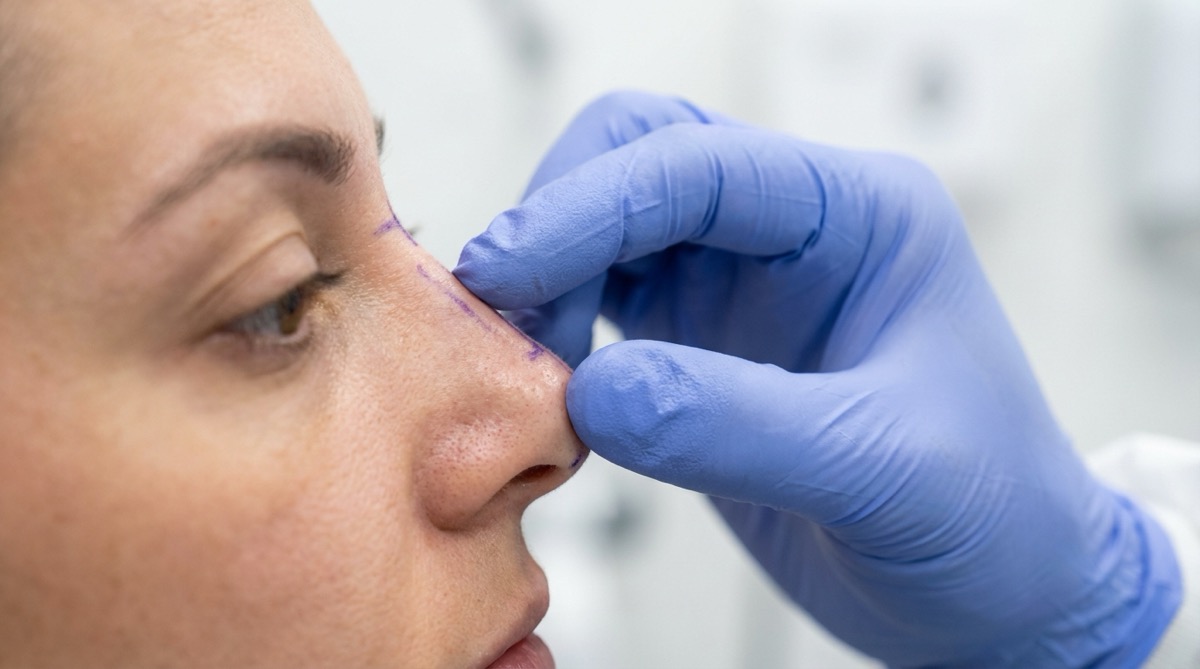
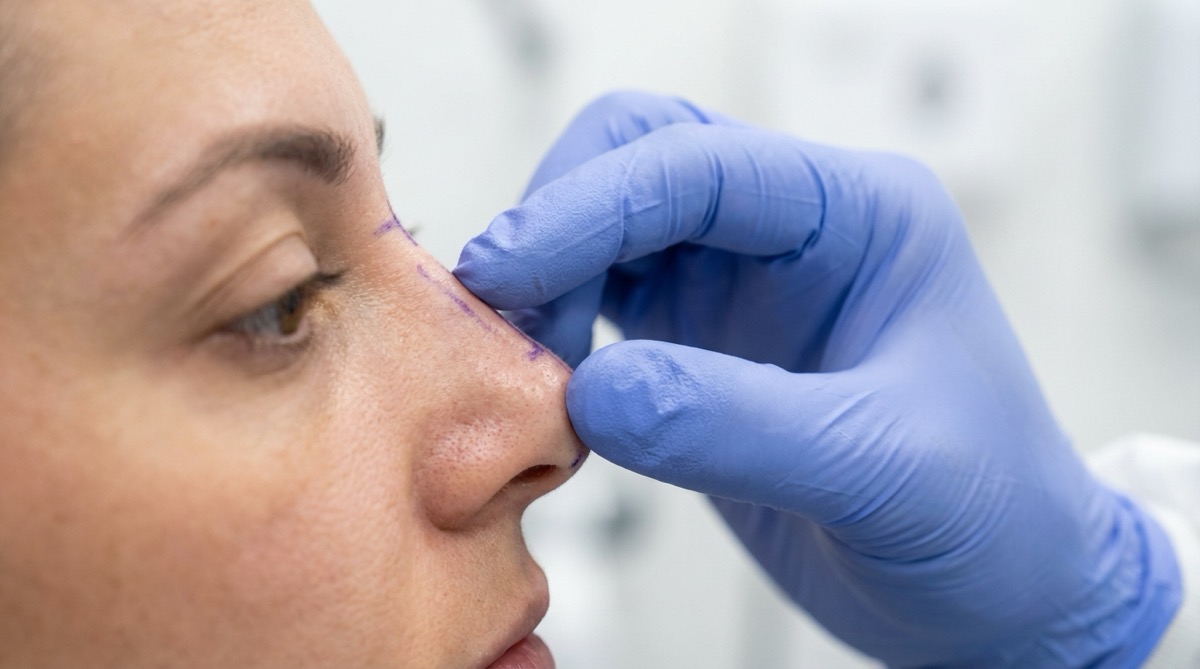
During consultation, the treating surgeon reviews the patient’s timeline, photographs, prior operative information when available, breathing symptoms, skin thickness, cartilage support, nostril shape, dorsum, tip, septum and expectations. For international patients, a virtual consultation with the chosen surgeon may help with preliminary planning, but an in-person examination is necessary before surgery.
For related reading, see the pages on revision rhinoplasty, structural rhinoplasty, septorhinoplasty, ultrasonic rhinoplasty and ethnic rhinoplasty, plus the blog guides on surgical vs non-surgical rhinoplasty and structural rhinoplasty in Brazil for international patients.