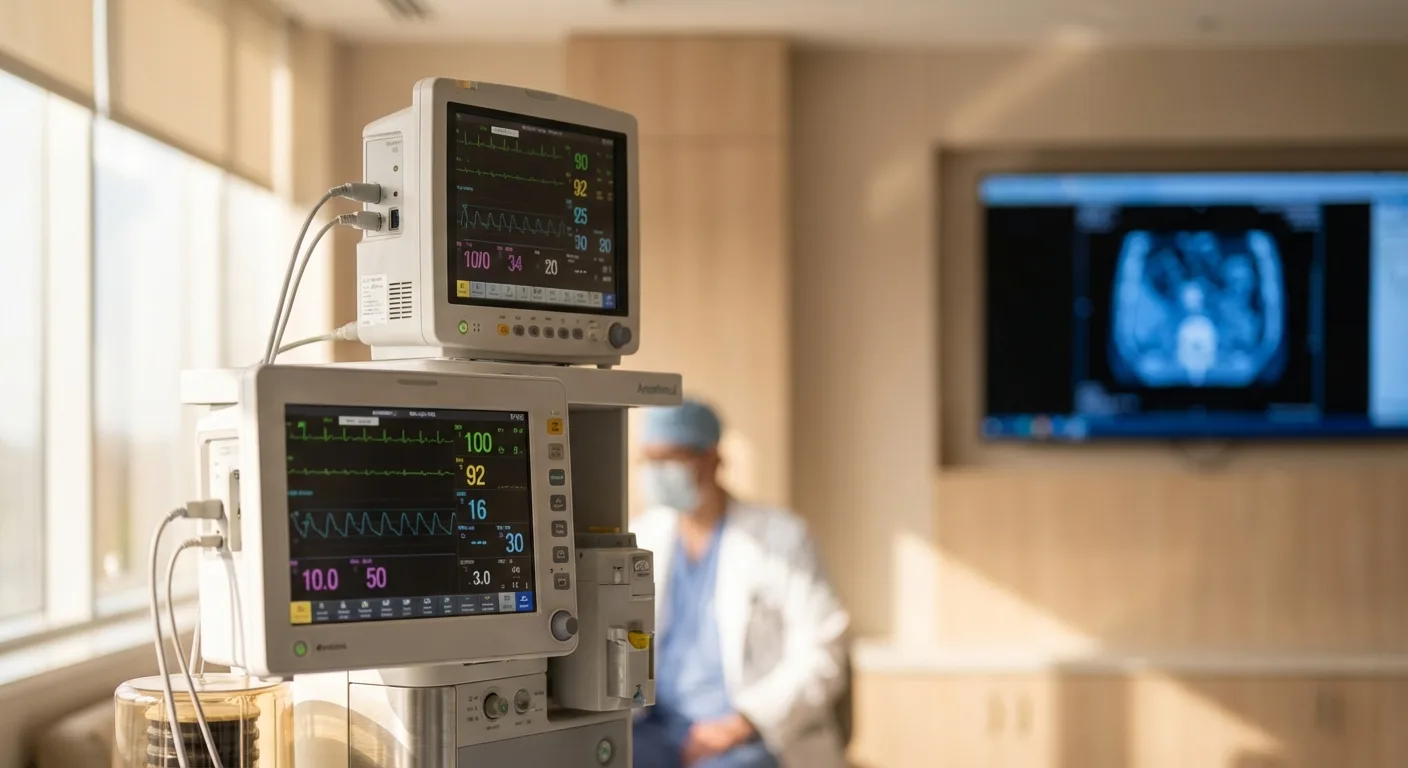
Quick answer: Rhinoplasty may be performed under general anesthesia or local anesthesia with sedation, depending on the operation and the anesthesiologist’s assessment. Total intravenous anesthesia, or TIVA, describes how anesthetic medication is delivered; it does not, by itself, describe how the airway is protected. A 2018 meta-analysis found less nausea and vomiting with propofol than with inhaled anesthetics across different operations. That finding does not make TIVA universally safer. Medical assessment, monitoring and a recovery plan remain essential.
About my current practice: I no longer perform rhinoplasty. I am keeping this article available for educational purposes.
Anxiety about anesthesia deserves a thoughtful answer. The concern may be less about the nose itself than about being unconscious, losing control or feeling something during surgery. I explain anesthesia by separating the questions that often get grouped together: how pain is controlled, how deeply the patient is asleep, how breathing is supported and how recovery is monitored.
Why does anesthesia matter in rhinoplasty?
Rhinoplasty involves cartilage, bone and the nasal lining; it may also involve the septum and nasal valves. These are small, vascular structures that affect breathing as well as appearance. A stable surgical field and an immobile patient allow the surgeon to work precisely.
Anesthesia does more than prevent pain. It helps manage reflexes and the response to surgery, while the anesthesia team monitors the patient and supports breathing as needed. The appropriate plan depends on the extent of surgery and the patient’s health, rather than on a preference for a particular label.
Local anesthesia, sedation and general anesthesia
Local anesthesia with light sedation
Local anesthetic numbs the nose, while intravenous medication reduces anxiety and discomfort. This can be appropriate for limited procedures. During my work in structural rhinoplasty, it was rarely my preferred approach for a full operation: movement, bleeding, reflexes and discomfort could interfere with surgical control.
Deep sedation
Deep sedation produces a deeper level of reduced awareness, but airway protection is not the same as general anesthesia with a controlled airway. The American Society of Anesthesiologists describes sedation as a continuum. A patient may move into a deeper level than intended, so the team must be able to recognize that change and provide appropriate support.
General anesthesia
Under general anesthesia, the patient is unconscious and the anesthesia team manages the airway. This is particularly relevant in nasal surgery, where blood and secretions may be close to the breathing passages. For a complete structural rhinoplasty, septorhinoplasty or a longer operation, the airway plan is an important part of the decision.
What does TIVA mean?
TIVA stands for total intravenous anesthesia. Instead of maintaining anesthesia mainly with inhaled agents, the anesthesiologist uses medication delivered through a vein, generally with infusion pumps. Propofol and remifentanil are examples of medications that may be used. The anesthesiologist selects and adjusts them; this is not a medication plan for patients to follow themselves.
TIVA can be used to maintain general anesthesia. In the 2018 systematic review and meta-analysis, propofol-based maintenance was associated with less postoperative nausea and vomiting than inhaled agents across several types of surgery. Recovery did not improve uniformly across every outcome. I would not turn a benefit in one outcome into a promise that every patient will recover faster or that one technique eliminates risk.
Choosing intravenous rather than inhaled maintenance does not replace decisions about ventilation, airway management, pain relief or nausea prevention. Those decisions belong to the individualized anesthetic plan.
What makes anesthesia safer?
Modern anesthesia has a strong safety record when a qualified anesthesiologist provides care in a properly equipped setting, with appropriate assessment and continuous monitoring. It still involves risks. I prefer to explain the safeguards rather than reassure someone with an absolute promise.
Training, oxygen monitoring, capnography, airway management and safety protocols all contribute. The Anesthesia Patient Safety Foundation discusses how anesthesia safety has improved. For an individual patient, the useful question is whether their own risks have been assessed and a plan has been made to address them.
Relevant information includes medical conditions, allergies, medications and supplements, previous anesthesia problems, smoking, sleep apnea, reflux, a history of blood clots, recreational substance use and family history. Some patients need further assessment or treatment before an elective operation can proceed.
Why does the airway need special attention?
The nose is both the surgical site and part of the respiratory system. Blood, secretions, swelling and surgical manipulation may affect the area. For extensive nasal surgery, a controlled airway helps the team manage these circumstances.
This is why I would not judge an anesthetic plan simply by whether it avoids general anesthesia. The question is whether the whole plan suits the procedure and the patient, including the ability to protect and support breathing.
What happens during the pre-anesthesia assessment?
The anesthesiologist reviews previous illnesses and operations, allergies, medicines, supplements, smoking, sleep apnea, family history and relevant test results. An airway assessment and a discussion of prior anesthetic experiences help guide planning.
The ASA physical-status classification is one part of that assessment, not a substitute for clinical judgment. A healthy younger person may have a different risk profile from someone with heart disease, obesity, significant reflux or sleep apnea. The plan may need to change accordingly.
Fasting instructions are individual instructions
Fasting reduces aspiration risk. Guidelines for selected healthy patients having elective procedures may permit clear liquids until two hours beforehand, but this is not permission to choose your own fasting schedule. Milk, solid food, drinks containing particles and fatty meals require longer fasting intervals.
I advise patients to follow the instructions given by their own anesthesia team and clarify any uncertainty about water, coffee or regular medication before the day of surgery. If those instructions cannot be followed, the team needs to know.
The day of surgery and early recovery
In the operating room, the team confirms patient information, establishes intravenous access and applies monitoring. During anesthesia, the anesthesiologist follows blood pressure, oxygenation, heart rate, ventilation and temperature, with additional monitoring according to the patient and procedure.
During my work in rhinoplasty, local anesthetic in the nose was also used when the patient was under general anesthesia, to help control bleeding and provide early pain relief. At the end of the operation, anesthetic medications are reduced or stopped and recovery continues under supervision.
Anesthetic choices may influence nausea, blood pressure, bleeding, comfort and the pace of waking. TIVA, anti-nausea medication and local pain relief can be useful components of care; none guarantees a recovery without nausea, pain or discomfort.
My earlier experience with rhinoplasty
During my work in structural rhinoplasty, I worked with an anesthesia team familiar with the procedure and its different stages. That coordination mattered for stability, blood-pressure control, pain relief, nausea prevention and recovery.
When the individual assessment supported it, my preference was general anesthesia maintained with TIVA. That was a clinical preference within a complete plan, rather than a claim that every nasal procedure requires the same technique.
Questions to discuss with the anesthesia team
- Why is this type of anesthesia appropriate for my operation?
- How will my breathing and airway be managed?
- Do any of my medications or health conditions change the plan?
- What are my fasting instructions?
- What is the plan for nausea, pain and supervised recovery?
For the broader surgical context, I explain the anatomy and planning principles on the rhinoplasty information page.
Frequently asked questions
Is TIVA a type of sedation?
TIVA describes intravenous delivery of anesthetic medication. It may be used to maintain general anesthesia. The medication route alone does not tell you how deeply the patient is anesthetized or how the airway is managed.
Can rhinoplasty be performed with sedation?
Local anesthesia with sedation is an option in selected cases. Deep sedation may still require breathing support and the ability to rescue a patient who enters a deeper level of anesthesia. The extent of the procedure and the anesthesia assessment guide the decision.
Does TIVA prevent all postoperative nausea?
No. Propofol-based anesthesia can reduce nausea and vomiting compared with inhaled agents in the published evidence discussed above, but individual risk and the rest of the treatment plan still matter.
What should I tell the anesthesiologist?
Disclose medical conditions, allergies, medicines, supplements, smoking, sleep apnea, reflux and previous reactions to anesthesia. These details help the team tailor the plan; they should not be withheld because they seem unrelated to nose surgery.
This article in other languages: Português
Read Also
This page in other languages: Português (BR)

Dr. Walter Zamarian Jr.
Plastic surgeon in Londrina, Brazil (CRM-PR 17.388 | RQE 15.688), full member of SBCP and ASPS. He has worked in plastic surgery for more than 20 years, with a focus on individualized planning, patient safety, Deep Plane facelift, eyelid surgery, facial fat grafting, and female intimate surgery.
Follow this blog on Google
Want to find more articles from this blog on Google? Add Dr. Walter Zamarian Jr. to your preferred sources.
Leave a comment