Short answer: Alternatives to labiaplasty depend on what is causing the discomfort. Skin care may help irritation; dryness, pain or infection need appropriate medical assessment; and selected pelvic floor conditions may benefit from physical therapy. These approaches do not remove excess inner labial tissue. Vaginal laser and radiofrequency are not proven replacements for surgery; NICE limits vaginal laser for menopausal symptoms to randomized trials. Sometimes no procedure is needed.
When someone asks me about alternatives to labiaplasty, I start with a different question: what are we trying to treat? Friction from a fold of skin, vaginal dryness, a skin condition and pain during intercourse can feel related, but they do not necessarily have the same cause. Choosing a treatment before understanding that cause can leave the original problem unresolved.
Labiaplasty changes the size or contour of the inner labia. It is not a treatment for every form of intimate discomfort, and normal anatomical variation does not automatically need correction. My first priority is to distinguish a concern about tissue from a condition that needs another kind of care.
Which alternatives to labiaplasty fit your symptoms?
I separate the main possibilities during the assessment:
- Friction or pulling: prominent inner labial tissue may fold, catch in clothing or become uncomfortable during activity. Skin irritation can also contribute.
- Dryness: hormonal changes, including those around menopause or breastfeeding, and some medications may be relevant.
- Itching or irritated skin: dermatitis, infection, sensitivity to products, hair removal or tight clothing may need attention.
- Pain during intercourse: lubrication, pelvic floor muscles, inflammation, scars and other gynecologic conditions may play a role.
- Loss of fullness in the outer labia: this is a different anatomical concern from excess inner labial tissue.
- Appearance-related distress: expectations, comparison and external pressure deserve space in the discussion.
These categories can overlap. I do not assume that a visible difference explains every symptom, or that changing its appearance will resolve pain.
Can everyday changes reduce irritation?
For mild friction or irritation, more comfortable clothing, underwear that does not rub, avoiding harsh soaps and reducing pressure during an aggravating activity may help. A skin condition should be assessed and treated rather than attributed automatically to the size of the labia.
Persistent itching, discharge or recurrent irritation is a reason to investigate. Repeatedly trying cosmetic products without a diagnosis can delay the care that is actually needed. Conservative measures may make daily life more comfortable, but they do not shrink the inner labia.
When should a gynecologist evaluate the symptoms?
Unusual discharge or odor, internal pain, bleeding, burning with urination, persistent dryness and pelvic pain warrant appropriate medical assessment. Pain during intercourse also needs a broader evaluation than an examination of the external contour alone.
Depending on the diagnosis, a treating clinician may consider lubricants, moisturizers, treatment for infection or a skin disorder, pelvic floor care or hormonal treatment where appropriate. The choice depends on the individual history and any contraindications. I would not present a single product or treatment as the answer for everyone.
What can pelvic floor physical therapy help with?
Pelvic floor physical therapy may be useful when an assessment by a qualified professional identifies a relevant pelvic floor condition. In a randomized trial, Morin and colleagues studied multimodal physical therapy for provoked vestibulodynia—pain around the vaginal entrance triggered by contact. Their findings support its role for that specific condition. [1]
This does not mean that physical therapy treats every type of intimate pain. It also does not remove or reduce inner labial tissue. Its value comes from matching the treatment to the diagnosis.
Are vaginal lasers or radiofrequency a substitute for surgery?
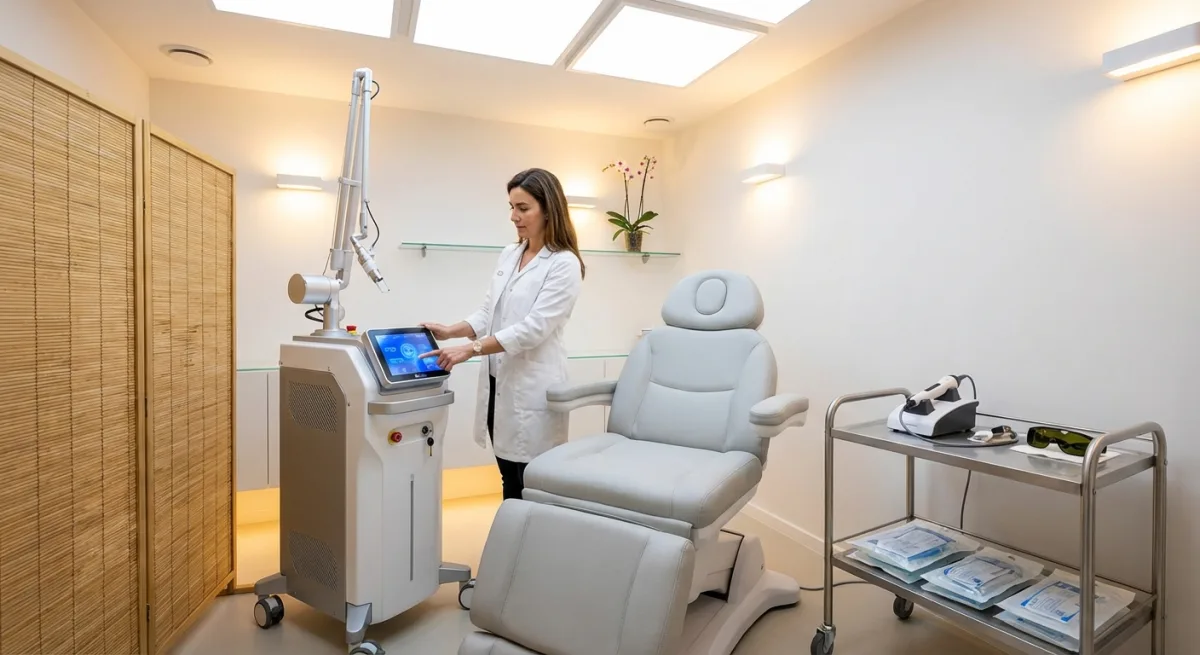
I distinguish an energy-based vaginal treatment from the use of a laser as a cutting instrument during surgery. They are not the same procedure, and a claim about one should not be used to promote the other.
For symptoms associated with genitourinary syndrome of menopause, the 2025 AUA/SUFU/AUGS guideline states that the evidence does not support CO₂ laser, Er:YAG laser or radiofrequency for the relevant symptoms. If CO₂ laser is considered outside a clinical trial in selected circumstances, its experimental nature must be explained to the patient. [2] NICE recommends offering vaginal laser treatment for menopausal genitourinary symptoms only as part of a randomized controlled trial. [3]
ACOG also discusses concerns including burns, scarring, pain during intercourse and persistent pain with vaginal laser therapy. [4] These treatments should not be presented as a proven nonsurgical replacement for removing excess inner labial tissue.
Do fillers or fat grafting address the same concern?
Adding volume to the outer labia addresses a different issue from reducing the inner labia. A fuller outer contour does not necessarily resolve friction caused by a fold of inner labial tissue. I assess the region involved, the symptom and the intended result separately before discussing an intervention.
This distinction matters when a treatment is advertised broadly as “rejuvenation.” The label alone does not explain what is being treated, what evidence supports it or what limitations and risks apply.
When might labiaplasty still be considered?
I may discuss surgery when persistent pulling, friction, recurrent local sores or discomfort, difficulty with hygiene, clothing or activity, or a functionally troublesome asymmetry is linked to the anatomy on examination. The presence of larger labia by itself is not an indication.
The conversation includes what the operation can realistically change, what it cannot address, the recovery period and potential complications. Expectations and emotional readiness are part of that assessment. Surgery should be a voluntary decision, not a response to pressure from a partner or an idealized image.
When is no procedure the better choice?
Sometimes reassurance about normal vulvar variation, a change in daily habits or treatment for another condition is the most appropriate next step. If appearance-related distress is disproportionate or driven by outside pressure, psychological support may be more useful than an operation. Concerns about body dysmorphic disorder deserve appropriate mental-health assessment.
For adolescents, ongoing development, the reason for the request and the influence of others require particular care. For patients under 18, age-specific assessment, involvement of a parent or guardian and a well-documented indication are essential. I do not treat a wish for a different appearance as an automatic reason to operate.
What I want you to take away
- Identify the cause before choosing a treatment.
- Conservative care can improve some symptoms without changing labial size.
- Dryness, skin conditions and pelvic floor pain may need different professionals or treatments.
- Energy-based vaginal treatments are not a proven replacement for labiaplasty.
- Outer labial volume and inner labial excess are separate concerns.
- Choosing not to have a procedure is a valid outcome of an assessment.
For the surgical context, read my guide to labiaplasty. You can also explore emotional readiness for labiaplasty and common myths about labiaplasty before deciding whether you want a consultation.
Frequently asked questions
Can a laser reduce the inner labia without surgery?
Energy-based vaginal treatments should not be presented as a proven substitute for removing excess inner labial tissue. A laser used as a surgical cutting instrument is a different situation.
Can a cream replace labiaplasty?
A product may help a diagnosed skin problem or dryness, depending on its purpose and your clinician’s advice. It does not remove excess inner labial tissue.
Will filling the outer labia stop friction?
Not necessarily. Outer labial volume and friction from the inner labia are different concerns, and I assess them separately.
When should I seek an assessment?
Persistent discomfort, itching, discharge, pain, emotional distress or difficulty with daily activities deserves an assessment to identify the cause before choosing a treatment.
References
- Morin M et al. Multimodal physical therapy versus topical lidocaine for provoked vestibulodynia: a multicenter, randomized trial. American Journal of Obstetrics and Gynecology. 2021.
- AUA/SUFU/AUGS. Genitourinary Syndrome of Menopause Guideline. 2025.
- NICE. Menopause: identification and management. NG23, recommendations on vaginal laser treatment.
- ACOG. Vaginal laser therapy: what is it?
Would you like to discuss your concerns privately?
If you live outside Brazil and would like to explore a consultation, contact Bruna on WhatsApp. Bruna handles initial inquiries and can help with the next steps. You can also read about online consultation and travel planning.
Read Also
This page in other languages: Português (BR)

Dr. Walter Zamarian Jr.
Plastic surgeon in Londrina, Brazil (CRM-PR 17.388 | RQE 15.688), full member of SBCP and ASPS. He has worked in plastic surgery for more than 20 years, with a focus on individualized planning, patient safety, Deep Plane facelift, eyelid surgery, facial fat grafting, and female intimate surgery.
Follow this blog on Google
Want to find more articles from this blog on Google? Add Dr. Walter Zamarian Jr. to your preferred sources.
Leave a comment