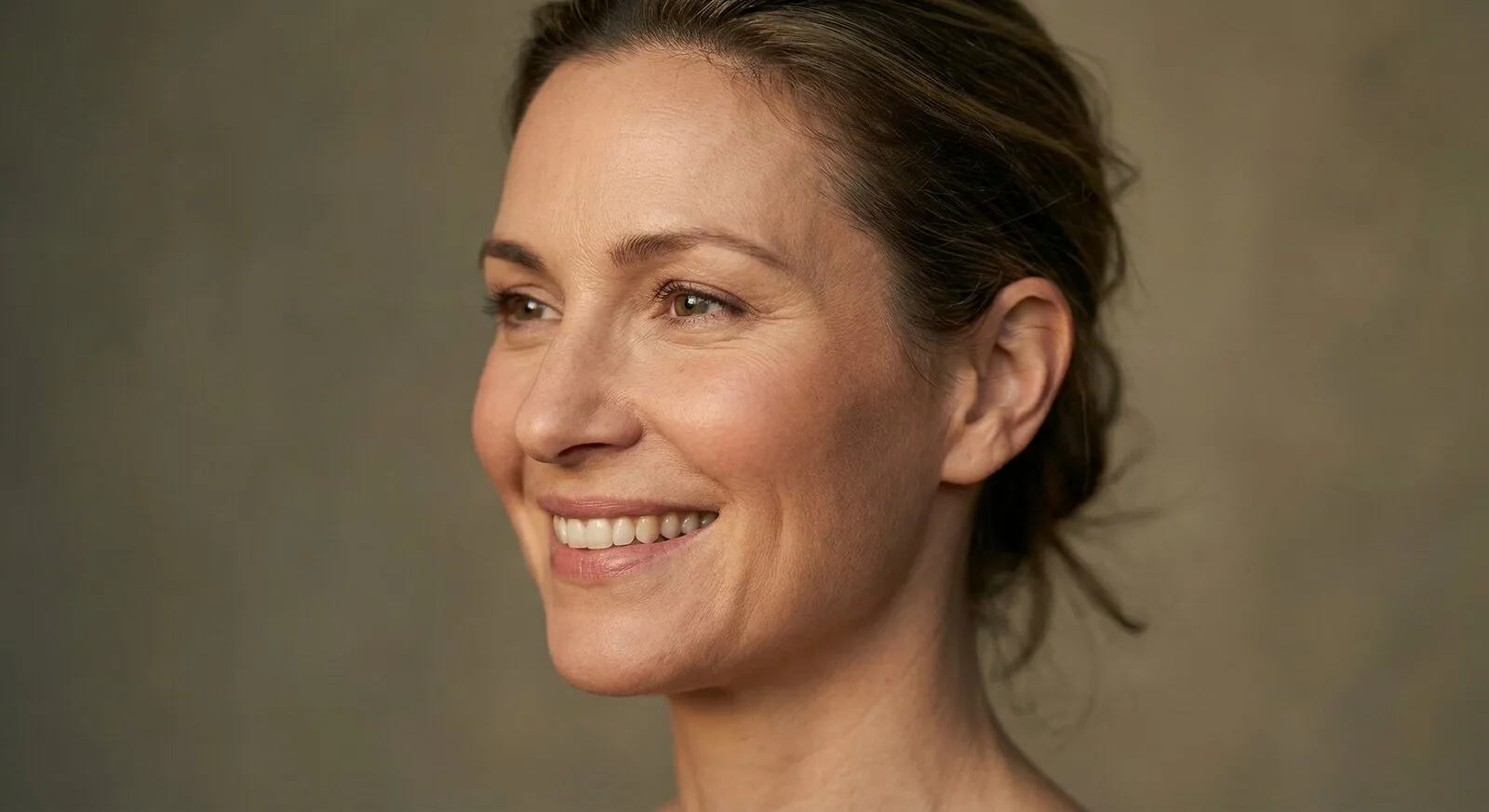
At a glance: Aiming for a natural-looking result means planning the change without losing sight of your identity, your proportions, and your expression. At your consultation, explain what bothers you and which features you want to keep, and ask for a clear description of the limits, scars, risks, and recovery time. The consultation questions published on the ASPS blog can help guide that conversation. Reference photos communicate your preferences, but they do not guarantee an appearance, symmetry, or how long a result will last.
This philosophy guides my practice in Londrina, Brazil. In facial surgery, the goal is not to “erase” every sign of aging or to standardize features. The goal is to reposition, restore, or refine what makes sense for that particular patient, in keeping with their age, anatomy, skin, bone structure, expression, and facial history.
I am Dr. Walter Zamarian Jr., a plastic surgeon (medical license CRM-PR 17.388; plastic surgery specialty registration RQE 15.688) and a member of the Brazilian Society of Plastic Surgery (SBCP) and of the American Society of Plastic Surgeons (ASPS). After more than 8,000 operations over two decades (today, by deliberate choice, I perform three facelifts a week, about 150 a year), I consider a natural look a technical criterion, not only an aesthetic one.
What makes a result look natural?
A natural result respects facial harmony. That means proportion between the forehead, eyes, nose, cheekbones, jaw, neck, and lips. When one area is changed in isolation and to an exaggerated degree, the face can lose its coherence even if the surgery on that area was well executed.
A natural look also preserves facial identity. Family resemblance, ethnic background, eye shape, smile, expression, and facial contour are part of who a person is. Good surgery does not try to erase these features; it tries to improve what bothers the patient without changing who they are.
A natural look is a planning goal, not a guarantee that the result will age better or last longer. Your appearance remains subject to aging and to how you individually heal. At the consultation, I discuss how to preserve proportions and avoid changes that go beyond the limits of each face.
Natural does not mean undetectable
It is important to be clear: every operation leaves some degree of scarring and carries risks. The aim is to place scars in favorable locations, reduce tension, preserve blood supply, and give clear aftercare guidance. Talking about a natural look does not justify promising that marks will disappear or that both sides of the face will end up perfectly identical.
Asymmetry is also part of human anatomy. No face is perfectly the same from one side to the other. At the consultation, I explain which asymmetries can be softened, which should be accepted, and which do not justify a more aggressive intervention.
Facelift: repositioning, not just pulling
In a facelift, a natural look depends on repositioning deeper structures, restoring vectors, and avoiding visible tension on the skin. When the skin is used as the main pulling force, the face can take on a stretched look, with changes to the earlobe, the mouth, or the jawline.
In modern approaches, especially in the context of the deep plane facelift, the logic is to treat the deeper layers and release points of resistance when indicated. This allows a more structural rejuvenation that relies less on surface tension. Even so, each case has to be assessed individually, because age, skin, facial fat, and the neck all change the indication.
Eyelid surgery: opening up the eyes without changing the expression
In blepharoplasty (eyelid surgery), a natural result means removing or repositioning tissue without hollowing out the eyes. The eyelid should not look “operated on”; it should look rested, keeping the shape of the eye, the brow, and the expression.
Removing excess skin may be necessary, but removing too much can make it hard to close the eyes, give the eye a rounded look, cause dryness, and create an artificial appearance. The decision involves the skin, muscle, fat, brow position, tear quality, and the relationship between the upper and lower eyelids.
Rhinoplasty: refining without standardizing
I no longer perform rhinoplasty. The example below is included for educational purposes only, to illustrate proportion and the preservation of identity.
In rhinoplasty, a natural look requires the nose to be in harmony with the rest of the face. A nose that is too small, too upturned, or too narrow can look odd even if it appeals in a single isolated photo. Planning has to take into account the bridge (dorsum), tip, projection, width, skin, breathing, and facial identity.
The ideal nose for one person may be wrong for another. There is no single formula. Rhinoplasty needs to respect sex, age, ethnicity, skin thickness, cartilage structure, and proportion with the chin, lips, and cheekbones.
Fat grafting: adding volume with judgment
Facial fat grafting can help restore areas that have lost volume, but a natural look depends on the amount, the layer, and the indication. Too much volume can weigh the face down, blur its contours, or create a puffy appearance.
When it is well indicated, fat grafting complements a structural plan: it does not replace a facelift when there is significant laxity, it does not replace blepharoplasty when there is excess eyelid skin, and it does not replace rhinoplasty when there is a structural problem with the nose. It is one tool within a plan, not a universal solution.
How I avoid overdoing it when planning
Before I suggest any surgery, I assess the concern, the anatomy, skin quality, history of previous procedures, expectations, and tolerance for risk. I also look at whether the motivation comes from the patient or from outside pressure. That conversation is part of patient safety.
Some requests sound simple but carry a risk of changing who someone is. “Lift more,” “slim it down more,” “take out more,” or “fill in more” do not always mean better. In many cases, the best medical decision is to do less, preserve support, and accept anatomical limits.
Another essential point is preserving movement. A natural face is not just a face at rest; it has to smile, talk, look around, and express emotion without odd stiffness. That is why I evaluate photographs, the physical examination, and facial movement, not just a list of measurements.
I also look at the relationship between skin and volume. In some patients, removing skin without restoring deep support leaves tension. In others, adding volume without treating laxity leaves heaviness. A natural plan usually comes from balancing repositioning, refinement, and moderate restoration.
Realistic expectations are part of the result
A natural look and realistic expectations are directly connected. A patient who expects perfect symmetry, no scar at all, a recovery identical to someone else’s, or a complete transformation tends to read normal changes as failures.
That is why I discuss risks, scars, swelling, how long the result takes to mature, the need for follow-up visits, and the possibility of revision when it applies. My article on the real risks of plastic surgery explains why safety depends on the indication, the technique, the facility, anesthesia, and aftercare.
How to choose a surgeon who shares this approach
Look for an active medical license, a recognized specialty qualification in plastic surgery (in Brazil, CRM registration and RQE), experience with the procedure you want, a clear explanation of risks, and consistency between what is promised and what is realistic. Good planning does not rest on vague phrases; it shows why a given procedure makes sense, what its limits are, and which alternatives could be considered.
It also helps to consider whether the surgeon respects the patient’s identity. My guide on how to choose a plastic surgeon brings together objective criteria for that decision.
Medical sources and further reading
To go deeper, I recommend these resources:
- American Society of Plastic Surgeons (ASPS). Patient safety.
- American Society of Plastic Surgeons (ASPS). Questions to ask your plastic surgeon.
- American College of Surgeons (ACS). Preparing for surgery.
A natural look is a technical and ethical choice. It takes surgical skill, but it also takes restraint, listening, and respect for the face that is already there.
Read Also
This page in other languages: Português (BR)

Dr. Walter Zamarian Jr.
Plastic surgeon in Londrina, Brazil (CRM-PR 17.388 | RQE 15.688), full member of SBCP and ASPS. He has worked in plastic surgery for more than 20 years, with a focus on individualized planning, patient safety, Deep Plane facelift, eyelid surgery, facial fat grafting, and female intimate surgery.
Follow this blog on Google
Want to find more articles from this blog on Google? Add Dr. Walter Zamarian Jr. to your preferred sources.
Leave a comment