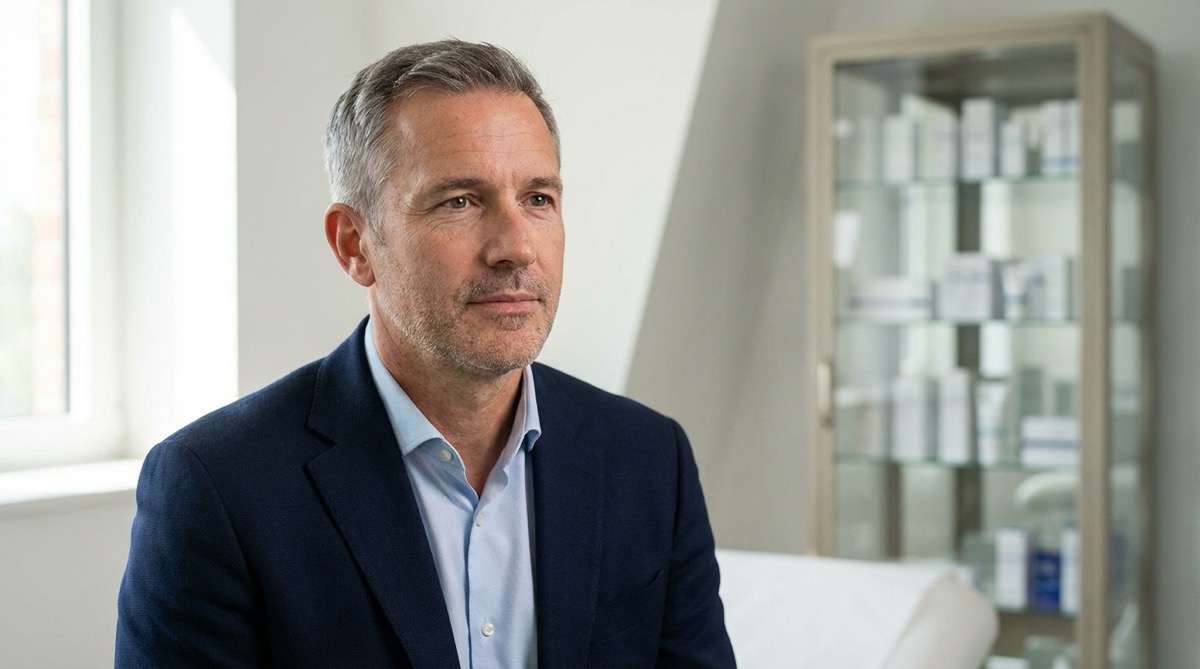
For decades, facelift surgery was perceived as an almost exclusively female pursuit. Men who considered facial rejuvenation often felt they had nowhere to turn — caught between the desire to look their best and the stigma that plastic surgery “wasn’t for men.” That narrative has changed dramatically. In my practice in Londrina, Brazil, I have witnessed a remarkable surge in male patients seeking facelifts over the past several years, and I can confidently say this is one of the fastest-growing segments in facial plastic surgery worldwide.
The American Society of Plastic Surgeons (ASPS), of which I am a member, has documented a significant increase in male facelift procedures over the last decade. This trend aligns with what I see every week in my clinic: accomplished men — CEOs, attorneys, physicians, entrepreneurs — who recognize that looking rested and vital is not vanity but a legitimate investment in their personal and professional lives.
After more than 20 years of experience and over 8,000 surgeries, I have developed a deep understanding of what the male facelift patient truly wants: to look like himself — only refreshed, revitalized, and naturally younger. Not “done.” Not “worked on.” Just better. And that is precisely what the Deep Plane technique, when properly adapted to male anatomy, delivers.
Why Men Seek Facelift Surgery
The motivations that bring men to my consultation room are remarkably consistent. The most frequent complaint is the loss of jawline definition — that angular, strong contour that defines the masculine face and gradually softens with age, eventually producing jowls and a heavy neck that can add years to one’s appearance.
The professional arena is another powerful motivator. In an increasingly visual world dominated by video calls, social media, and on-camera appearances, many men feel that a tired-looking face undermines their professional image. They report feeling a disconnect between their internal energy and what their face communicates to others.
Weight loss — whether through lifestyle changes or medications like Ozempic — has also become a significant driver. While the body may respond beautifully to weight loss, the face often deflates, leaving loose skin, hollow cheeks, and deepened folds that cannot be reversed through diet or exercise.
And then there are the personal milestones: a divorce, a career pivot, retirement from corporate life into a new venture. Moments of reinvention when a man wants his exterior to match the renewed energy he feels within.
Anatomical Differences: How the Male Facelift Is Different
One of the most critical mistakes a surgeon can make is to approach the male face with the same techniques and aesthetic goals used for female patients. The anatomical and aesthetic differences are profound, and my training at the renowned Pitanguy Clinic in Rio de Janeiro, followed by advanced Deep Plane training with Dr. Tim Marten in San Francisco — widely regarded as the world’s foremost authority on Deep Plane surgery — taught me to respect these distinctions rigorously.
The key anatomical differences include:
- Thicker, more vascularized skin: Male facial skin has a richer blood supply due to beard follicles, which can lead to more bruising but also supports robust healing.
- Beard and sideburns: Incision placement must account for facial hair patterns. Poorly planned incisions can displace sideburns, create hairless patches, or — worse — cause beard hair to grow in unnatural locations such as inside the ear canal.
- Masculine aesthetic standards: While female rejuvenation emphasizes softness and gentle curves, the male face must retain its angular jawline, defined mandibular angle, and strong cervical contour. Over-correction or feminization is a serious pitfall.
- Robust SMAS layer: The superficial musculoaponeurotic system (SMAS) in men is typically thicker and more fibrous, requiring a more decisive surgical approach.
The Deep Plane Technique for Men: Preserving Masculinity
The technique I employ — which I call Regenerative Deep Plane — combines three elements that I consider essential for optimal male facelift results:
- Deep Plane dissection: Unlike traditional facelifts that rely primarily on skin tension, the Deep Plane approach mobilizes the deep structures of the face — muscles, fat pads, and fascia — as a unified composite flap. This produces natural results because it repositions rather than stretches.
- Fat grafting (lipofilling): The aging male face loses volume in critical areas — the temples, cheekbones, and deep nasolabial folds. Autologous fat transfer restores this volume organically, without the artificiality of synthetic fillers.
- Adipose-derived stem cells: The stromal vascular fraction (SVF) present in the grafted fat contains regenerative cells that improve skin quality, stimulate collagen production, and enhance graft survival.
For the male patient, this technique is particularly powerful because it allows me to restore the defining landmarks of the masculine face — the strong jaw, the defined cervical angle, the projected chin — without feminizing the result. The goal is not to create a “younger face” but to reposition and regenerate the structures that age has displaced.
A crucial advantage of Deep Plane surgery is that the skin is redraped without tension. Because the deep structures provide the lift, the skin merely settles over the newly repositioned foundation. This eliminates the “pulled” or “windswept” appearance that is the hallmark of outdated techniques — and the primary fear of every man considering a facelift.
Scars in the Male Facelift: Beard, Sideburns, and Hairline
Scar visibility is the number-one concern among my male patients — and understandably so. Men typically wear short hair and do not use cosmetics to conceal incision lines. Every millimeter of the incision must be meticulously planned.
My incision protocol for the male deep plane facelift includes:
- Temporal region: The incision begins within the temporal hair, following the hairline in a way that remains hidden even with closely cropped hair.
- Pre-auricular: In men, I use a pre-tragal incision (in front of the ear cartilage) rather than the retro-tragal approach used in women. This prevents beard hair from migrating into the ear canal — a technical error I have corrected in patients previously operated elsewhere.
- Sideburns: Incisions are carefully positioned to preserve the natural shape and position of the sideburns, ensuring normal beard growth patterns postoperatively.
- Retroauricular and occipital: Behind the ear, a minimal incision extends discretely into the hairline of the nape.
In experienced hands, male facelift scars become virtually invisible within three to six months. Most of my patients report that even their barbers never notice.
Recovery: What to Expect
Recovery is understandably a major concern for male patients, many of whom have demanding professional schedules. Here is the realistic timeline I share during consultation:
- First 48 hours: The most intense period. Swelling and bruising are expected. Cold compresses, head elevation, and prescribed medications manage discomfort effectively.
- Week 1: Sutures are removed between days 5 and 7. Swelling decreases significantly, and most bruising resolves. No strenuous activity.
- Week 2: Many patients feel comfortable returning to light social activities. Residual swelling is noticeable mainly to those who know about the surgery.
- Weeks 3-4: Gradual return to the gym with light exercise. Most patients return to in-person work between days 10 and 14.
- Months 3-6: The final result consolidates. Fat grafts integrate, scars mature, and stem-cell-stimulated skin reaches its best quality.
An important note: men tend to experience more bruising than women postoperatively, due to the greater vascularity of male facial skin. I advise my patients to plan their recovery with this expectation. On the positive side, thicker male skin tends to heal with excellent scar quality.
Natural Results: Overcoming the Fear of Looking “Done”
This is, without question, the greatest fear among my male patients. And I understand it completely. We have all seen public examples of facelifts gone wrong — tight faces, distorted features, unnatural smoothness. These images create a legitimate anxiety.
But I must be candid: those poor results are overwhelmingly the consequence of outdated techniques that rely on skin tension as the primary mechanism of rejuvenation. When you pull skin, it stretches, becomes taut, and the result looks artificial.
The Deep Plane facelift operates on an entirely different principle. By mobilizing the deep structures — SMAS, platysma muscle, malar fat pads — rejuvenation occurs “from the inside out.” The skin is simply redraped over the newly repositioned foundation, without tension. The result is a face that looks naturally younger, not surgically altered.
I tell my patients: “If someone can tell you had surgery, I haven’t done my job.” The goal is for people to comment that you look well-rested, healthy, energized — without ever suspecting surgical intervention.
For the male patient, this is paramount. A man’s face should not lose its natural expression lines or character marks. A 55-year-old man should not look 30 — he should look like a 55-year-old man who is living at his absolute best.
Frequently Asked Questions About Male Facelift
What is the ideal age for a man to have a facelift?
There is no fixed minimum or maximum age. What matters is the degree of facial aging and skin quality. In my experience, most men seek a male facelift between ages 50 and 65, though I have operated on patients from 42 to 78 with excellent results. An individualized evaluation is essential.
Will facelift scars be visible with short hair?
With proper technique and male-specific incision planning, scars are extremely discreet — even with short hair. They are positioned in natural transition zones (in front of the ear, within the hairline, behind the ear) and mature over 3 to 6 months, becoming virtually imperceptible. The key is correct placement that respects the beard and sideburn anatomy.
How soon can I return to work?
For non-physically demanding work, most of my patients return within 10 to 14 days. Remote workers may return even sooner. Light exercise is permitted at 3 to 4 weeks, with intense physical activity cleared at 6 weeks. Each case is individually assessed.
How long do male facelift results last?
A facelift does not stop aging but effectively “resets the clock” by 10 to 15 years. The advantage of my Regenerative Deep Plane technique is that, by addressing deep structures and incorporating fat grafting with stem cells, results tend to be more durable, and skin quality continues to improve for months after the procedure.
You deserve to look as good as you feel. If the mirror does not reflect the energy and vitality within you, perhaps it is time for a conversation. Schedule your consultation and discover how the Regenerative Deep Plane facelift can help you reclaim your best version — with natural, discreet, and safe results.
Dr. Walter Zamarian Jr.
Board-Certified Plastic Surgeon — CRM-PR 17,388 | RQE 15,688
Member: SBCP, ASPS, AExPI
Londrina, PR, Brazil — Learn more about Facelift Surgery

drwalterzamarianjr
Dr. Walter Zamarian Jr. é cirurgião plástico em Londrina-PR (CRM-PR 17.388 | RQE 15.688), membro titular da SBCP e da ASPS. Formado em Medicina pela UEL, com especialização no Instituto Ivo Pitanguy (38a Enfermaria da Santa Casa do Rio de Janeiro) e treinamento nos EUA em lifting facial Deep Plane, rinoplastia estruturada e cirurgia íntima feminina. Com mais de 20 anos de experiência e 8.000+ cirurgias realizadas, é referência em rejuvenescimento facial e cirurgia genital feminina.
Deixe um comentário