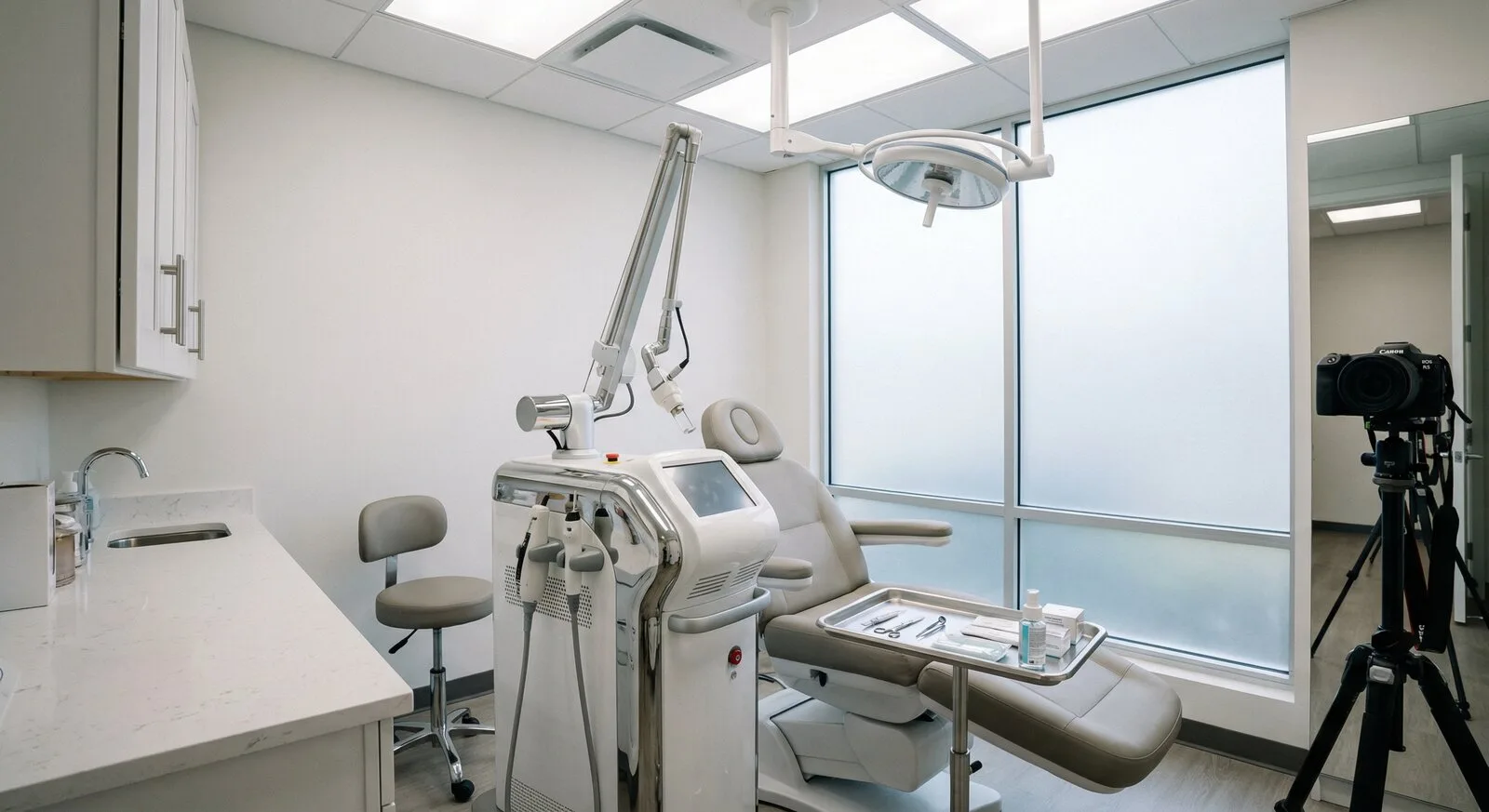
At a glance: Dermabrasion, chemical peels, and laser resurfacing treat the skin through different mechanisms: mechanical abrasion, chemical action, and light energy. None of them is the best choice for every scar, spot, or wrinkle. The depth of the problem, skin tone, the risk of pigment changes, and recovery time guide the evaluation. In my practice, I use surgical dermabrasion only for scar revision, not for acne or acne scars; lasers and cosmetic peels are described here for comparison, and I do not offer them. In Brazil, the use of phenol in cosmetic procedures remains prohibited by Anvisa, the national health regulatory agency.
As a plastic surgeon in Londrina, Brazil, I evaluate scar revision by looking at the main concern, the characteristics of the scar, and the quality of the skin. In my current practice, I do not use dermabrasion to treat acne or acne scars. That boundary matters: knowing what a technique can do does not mean offering every one of its applications in the clinic.
The purpose of this guide is to explain the differences between three families of treatment. Surgical dermabrasion, laser, and peels are not equivalent in depth, recovery, or risk. I do not offer laser, cosmetic peels, Botox, or fillers in my current practice. My evaluation for dermabrasion is limited to scar revision and does not include treatment of acne or acne scars.
What is facial resurfacing?
Facial resurfacing is the controlled treatment of the superficial or middle layers of the skin to stimulate healing, collagen reorganization, and renewal of texture. It may be indicated for fine lines, wrinkles around the mouth, irregular texture, acne scars, sun damage, and some types of spots. The deeper the treatment, the greater the potential for change tends to be, but recovery time and the need for strict aftercare increase as well.
In aesthetic medicine and plastic surgery, the right question is not “which device is strongest?” but “what depth and what type of lesion need to be treated safely in this patient?” That distinction changes the entire decision.
Dermabrasion: mechanical resurfacing
Dermabrasion is a mechanical technique. The surgeon uses an abrasive tip or a rotary instrument to wear down the skin in a controlled way. Its main advantage is direct visual control of depth during the procedure, which can be useful for scars with well-defined edges and for pronounced wrinkles around the mouth.
In the medical literature, it may be considered for acne scars, superficial traumatic scars, wrinkles around the mouth, and localized irregularities. As noted above, in my own practice I use it only for scar revision, not for acne or acne scars. In many cases, planning includes skin preparation, appropriate anesthesia, eye protection when needed, and careful postoperative guidance.
The limitations also need to be clear. Dermabrasion requires technical experience and can cause crusting, prolonged redness, pigment changes, infection, an unfavorable scar, and worsening of dark spots in predisposed patients. In darker skin types, in people with a history of post-inflammatory hyperpigmentation, or in those prone to keloids, the indication has to be even more selective. See the American Society of Plastic Surgeons on dermabrasion risks.
Chemical peels: depth set by the agent and its concentration
A chemical peel uses substances that produce a controlled injury to the skin. Depth varies with the agent, the concentration, skin preparation, the number of coats, the area treated, and the individual response.
Superficial peels
Superficial peels, such as glycolic acid, salicylic acid, or Jessner’s solution in selected protocols, mainly reach the epidermis. A superficial peel may be used for mild texture concerns, oiliness, dullness, active acne in some cases, and superficial pigmentation. It generally requires a series of sessions and maintenance, with less recovery time per session.
Medium-depth peels
Medium-depth peels, such as TCA at appropriate concentrations, can reach the papillary dermis. They are considered for dark spots, fine lines, and more irregular texture. The risk of hyperpigmentation, unfavorable healing, and prolonged redness increases as depth increases, especially in more pigmented skin.
Deep peels
Phenol should not be presented as an available cosmetic peel option in Brazil. Anvisa maintains the ban indefinitely, according to its page updated on April 27, 2026; there is no registered product indicated for peels or other cosmetic procedures. Beyond local risks, phenol can cause heart rhythm disturbances and damage to the heart, kidneys, and liver, as described by the Mayo Clinic. The existence of protocols in foreign publications does not change the Brazilian ban.
Laser: resurfacing with light energy
Lasers use light energy to treat the skin. Ablative lasers, such as CO2 and Erbium:YAG, remove tissue; nonablative approaches heat tissue without removing the surface in the same way. Fractionation is a separate feature: it delivers the treatment in tiny columns, leaving untreated skin between them.
Fractional laser does not necessarily mean nonablative: both modalities can be fractionated. Recovery and the number of sessions depend on the device, the settings, and the condition being treated. The name of the technology alone tells you nothing about intensity or risk. The Mayo Clinic explains the difference between these modalities.
Even with advanced technology, laser treatment does not remove the need for a clinical examination. A history of herpes, recent use of isotretinoin or other medications, active infection, a tendency toward dark spots, a recent tan, unstable melasma, a darker skin type, and difficulty with sun protection can change the indication or postpone the procedure.
How the three options compare
For educational purposes, the comparison starts with the main problem. The applications described below do not represent services I offer in my clinic. Boxcar acne scars and irregularities with sharp edges may respond well to a mechanical or combined approach, such as subcision, localized dermabrasion, and other techniques. Diffuse spots and superficial sun damage, on the other hand, may favor peels or light-based technologies, depending on skin type and the depth required.
Wrinkles around the mouth, often called “barcode lines,” may prompt an evaluation for localized dermabrasion or for other resurfacing approaches described in the literature. The decision depends on skin thickness, sun damage, healing, and tolerance for recovery. None of this makes phenol an authorized option in Brazil, and this comparison is not an offer of laser or peel treatment at my clinic.
For patients who want less downtime per session, fractional strategies or superficial peels may be considered, as long as expectations are proportionate. Shallower procedures tend to have an easier recovery, but they may need to be repeated and do not replace deeper treatments when the problem is structural.
Skin type and the risk of dark spots
Skin type, or phototype, is one of the central points of planning. More pigmented skin carries a higher risk of post-inflammatory hyperpigmentation after thermal, chemical, or mechanical injury. That does not mean every form of resurfacing is off-limits, but it does change the preparation, depth, energy, intervals, sun protection, and choice of technique.
Patients with melasma need additional attention. Aggressive resurfacing can trigger or worsen pigmentation if there is no prior control, sun protection, and precise indication. For that reason, dermatologic preparation before the procedure is often as important as the technique chosen.
When techniques are combined
A tethered scar may need the tethering treated before the surface is leveled. Dermabrasion can therefore be one step in a plan rather than a stand-alone solution. My article on dermabrasion for acne scars explores this reasoning in educational terms, not as a service I offer; a review of treatments for atrophic scars describes the differences between the approaches.
In patients with broader facial aging, resurfacing does not treat deep sagging. In those cases, it may complement structural procedures such as a deep plane facelift, blepharoplasty, or fat grafting. My article on regenerative facelift explains the approach I use when deeper tissue changes, rather than surface texture alone, are the main concern.
Care before and after
For broader surgical planning, see my guide to preparing for plastic surgery. The specific preparation for resurfacing still depends on the technique and your skin.
Before any resurfacing, medications, sun exposure, a history of herpes, skin diseases, a tendency toward poor scarring, smoking, diabetes, immunosuppression, and your sun-protection routine all need to be assessed. Preparation may include stopping irritating products, antiviral treatment in selected patients, controlling active acne, and adjusting lightening creams.
After the procedure, aftercare varies with depth. It may include gentle cleansing, ointments, dressings, moisturizing, strict sun protection, avoiding direct sun, not picking at crusts, and returning for scheduled visits. Unexpected pain, discharge, fever, progressively worsening redness, or herpes lesions require prompt medical evaluation. Any change in vision requires emergency care right away; do not wait for a reply to a message. If you cannot reach the team about the other warning signs, seek in-person care.
A practical answer
For acne scars, the decision depends on their type, depth, and whether there is tethering. For wrinkles around the mouth, the skin and the recovery need to be assessed. For dark spots, a dermatologic diagnosis should come before choosing any procedure. Not every concern calls for surgery, and more aggressively treated skin does not necessarily mean a better result.
It is also important to separate resurfacing from daily skincare. Creams, retinoids, antioxidants, and sun protection can improve skin quality and slow the progression of sun damage, but they do not level deep depressed scars or replace ablative procedures when there is a structural irregularity. On the other hand, resurfacing without maintenance, sun protection, and control of inflammation tends to lose part of its clinical benefit over time.
The central point is that facial resurfacing is a medical procedure. The choice should be made after examining the skin, analyzing risk, aligning expectations, and explaining the alternatives. When choosing a professional, it is worth confirming their training, specialist registration, experience in managing complications, and ability to recommend the right technique, not just the technology they happen to have. My article on how to choose a plastic surgeon summarizes these criteria.
I am a Full Member of the Brazilian Society of Plastic Surgery and a member of the American Society of Plastic Surgeons, and I have performed more than 8,000 operations over two decades; today, by deliberate choice, more than 90% of my surgeries are deep plane facelifts with fat grafting, about three per week (roughly 150 a year). The first consultation is when I assess whether surgical dermabrasion for scar revision, excluding acne and acne scars, is appropriate, and explain which concerns call for a different approach or for dermatologic care.
Traveling from another city or country: how we can help
We can start with an online consultation before you plan your trip to Londrina. An in-person preoperative consultation is still required; when the first consultation was online, that in-person visit does not carry a new consultation fee.
My team can advise you on accommodation in Londrina, including hotel or Airbnb options. Booking and paying for accommodation are handled separately. We can recommend a trusted driver and a companion or caregiver, both hired separately.
While you are in Londrina, you will have support with dressings and frequent in-person assessments with me. After you return home, we continue follow-up online for up to one year after surgery.
Before booking, confirm with the team where you will stay, how you will get to your appointments, and whether you need a companion. How long you stay and when you are cleared to travel depend on the in-person assessment and on how your recovery progresses. See how the online consultation and trip planning work.
Frequently asked questions
What is the main difference between dermabrasion, chemical peels, and laser resurfacing?
The mechanism. Dermabrasion removes skin mechanically, with direct visual control of depth; peels cause a controlled chemical injury whose depth depends on the agent and concentration; lasers use light energy, ablative or nonablative, often in a fractional pattern.
Do you treat acne or acne scars with dermabrasion?
No. In my practice, I use surgical dermabrasion only for scar revision. Acne and acne scars are discussed in this article for educational purposes only.
Do you offer laser treatments or chemical peels?
No. I do not offer laser, cosmetic peels, Botox, or fillers in my current practice. They are described here only so you can understand how they compare.
Is a phenol peel available in Brazil?
No. Anvisa maintains an indefinite ban on phenol in cosmetic procedures, and there is no registered product indicated for peels or other cosmetic uses. Protocols published abroad do not change the Brazilian ban.
Does fractional laser mean nonablative laser?
No. Both ablative and nonablative lasers can be fractionated. The name of the technology alone does not tell you its intensity or risk; that depends on the device, the settings, and the condition being treated.
Is resurfacing riskier for darker skin?
More pigmented skin carries a higher risk of post-inflammatory hyperpigmentation after thermal, chemical, or mechanical injury. That does not rule out resurfacing, but it changes preparation, depth, energy, intervals, sun protection, and the choice of technique.
Can resurfacing replace a facelift?
No. Resurfacing treats the skin surface, not deep sagging. When the main concern is descent of the facial tissues, it may complement structural surgery but does not replace it.
Sources
- American Society of Plastic Surgeons: Dermabrasion risks and safety
- American Society of Plastic Surgeons: Skin rejuvenation and resurfacing safety
- Mayo Clinic: Chemical peel
- Mayo Clinic: Laser resurfacing
- Anvisa: phenol remains prohibited in cosmetic procedures (in Portuguese)
- Review of treatments for atrophic scars (PMC)
- NCBI Bookshelf: Skin Resurfacing Dermabrasion
This page in other languages: Português (BR)

Dr. Walter Zamarian Jr.
Plastic surgeon in Londrina, Brazil (CRM-PR 17.388 | RQE 15.688), full member of SBCP and ASPS. He has worked in plastic surgery for more than 20 years, with a focus on individualized planning, patient safety, Deep Plane facelift, eyelid surgery, facial fat grafting, and female intimate surgery.
Follow this blog on Google
Want to find more articles from this blog on Google? Add Dr. Walter Zamarian Jr. to your preferred sources.
Leave a comment