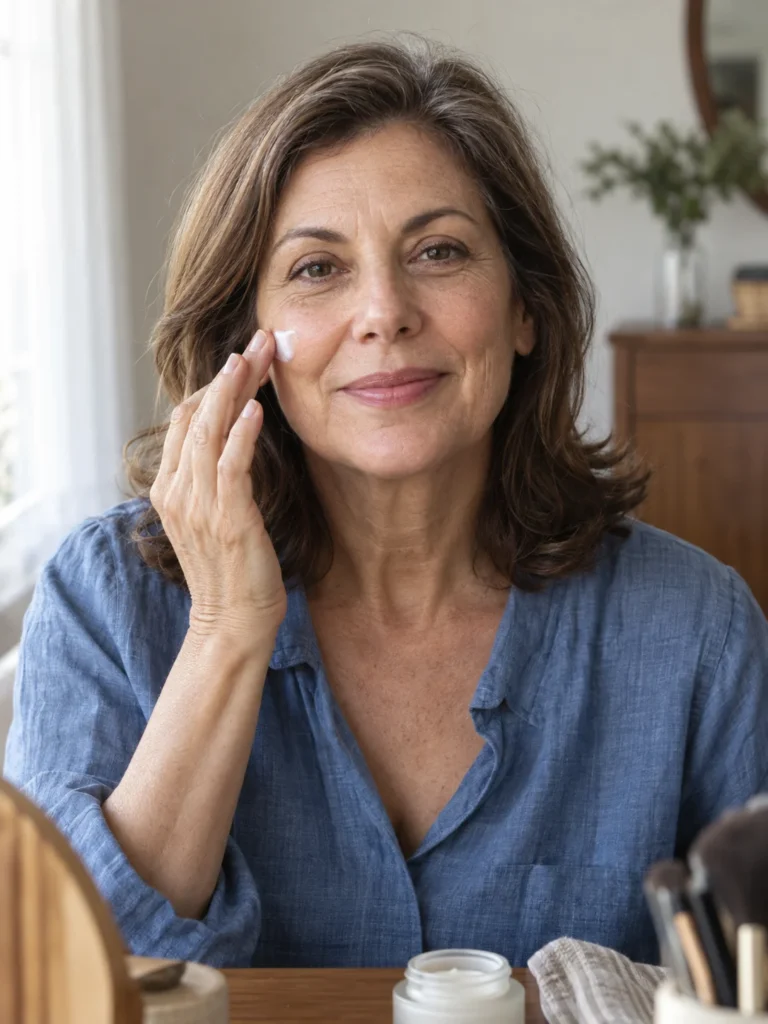
At a glance: can skincare replace a facelift?
No, because they treat different things. Moisturizers and dermatologic treatments improve the skin surface, such as fine lines from sun damage; a cream does not reposition tissues that have descended [1][2]. In consultation, I separate surface, volume and contour. The outcome may be dermatologic care, observation or a discussion of surgery: a disappointing cream is not a reason to operate.
- Surface: texture, pigmentation and fine lines respond to skin care, not to a facelift.
- Volume: an area that has hollowed out is a different question from hydration.
- Contour: the jawline and neck depend on where the tissues sit, which creams don’t change [1].
- Evidence: tretinoin improved sun-damage wrinkles in randomized trials; facial contour was not assessed [2].
- Routine: more products tend to irritate the skin; retinoids are not used during pregnancy [3][4].
- After surgery: restart each product only once the team clears it.
My deep plane facelift guide explains what surgery treats. Here, the question is how to tell what belongs to the skin from what belongs to the contour, so you know what to expect from each kind of care.
When the mirror shows two different things
You may like how your skin looks with a good routine and still be bothered by the contour of your face. That doesn’t make the routine useless: these are two features assessed separately. Saying “my makeup sits better, but this area still looks heavy” already helps me pinpoint the concern. The reverse happens too: if what you want is more even skin, I need to explain what a facelift won’t change.
Texture and fine lines
Dryness, roughness and fine lines call for a conversation about skin care. On their own, they are not a reason for a facelift.
Spots and skin tone
A spot deserves a diagnosis, ideally from a dermatologist. Repositioning tissue is no substitute for looking into a skin change.
Volume
A hollow area is different from dry skin. If that’s the issue, I explain what fat grafting can and can’t do.
Contour
When the concern is the jawline, cheeks or neck, I examine the whole face before putting it all down to the skin. A single photo doesn’t decide the treatment.
What research says you can expect from a cream
“Rejuvenation” needs an object. Improving fine wrinkles is not the same as changing the jawline. A 2025 systematic review and meta-analysis included eight randomized trials, with 1,361 participants, comparing topical tretinoin with the same base without the active ingredient: fine and coarse wrinkles from sun damage improved, with follow-up ranging from 16 weeks to 2 years [2]. That is evidence about the skin surface, not a comparison with a facelift, and it doesn’t apply to every product labeled “anti-aging.”
The American Academy of Dermatology (AAD) notes that firming creams give subtle results at best, and that a good moisturizer’s effect on fine lines is temporary [1]. That doesn’t take away the value of skin care; it simply makes clear what to expect from it.
Look after your skin without expecting surgery from it
Daily sunscreen and moisturizing have their own place, and using too many products, especially more than one anti-aging product, tends to irritate the skin [3]. “Retinoid” covers a range of vitamin A-based products, some over the counter and some by prescription; they can irritate the skin and should not be used during pregnancy [4]. Strength and frequency are decisions for your dermatologist, not for this article.
For the consultation, bring a list or photos of the labels of what you use, what has been prescribed and anything that caused a reaction. There’s no need to buy anything new to “arrive with better skin,” or to give up a well-guided routine because you’re considering surgery.
When a facelift consultation makes sense
When there’s a contour concern you want to understand, without having decided to have surgery. I examine your face, listen to what you hope for and explain what surgery could or couldn’t add, including risks and recovery. Pulling your skin back with your fingers in the mirror shows where you’d like a change, but it doesn’t reproduce surgery or predict the result. The conclusion may be that surgery isn’t the next step.
Skin care after surgery
After a facelift, the question also involves the stage of healing and where a product would go. Topical acids and tretinoin, stopped 1 month before surgery, are restarted 1 month after; for other products, ask about each one, and don’t apply anything to the incisions until you’re cleared. Stitch removal doesn’t, by itself, clear your whole previous routine. My post-surgical recovery guide and the article on skin care before and after plastic surgery cover this stage in detail.
Questions
If a cream didn’t work, do I need surgery?
No. I want to understand what you expected and which feature the product was meant to treat. Being disappointed with a product is not a reason for surgery.
Will good skin care keep me from needing a facelift?
Skin care and the decision about surgery answer different questions. A good routine neither requires you to have surgery nor prevents you from having it.
Does a facelift replace my dermatologist?
No. If you’re being treated for a skin condition, that goes into the plan, and the advice from both sides needs to fit together.
Can I restart my skincare once the stitches are out?
Not automatically. Ask about each product and area; the answer depends on how you’re healing.
Let’s clarify what you want to change
If you look after your skin but still aren’t sure what could improve the contour of your face, write to us on WhatsApp: Bruna, my AI assistant, handles the first contact and then puts you in touch with Isanna to arrange a consultation with me.
References
- American Academy of Dermatology. Many ways to firm sagging skin.
- Huang HY, Lee LT. Tretinoin for Photodamaged Facial Skin: Systematic Review and Meta-Analysis of Randomized Controlled Trials. Dermatol Pract Concept. 2025.
- American Academy of Dermatology. Wrinkle remedies.
- American Academy of Dermatology. Retinoid or retinol?.