Days 1 and 2
The next morning, I assess you at the hospital for discharge. Around day 2, we schedule removal of the hemostatic net at my office.
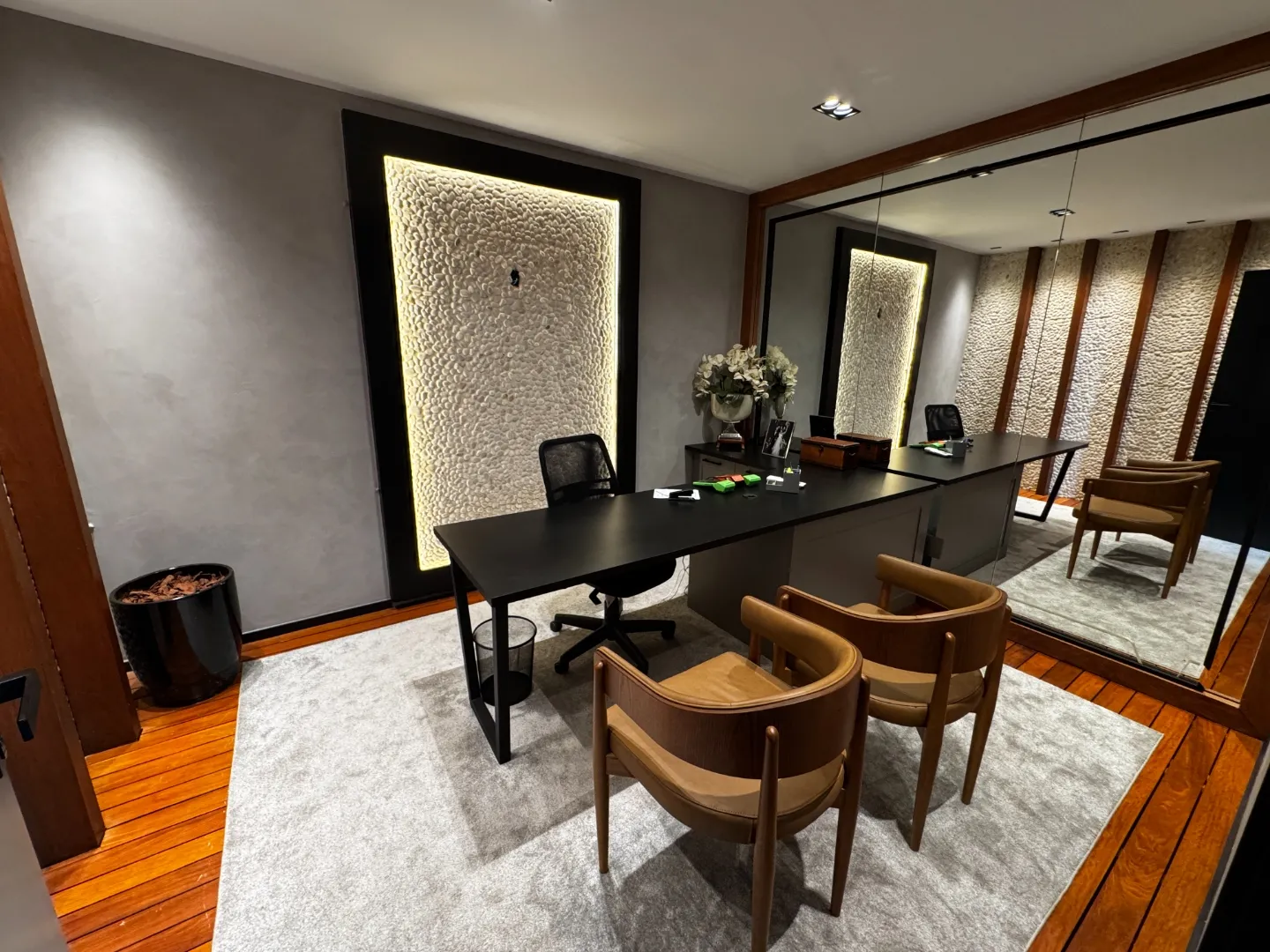
A room at Clínica Zamarian set up for follow-up visits.
At a glance
Recovery includes care of the surgical area, prescribed medication and follow-up visits from discharge through one year, with 24-hour WhatsApp support from Isanna and me. In my practice, many patients return to social activities at around two weeks, but swelling and healing keep changing for months.
Timeline
To keep things simple, I count the day of surgery as day zero. The next day is day 1. These milestones describe how I usually follow patients; I confirm each step based on your recovery.
The next morning, I assess you at the hospital for discharge. Around day 2, we schedule removal of the hemostatic net at my office.
Hair care with Renan at the salon can begin on day 4. Lymphatic drainage with Gisele is scheduled starting on day 5, as I advise.
Stitches are removed in stages, usually on days 7, 10 and 14. Endermologie can start on day 10. If you are traveling, I assess whether the removal can be finished on day 12.
You return to your activities gradually. I continue to follow your progress with check-ups and photographs; my care doesn't end when the stitches come out.
First days
After your hospital stay, I want you to know what to do and when to come back. Before discharge, we confirm your prescriptions and care, and arrange help to get you home or to your accommodation. The person with you can also help check the instructions.
Swelling and bruising are part of recovery and can look different from day to day. Don't compare each morning with a photo taken later in recovery. At follow-up visits, my job is to assess your progress, tell what is expected from what needs attention and guide the next step.
Use only the medications and products I recommend; for pain, I prescribe acetaminophen and ketorolac at discharge. I don't use drains: the only device during this period is the hemostatic net, removed 48 hours after surgery. Dressings, hygiene, compresses and incision care depend on the procedure performed; don't add massage, direct ice, ointments or treatments recommended on social media. The ASPS stresses that patients should receive specific recovery instructions.
A compression garment isn't routine: I use one in about 5 to 10% of patients, when swelling is greater. Ice and heat applied directly to the operated area aren't part of care either, as the ASPS recovery guidance notes. It describes initial healing in 10 to 14 days and improvement that continues for several weeks as swelling goes down and scars mature; full recovery can take months.
Follow-up visits
At my office, Amanda, who is also a nurse, removes the hemostatic net, as I instruct. We count the day of surgery as day zero to schedule this visit.
Once I clear you, Renan welcomes you at the Diogo Guerra salon for hair care. We routinely provide two hair washes to help gently remove the surgical soap and crusts. During the first month, do not wrap a towel around your hair after showering: the pull can tug on the earlobe.
When it's indicated and I've cleared you, lymphatic drainage with Gisele begins. She can see you at home or at your hotel, which makes your recovery easier to organize.
Endermologie can become part of your care, based on my assessment. There are usually ten sessions with Gisele in total. The combination and frequency of care are planned around my guidance, your progress and how long you stay in Londrina.
Don't book treatments just because a date has arrived. The team confirms whether your healing allows you to start and how to schedule the sessions. Stitches are usually removed in stages at 7, 10 and 14 days after surgery.
If you are coming from out of town, I ask you to stay at least 12 days after surgery, preferably 14. Moving the last stitch removal up to day 12 depends on the healing I see; it is not an automatic change to the schedule.
Tell us about your routine, where you are coming from and who can help. Your follow-up has to fit your life, starting before surgery.
Activities
My usual advice is not to drive. After that, I assess things like mobility, comfort and the medications you are taking before clearing you to drive again. Makeup is allowed at 7 days, only on areas without stitches or scabs; on the upper eyelid, at two weeks.
In my practice, many patients feel comfortable returning to social activities at around two weeks. By the third week, this is true for the great majority, although some swelling may remain and recovery varies from person to person.
You can color your hair, as long as there are no scabs or open wounds.
I advise sleeping on your back and avoiding exercise. Rest doesn't mean staying still: for everyday moving around, follow the individual instructions the team gives you.
If your progress allows, I clear you to sleep on your side and resume light activities such as walking, cycling and working out at the gym at about half your usual weights.
I assess your return to running, spin classes and your usual gym weights. At two months, I can clear you for any physical activity, including contact sports. Time passing, on its own, doesn't replace that assessment.
For the first three months, avoid the sun. From three to six months, go out in the sun only early in the morning and late in the afternoon, with SPF 30 to 40 sunscreen. After six months, sun exposure is fine.
Going back to work also depends on what you do. A short task at home that lets you take breaks is different from lifting heavy things, spending the day on the move or appearing on camera at an event. Talk to me about what your work really demands so you don't mistake an open calendar for physical recovery.
Progress
In the first few days, your face may look different from what you imagined. Swelling and bruising are among the possible effects after surgery. At follow-up visits, I watch how things evolve and check whether any change needs treatment.
Areas near your ears may feel numb. Tell me where you notice it and whether it has changed since your last visit. Don't let the lack of feeling lead you to press, heat or massage the skin.
If a photo or the mirror worries you, bring that concern to me. I'd rather talk about what you are noticing and examine your face than leave you trying to interpret every sign on your own.
Mayo Clinic lists swelling, bruising and numbness among the possible changes after a facelift. That doesn't mean every worsening symptom is normal: rapidly increasing swelling or severe pain need to be evaluated, as I explain below.
At visits over the months, I look separately at how the scars look, the contour of your face and, when we did fat grafting, the volume of the treated areas. An early photo combines the effect of surgery with that of recovery; a series of photos helps follow your progress without turning one day into a conclusion about the result.
Warning signs
Shortness of breath, chest pain, fainting or a sudden change in vision, speech or strength need emergency care right away. Don't wait for a reply on WhatsApp.
Rapid swelling of the face or neck, swelling that is very different between the two sides, a firm area or a bruise that keeps growing, severe pain especially on one side, ongoing bleeding, fever, discharge or a clear worsening after you had been improving all need to be evaluated quickly. Contact the team; if you can't reach anyone and the change is significant, seek urgent medical care.
Mayo Clinic advises watching for symptoms such as significant pain on one side, shortness of breath and chest pain after a facelift. Don't try to drain, squeeze or treat an area that has changed on your own. Spotting a problem early is part of your care; you don't need to be sure of the diagnosis to ask for help.
New pain or swelling in one leg, especially in the calf, also needs urgent evaluation. Don't wait for your scheduled visit: these symptoms may be related to a blood clot, among other causes. If you have shortness of breath or chest pain, go to the emergency room immediately. The NHS explains the signs of deep vein thrombosis and why it needs to be checked quickly.
New facial weakness, an uneven smile or trouble closing one eye should also be reported right away. These changes are uncommon: a meta-analysis of more than 15,000 patients estimated motor nerve injury in 0.66% of facelifts and permanent injury in 0.047%. In another meta-analysis of deep plane facelifts, hematoma occurred in 1.8% and temporary facial nerve changes in 1.2%. Low numbers don't eliminate the risk, so I want to hear early about any change.
First year
My usual follow-up visits are at 7, 14 and 30 days, two months, six months and one year. On top of these, there is the discharge assessment, the net and stitch removals, including at ten days, and other visits if needed. Photos are scheduled at two, six and twelve months.
This follow-up is when I watch how the scars heal and the tissues settle, hear how you feel and answer your questions. Your early appearance is still changing; returning to social life is not the same as judging the mature result.
If you live far away, we can do follow-up visits online at the appropriate stages. If a concern requires an in-person exam, we'll arrange how to get one. Sending a photo doesn't replace every type of examination.
Throughout follow-up, you can reach the office during business hours and 24-hour WhatsApp support with Isanna and me. I want you to have a familiar channel, but this support should never delay going to the emergency room when there are serious signs.
At home
Before you travel, work out with us how long you will stay, your transportation and help for the first few days. Don't book a flight based only on the time to return to social life: your follow-up visits, your clinical condition and the length of the trip all factor into the decision.
If work, sleep or care at home becomes difficult, tell the team. We can talk about how to organize things, without trading clinical restrictions for a tight schedule. For patients from out of town, recommendations for a caregiver, driver and accommodation are discussed ahead of time.
Keep your prescription, schedule and contacts somewhere easy to find. Keeping these together helps you carry on what we started at the hospital and lets you focus your energy on recovering.
Your trip home is planned after the first in-person care, with a stay of at least 12 days and preferably 14 days after surgery. The final date depends on my assessment, travel conditions and how you are doing. This estimate doesn't mean you are cleared to fly on a fixed date.
Questions
No. In my practice, many patients feel comfortable returning to social activities at around two weeks and the great majority by the third, but recovery varies. Swelling and healing keep evolving; I assess the result over your follow-up visits and photos.
When to start and which technique to use must match the surgical plan and my clearance. I routinely involve Gisele in this care; check with us before booking another treatment.
No. I usually remove stitches in stages at 7, 10 and 14 days. If you need to travel, I can move the last removal up to day 12 if your healing allows. I'd rather you plan to stay 14 days after surgery.
No. We continue your follow-up and stay in touch. Remote visits can be used at the right stages, but a change that requires an in-person exam needs that evaluation.
Follow your prescription and contact us if you have a question, a side effect or trouble taking it. Don't change the dose, duration or combination of medications on your own.
Makeup is allowed at 7 days, only on areas without stitches or scabs, and hair color at 3 weeks, as long as there are no scabs or open wounds. Sun: none for the first three months; from three to six months, only early in the morning and late in the afternoon, with SPF 30 to 40 sunscreen; after six months, it's fine.
At follow-up visits, I want to know how you are and examine your progress. For routine questions, talk to the team; urgent signs need immediate care.
References
The sources below support the general information on this page. When I describe how I work, I am describing my team's routine; the guidance for your surgery will be individual.
This page in other languages: Português (BR) | Español | Français | Italiano