Every year, thousands of patients from the United States, Canada, Europe, and the Middle East travel to Brazil for rhinoplasty. They come not because surgery is simply cheaper here — although the cost advantage is significant — but because Brazil has developed one of the most sophisticated rhinoplasty training ecosystems in the world. As a structural rhinoplasty specialist with over 20 years of experience and more than 8,000 surgeries performed, I have operated on patients from dozens of countries, and I understand exactly why they make this journey.
Brazil is the second-largest market for plastic surgery worldwide, trailing only the United States. This volume means Brazilian surgeons train with an intensity and case diversity that few countries can match. When you combine world-class surgical training, the structural rhinoplasty philosophy, and a fraction of the cost, the decision becomes clear for many international patients.
What Is Structural Rhinoplasty?
Structural rhinoplasty is a philosophy of nasal surgery that focuses on building and supporting the nose rather than simply removing tissue. Traditional rhinoplasty — the approach that dominated the 20th century — relied heavily on resection: cutting away cartilage and bone to make the nose smaller. The problem? Over time, without structural support, noses would collapse, pinch, or develop breathing problems.
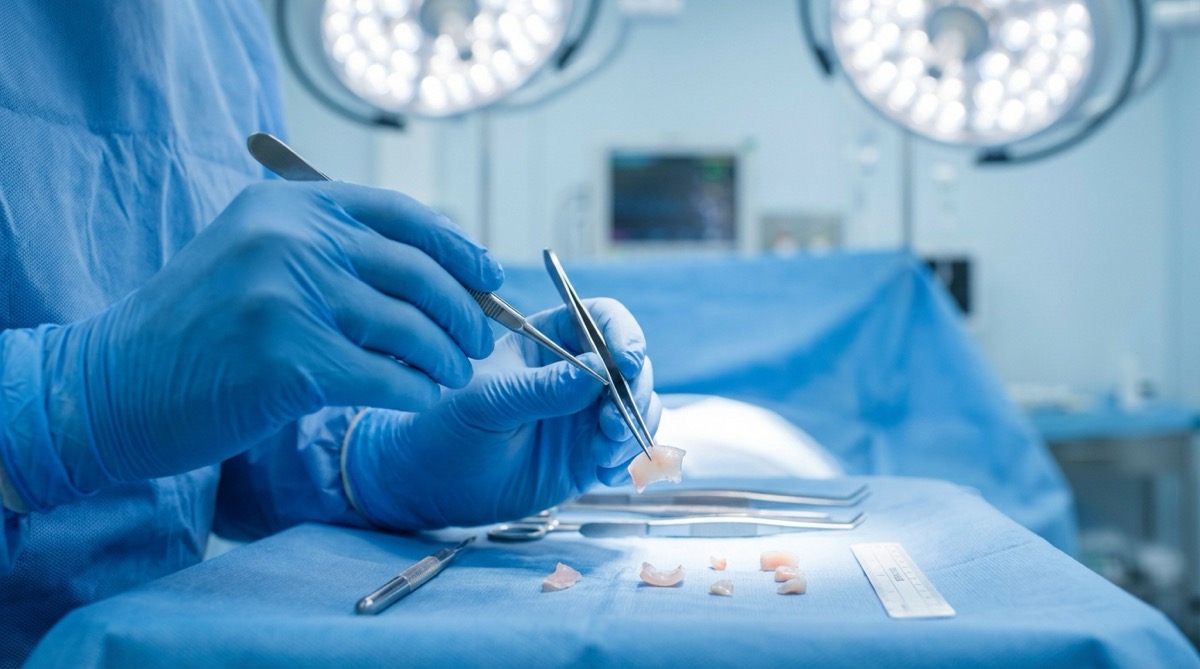
Structural rhinoplasty reverses this logic entirely. Instead of weakening the nose by removing its framework, we strengthen it with precisely shaped cartilage grafts. These grafts come from three possible sources:
- Septal cartilage — harvested from the nasal septum itself; the first choice when available in sufficient quantity
- Auricular cartilage — taken from behind the ear through a hidden incision; ideal for softer, more flexible grafts
- Costal cartilage — harvested from a rib; reserved for revision cases or when large amounts of structural material are needed
By using these grafts strategically, I can refine the nasal tip, straighten a deviated nose, project or de-project the profile, narrow the bridge, and improve breathing — all while creating a nose that will maintain its shape for decades, not just for the first few years after surgery.
Why Brazil for Rhinoplasty: Training, Volume, Cost, and Quality
There are four reasons international patients consistently choose Brazil — and specifically Brazilian board-certified plastic surgeons — for rhinoplasty.
World-Class Surgical Training
Brazilian plastic surgery residency programs are among the most rigorous in the world. I trained at Clínica Pitanguy, founded by the legendary Professor Ivo Pitanguy, widely considered the father of modern plastic surgery. This training, combined with further specialization in the United States, gave me exposure to techniques and case volumes that shaped my structural approach to rhinoplasty.
In Brazil, plastic surgery is a full medical specialty requiring 3 years of general surgery residency followed by 3 years of plastic surgery fellowship — 6 years of postgraduate training minimum. This is more rigorous than many countries where rhinoplasty is performed by ENT surgeons or general practitioners with weekend courses.
Unmatched Surgical Volume
Brazil performs over 1.5 million plastic surgery procedures annually. This volume creates an environment where surgeons develop refined judgment and technical skill through sheer experience. A Brazilian rhinoplasty specialist may perform 200-400 rhinoplasties per year — a volume that would take decades to accumulate in countries with smaller markets.
Significant Cost Advantage
International patients typically save 40% to 60% compared to equivalent procedures in the United States. A structural rhinoplasty that costs $8,000-$15,000 in the US may cost $4,000-$7,000 in Brazil, including surgeon fees, anesthesia, and facility costs. This is not because of lower quality — it reflects differences in operating costs, currency exchange, and healthcare economics.
Quality That Matches or Exceeds International Standards
Brazilian plastic surgeons publish extensively in international peer-reviewed journals, present at global conferences, and many hold dual board certifications. The Brazilian Society of Plastic Surgery (SBCP) maintains strict standards for member certification. When you choose a SBCP-certified surgeon, you are choosing a professional held to the highest international standards.
My Approach to Structural Rhinoplasty
After more than 8,000 surgeries, I have developed a systematic approach to rhinoplasty that prioritizes three pillars: structure, function, and aesthetics — in that order.
Structure comes first because without a solid framework, no aesthetic result will last. I begin every rhinoplasty by assessing the existing cartilaginous and bony architecture. Where is it weak? Where does it need reinforcement? Only after establishing a strong foundation do I refine the aesthetic details.
Function is non-negotiable. A beautiful nose that cannot breathe is a failed rhinoplasty. I routinely correct septal deviations, turbinate hypertrophy, and internal valve collapse as integral parts of every procedure — not as afterthoughts.
Aesthetics are the final layer, built upon the structural and functional foundation. Tip refinement, dorsal profiling, alar base adjustment, and radix grafting are all performed with precision, always respecting the patient’s ethnic features and facial proportions.
“I never aim to give a patient someone else’s nose. My goal is to give them the best version of their own nose — one that fits their face, breathes well, and lasts a lifetime.”
The International Patient Experience: Logistics, Follow-Up, and Language
I understand that traveling to another country for surgery requires trust and careful planning. Over the years, I have refined the international patient journey to make it as seamless as possible.
Initial consultation: We begin with a detailed virtual consultation. Patients send photographs and describe their concerns. I provide an honest assessment, a preliminary surgical plan, and a transparent cost estimate — all before the patient books a flight.
Language: My team and I communicate fluently in English and Portuguese. All pre-operative instructions, consent forms, and post-operative guidelines are provided in English.
Logistics: Londrina is a modern city in southern Brazil with an airport served by direct flights from São Paulo and other major hubs. We assist international patients with hotel recommendations near the clinic, ground transportation, and local orientation.
Follow-up: Patients typically stay in Londrina for 7 to 10 days after surgery for in-person follow-up. After returning home, we continue monitoring recovery through video consultations at scheduled intervals for up to one year.
Recovery Timeline for International Patients
Understanding the recovery timeline is critical for international patients planning their trip. Here is what to expect:
- Day 1-3: Swelling and bruising peak. Rest at the hotel with head elevated. Light walking is encouraged.
- Day 5-7: External splint removed. Most bruising has faded. Patients begin to see the early shape of their new nose.
- Day 7-10: Final in-person appointment. Clearance to fly home (most airlines allow flying after day 7-10).
- Week 2-4: Swelling continues to decrease. Return to desk work and light activities.
- Month 1-3: 70-80% of swelling resolved. The nose begins to look more defined.
- Month 6-12: Final refinement of the nasal tip as residual swelling resolves. The structural grafts integrate fully with native tissue.
I recommend international patients plan a minimum 10-day stay in Brazil — ideally 14 days for maximum comfort and peace of mind.
Frequently Asked Questions
Is it safe to have rhinoplasty in Brazil?
Yes, when performed by a board-certified plastic surgeon (SBCP member) in an accredited surgical facility. Brazil’s plastic surgery infrastructure is world-class, and complication rates among qualified surgeons are comparable to — or lower than — those in the United States and Europe. I operate in a fully equipped hospital with dedicated anesthesiology teams.
How much does structural rhinoplasty cost in Brazil compared to the US?
Structural rhinoplasty in Brazil typically costs 40-60% less than in the United States. While prices vary depending on case complexity (primary vs. revision, need for rib cartilage grafts), most international patients find the total cost — including travel and accommodation — is still significantly lower than surgery at home.
Can I combine rhinoplasty with other procedures during my trip to Brazil?
Yes, many international patients combine rhinoplasty with complementary facial procedures such as deep plane facelift, chin augmentation (mentoplasty), or eyelid surgery (blepharoplasty). Combining procedures reduces overall recovery time and travel logistics compared to separate trips.
What if I need a revision after returning to my home country?
Revisions after structural rhinoplasty are uncommon — around 5-8% of cases — because the technique creates a stable, long-lasting framework. If a revision is needed, we discuss it during virtual follow-up and plan accordingly. In my experience, most minor concerns resolve with time as swelling subsides over 12 months.
How do I choose a qualified rhinoplasty surgeon in Brazil?
Look for three things: board certification by the SBCP (Sociedade Brasileira de Cirurgia Plástica), specialization in rhinoplasty (not just general plastic surgery), and before-and-after photos of real patients with similar nasal anatomy to yours. A qualified surgeon will also offer a thorough virtual consultation before you commit to traveling.
Ready to Explore Structural Rhinoplasty in Brazil?
If you are considering rhinoplasty and want the precision of structural technique combined with the experience and value that Brazil offers, I invite you to schedule a virtual consultation. We will discuss your goals, evaluate your anatomy, and create a personalized surgical plan — all before you book your flight.
Learn more about my approach to structural rhinoplasty or explore other facial procedures like the regenerative deep plane facelift.
Dr. Walter Zamarian Jr.
CRM-PR 17.388 | RQE 15.688
Board-Certified Plastic Surgeon — Londrina, PR, Brazil

drwalterzamarianjr
Dr. Walter Zamarian Jr. é cirurgião plástico em Londrina-PR (CRM-PR 17.388 | RQE 15.688), membro titular da SBCP e da ASPS. Formado em Medicina pela UEL, com especialização no Instituto Ivo Pitanguy (38a Enfermaria da Santa Casa do Rio de Janeiro) e treinamento nos EUA em lifting facial Deep Plane, rinoplastia estruturada e cirurgia íntima feminina. Com mais de 20 anos de experiência e 8.000+ cirurgias realizadas, é referência em rejuvenescimento facial e cirurgia genital feminina.
Deixe um comentário